Coastal privacy along Australia’s eastern seaboard is growing rare — and the well-heeled are noticing. South of Sydney, the migration is clear: families and retirees are saying no to cramped inner-city life and yes to tucked-away beachside communities. It’s less about escape and more about clarity (more room, more quiet, fewer sirens) — a deliberate trade for a slower, better rhythm.
Ridgewaters Kiama is built for that moment — true seclusion married to honest lifestyle flexibility. We’ve designed a property that works as a permanent home, an income-producing asset, or both…pick your stance. Simple premise, sensible value, and the kind of desirability that doesn’t need a billboard.
Why Affluent Buyers Are Choosing Kiama Over Sydney
The Economics of Coastal Relocation
Sydney’s inner suburbs have been monetised to a point of absurdity – the median CBD apartment now clears $1 million. Meanwhile, comparable beachside digs in Kiama hover around $1.08–$1.18 million and come with more square metres, ocean views, and none of the urban crush. The thesis is simple: wealthy buyers aren’t chasing scarcity anymore – they’re chasing sanity. They want dollars that stretch, mornings that feel softer, weekends that are homecoming rather than recovery. Kiama hands all three to you – no compromises, no cancellations.
Distance That Works
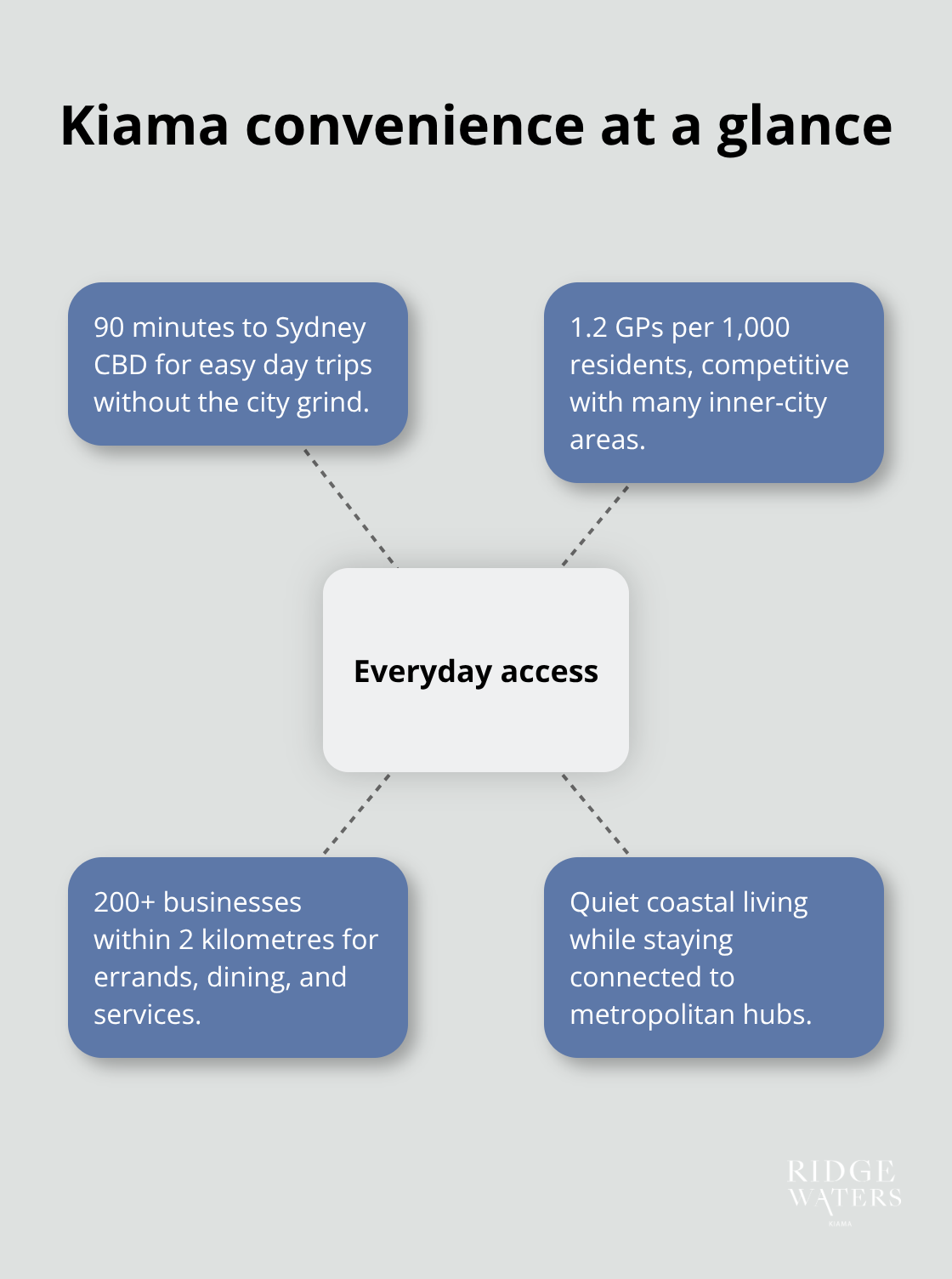
Ninety minutes south – far enough to mute the sirens, close enough that popping into the CBD is not an expedition. Healthcare here isn’t a trade-off: the Australian Institute of Health and Welfare reports Kiama has 1.2 general practitioners per 1,000 residents – that’s competitive with many inner-city pockets. Over 200 businesses operate within a 2-kilometre radius of Kiama town centre (Kiama Municipal Council), so retirees and families can run errands, get a coffee, file a tax return – and still feel like they live near a neighbourhood, not a concession stand.
Natural Attractions That Matter
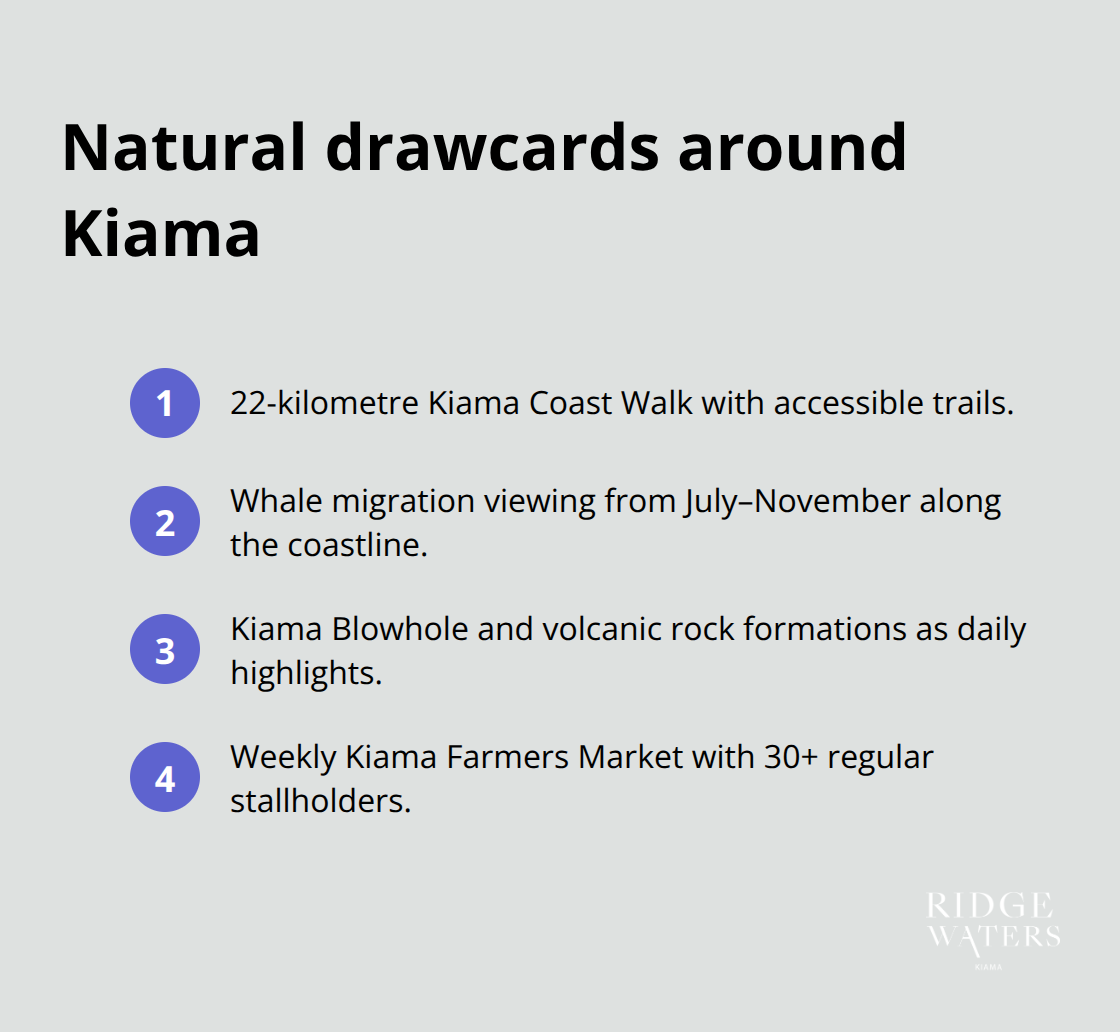
The landscape does the heavy lifting. The 22-kilometre Kiama Coast Walk gives you accessible trails for every fitness level; whale migration season (July–November) turns your morning walk into a nature documentary. Add the Kiama Blowhole, volcanic rock formations – real, daily reasons to leave the sofa. The weekly Kiama Farmers Market at Surf Beach pulls together 30+ regular stallholders – fresh produce, artisans, gossip – the stuff that knits a community.
Community and Culture
More than 30 community groups operate in Kiama – so whether you’re retired or raising kids, you’ll find a hobby, a club, a team (and not the sterile gym-bro variety). The dining scene is growing; cafes and restaurants offering senior discounts make the coastal lifestyle accessible, not performative. It’s a neat combo: natural beauty + healthcare backbone + local commerce + social fabric. The payoff for affluent buyers is obvious – convenience and seclusion, simultaneously.
What separates Ridgewaters Kiama from other coastal developments is how it amplifies these advantages through thoughtful design and location strategy – it’s not just a place to live, it’s a place to belong.
What Sets Ridgewaters Kiama Apart From Other Developments
Architecture That Respects the Coastline
The gap between a well-positioned coastal apartment and a mediocre one? Three things – how the building meets the land, how you move through it, and what you see when you step outside. Most Kiama developments trip on at least one. Ridgewaters Kiama doesn’t. The architecture here bows to the coastline rather than trying to outshout it. Floor-to-ceiling windows frame the ocean without pretence; natural stone and timber interiors echo the beach rather than pretending to be something else. This isn’t minimalism for the Instagram flex-it’s the sensible result of recognising that Kiama’s actual luxury isn’t marble or a rooftop bar. It’s the view. It’s the quiet. You design around that, not against it.
Private Access and Secure Parking
Private lift access means you park underground and arrive at your apartment without wrestling wind, rain, or the hallway gossip. Two undercover spaces per residence ends the tiny, constant annoyances of coastal life (salt spray, sand tracked in like confetti, the eternal parking hunt). Sounds small – and then you live it for a week and realise it’s not. In Kiama, weather turns fast and the Tasman Sea chews on anything left exposed; secure underground parking with direct lift access is the difference between thoughtful design and performative design.
Beachside Location Without Commercial Sprawl
Location is the amplifier – choose it right and everything sings. Ridgewaters Kiama sits beachside but without that banal commercial sprawl that plagues other projects. The 22-kilometre Kiama Coast Walk runs past the property – you step out and you’re on one of Australia’s most accessible coastal trails. No main-street noise, no retail strip eating into sightlines, no fake choice between seclusion and access. The Kiama Blowhole, whale migration routes (July–November), and Minnamurra Rainforest are 10–15 minutes by car, yet the apartment itself stays blissfully insulated from that traffic. Kiama town centre – 200+ businesses and a weekly farmers market – sits 2 kilometres away: close enough for errands and dinners, far enough that daily life doesn’t feel urban. You’re not trading convenience for peace; you get both – because this location was selected with precision, not opportunism. That precise placement is the foundation of what makes Ridgewaters Kiama a compelling pick for anyone wanting active coastal living without surrendering real seclusion.
Investment and Lifestyle Flexibility at Ridgewaters Kiama
Kiama’s Tourism Economy Drives Short-Term Rental Demand
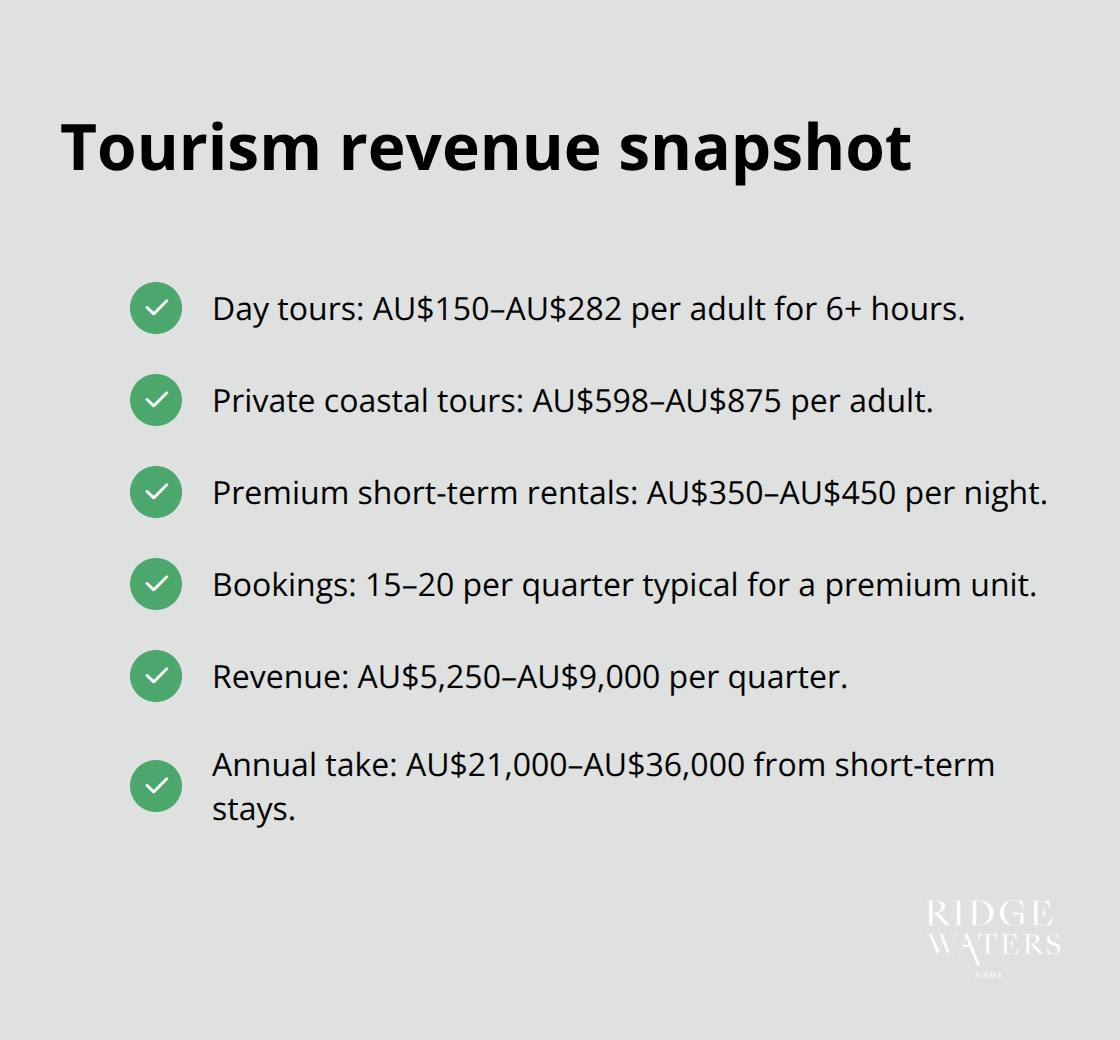
Kiama pulls premium visitors year‑round – this isn’t seaside foot traffic, it’s curated escapes. Day tours run AU$150–AU$282 per adult for 6+ hours (think Sea Cliff Bridge, Kiama Blowhole, beaches and wildlife – 5.0 ratings from 63+ reviews). Private coastal tours sit higher – AU$598–AU$875 per adult for 6+ hours – which tells you affluent travellers will pay for privacy, curation and a good story to post. Whale migration season (May–November) is a book-it-now period; weekly farmers markets and the Kiama Jazz & Blues Festival drag people back repeatedly.
Accommodation spans value to luxury – Sand Dune Studio at AU$215 a night up to Crooked River Estate Villas at AU$600+ a night. Slot a well‑positioned oceanview apartment into the premium bracket – 15–20 bookings per quarter at AU$350–AU$450 per night – and you’re looking at AU$5,250–AU$9,000 quarterly, or AU$21,000–AU$36,000 annually. That’s not pocket change – that revenue pays body corporate fees and rates, or funds sensible renovations. Simple math.
Real optionality.
Permanent Residence: Healthcare and Community Access
You don’t have to sacrifice access for seclusion. Kiama reports 1.2 general practitioners per 1,000 residents, plus 24‑hour emergency care at Kiama Hospital – which, yes, matters when you’re deciding where to hang your retirement hat. Over 200 businesses operate within 2 kilometres, so errands aren’t a two‑hour city pilgrimage. The 22‑kilometre Kiama Coast Walk and 30+ community groups give retirees structure without obligation (walk, volunteer, sip coffee – repeat). Cafes and restaurants offer senior discounts – small detail, big quality‑of‑life impact. Bottom line: the town supports active, connected living without forcing you into constant upkeep or isolation.
Low-Maintenance Design for Long-Term Living
Ridgewaters Kiama is designed to keep you in the apartment longer than five years – and that’s intentional. Undercover parking, private lift access, low‑maintenance interiors and communal gardens managed by the body corporate remove the friction that often pushes retirees back into the market. You’re buying a lifestyle that functions for 15+ years without the traditional renovation treadmill. Natural materials (stone, timber) mean minimal upkeep; energy‑efficient appliances reduce ongoing costs. In short – you get secluded luxury coastal accommodation without the maintenance hangover.
Flexibility Across Living and Earning Models
Dual‑use optionality is the strategic edge. Buy it as a permanent base, rent it short‑term while you travel, then lock it in for retirement – or any sequence you prefer. That optionality – live, earn, do both – creates genuine investment flexibility. Young family? Live there year‑round, shift to short‑term rentals during school holidays. Retiree? Live there, rent during peak tourism windows. Pure investor? Focus on rental income. Kiama’s mix of tourism demand and permanent‑resident appeal supports all three simultaneously – which, frankly, is rare.
Final Thoughts
Affluent Australians are voting with their feet – and their wallets – for one tidy combo: coastal privacy plus real convenience. Ridgewaters Kiama nails that balance without asking you to choose. You get the 22-kilometre Kiama Coast Walk, whale migration season (May–November), and the Kiama Blowhole on your doorstep – and full infrastructure for everyday life. Kiama Hospital runs 24-hour emergency care, there are 1.2 GPs per 1,000 residents, and more than 200 businesses within 2 kilometres for errands and eating out. Translation: no city commute required.
We built Ridgewaters Kiama around what people actually want – not what marketers think they want. Space. Ocean views. Low-maintenance living. Proximity to nature and services. Private lift access, secure underground parking, floor-to-ceiling windows, and body-corporate-managed gardens mean you live in the place rather than run it. That’s a feature set, not a sales pitch.
And the numbers back up something investors already know: Kiama’s tourism economy supports real returns. Day tours command AU$150–AU$282 per adult; private coastal experiences fetch AU$598–AU$875; premium short-term rentals sit around AU$350–AU$450 per night. Those aren’t anecdotes – they’re cash flows.
Flexibility is built in – permanent residence, seasonal income, or both. Kiama functions like a proper coastal town (healthcare, commerce, natural attractions) – so it sustains tourists and locals alike. Curious? Explore what’s available at Ridgewaters Kiama and see why this matters for your coastal future.