Most people assume living without a car equals sacrificing convenience. At Ridgewaters Kiama — that’s not the deal. We built a community that makes car-free living feel like an upgrade, not a compromise: direct beach access, neighbourhoods you actually want to walk through, and solid Kiama-to-Sydney transport links. Everything residents need is either a short stroll or a quick public-transit hop (yes, really)… convenience without the parking wars.
What Makes Kiama’s Location Work Without a Car
Essential Services Within Walking Distance
Everything you need in Kiama sits close enough that a brisk walk feels like an upgrade – grocery stores, pharmacies, cafes, clinics – they cluster near where people live instead of being scattered across some zoning experiment. Kiama’s compact layout rewards pedestrians – not by accident, but by geography and history. Coastal towns evolved before car obsession turned streets into parking lots, so density follows the waterfront rather than the other way around. The result: most daily errands are a 10–15 minute stroll. Simple. Low friction. Delightfully anti-suburban.
Recreation and Dining at Your Doorstep
The beach is the living room – your primary recreation hub – so you don’t pack the car and bleed time driving somewhere else. Restaurants and cafes hug the coast, which means dinner is a short walk, not a commute (and yes, that changes your evening). Schools and healthcare sit integrated in neighbourhoods – not exiled on the edge of town. That proximity matters for your bank account too – walking and transit run roughly 85% cheaper than owning a car when you tally fuel, insurance, maintenance, parking (the usual suspects), according to Australian urban planning analyses. Your wallet actually breathes here.
Sydney Connections Without the Drive
Kiama ties into Sydney on a reliable schedule – 90 minutes by public transport, and that’s enough to keep you connected, not stranded in a regional bubble. You gain access to jobs, specialists, cultural life – without throwing away hours in traffic or circling for parking. Local buses stitch neighbourhoods to transit hubs, and during peak times the frequency means you won’t be left waiting 45 minutes wondering if public transit exists.

For residents at Ridgewaters Kiama, that connection is a real strategic advantage – coastal living with legit city access.
The trade-off is obvious – you pick up extra time (no commute stress, no parking hunts) and lower expenses (no vehicle costs) while keeping access to big-city amenities. This lifestyle works because Kiama’s location actually supports it – walkability and connectivity (https://theconversation.com/moving-house-3-surprising-ways-your-new-neighbourhood-can-affect-health-and-happiness-266997) open up another significant advantage for property owners in the area.
Walkable Kiama Means Everything Is Close
Kiama’s street plan is an unintended act of kindness to pedestrians – born of history and coastline, not of a planner’s spreadsheet. Coastal towns grew up before sprawl became the default, so shops, cafes, clinics and homes cluster together instead of scattering across asphalt deserts designed for cars. Most daily errands land inside a 10–15 minute walk… which, let’s be honest, beats a 40-minute round trip to the supermarket in suburbia.
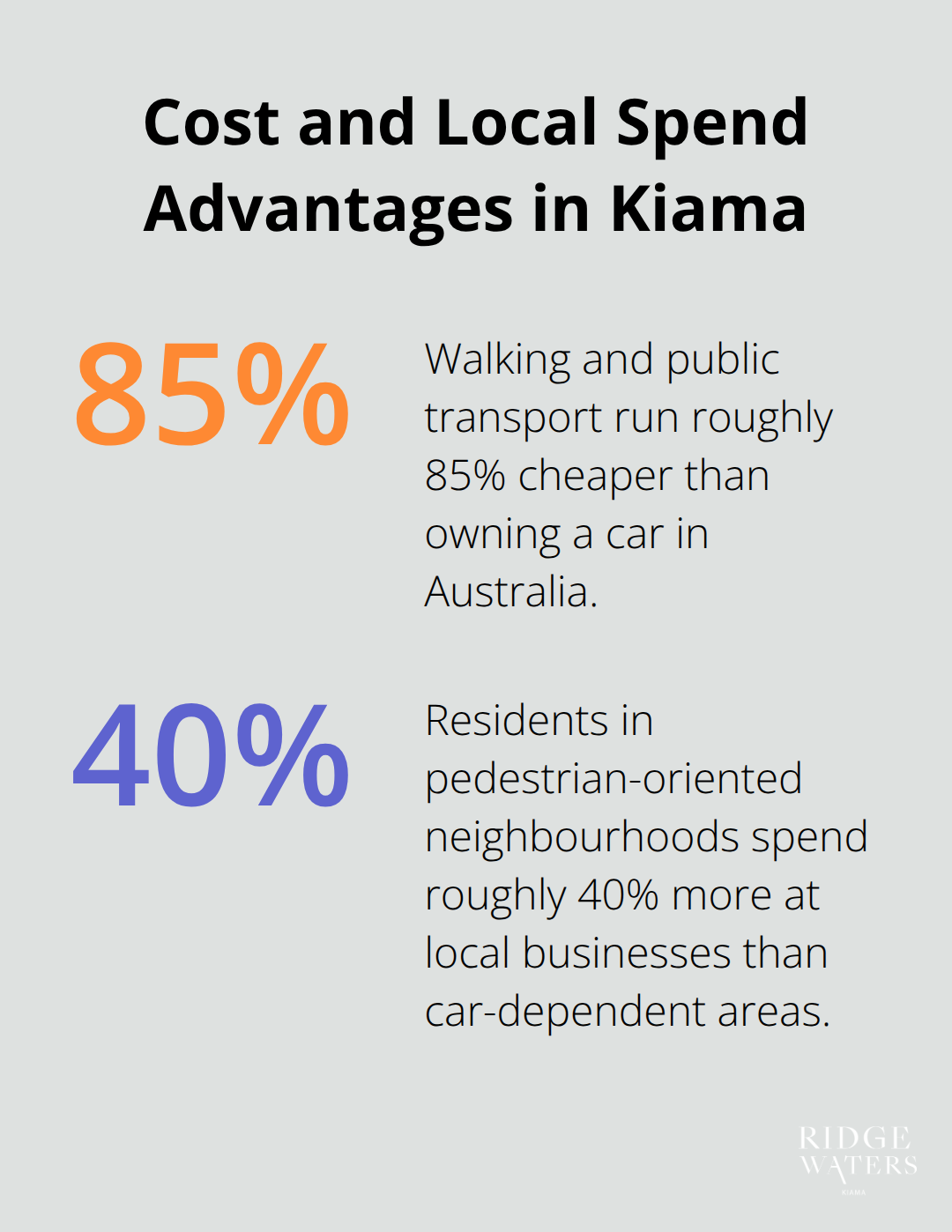
Walking also rewires your wallet-pedestrian-oriented neighbourhoods see residents spend roughly 40% more at local businesses than car-dependent areas, because convenience triumphs over the siren song of a different mall. Kiama’s compactness means you actually use what’s local because it’s there – not because you’re trapped or nostalgic. Schools and clinics sit woven into neighbourhoods rather than shoved to the fringe (which, for parents and older residents, is everything). The beach doubles as the town’s recreation hub – dinner, exercise, weekend plans: all a short walk away. That changes behaviour in ways suburban life rarely affords: evenings don’t dissolve in traffic, and kids can roam without constant chauffeuring.
Streets Designed for Walking, Not Just Passing Through
Kiama’s pedestrian infrastructure isn’t decorative – it reflects use. Wide footpaths, clear crossing points at busy junctions, and buildings that meet the street (not hide behind setbacks) make walking feel natural, not tolerated. Cafes and restaurants sit at street level with outdoor seating, activating public space and making strolls social rather than purely functional. Foot traffic lowers overhead for local shops – they don’t pay for highway frontage or mall leases – so competitive pricing follows (regional independents routinely report lower costs than their metro cousins). Lower vehicle speeds matter, too: walkable streets see markedly fewer pedestrian injuries. For families, that translates to children walking to school, shops, friends’ houses without an escort – a quality-of-life gain many suburbanites only recognise after they experience it.
Community Spaces That Anchor Neighbourhoods
Parks, playgrounds and meeting rooms sit inside the same comfortable walkable radius, and that’s the difference between a neighbourhood and a collection of houses. These spaces create daily encounters – the small, repeat interactions that build trust, reciprocity, the social fabric that keeps streets lively instead of empty. Proximity means recreation is spontaneous, not a planned, fuel-burning production. That integration – amenities embedded in the walkable core – is what sets Kiama apart from sprawled suburbs where facilities are scattered and disconnected. The result: movement feels purposeful and social, not just functional – and that shapes how residents actually live their lives.
Why Car-Free Living Attracts Renters and Boosts Your Returns
Renters Pay More for Walkable Coastal Locations
Renters in coastal towns are voting with their feet – literally – and that shift hits your bottom line. Research shows that walkable neighbourhoods command rental premiums of 5–10% over car-dependent places. Why? Tenants do the arithmetic: in Kiama a renter can shave roughly $250–300 a month off their expenses (fuel, insurance, maintenance – averaged to Australian costs). That saving isn’t theoretical – it converts into willingness to pay more for an apartment where walking replaces driving. Simple, brutal economics.
Short-Term Renters Seek Car-Free Convenience
Holidaymakers and business travellers don’t want logistics – they want convenience. Short-term renters search listings for places where you can ditch the car and still live a movie-worthy weekend. Platforms like Airbnb reward walkable coastal communities with higher booking and nightly rates. Kiama delivers the checklist: beaches within walking distance, restaurants clustered nearby, and a train or coach to Sydney for day trips. Guests don’t just tolerate the setup – they prefer it, and they’ll pay for that preference. A family renting for six months? They save thousands by skipping a car – and landlords who lead with that math fill units faster and keep tenants longer.
Market Demand Accelerates for Walkable Coastal Properties
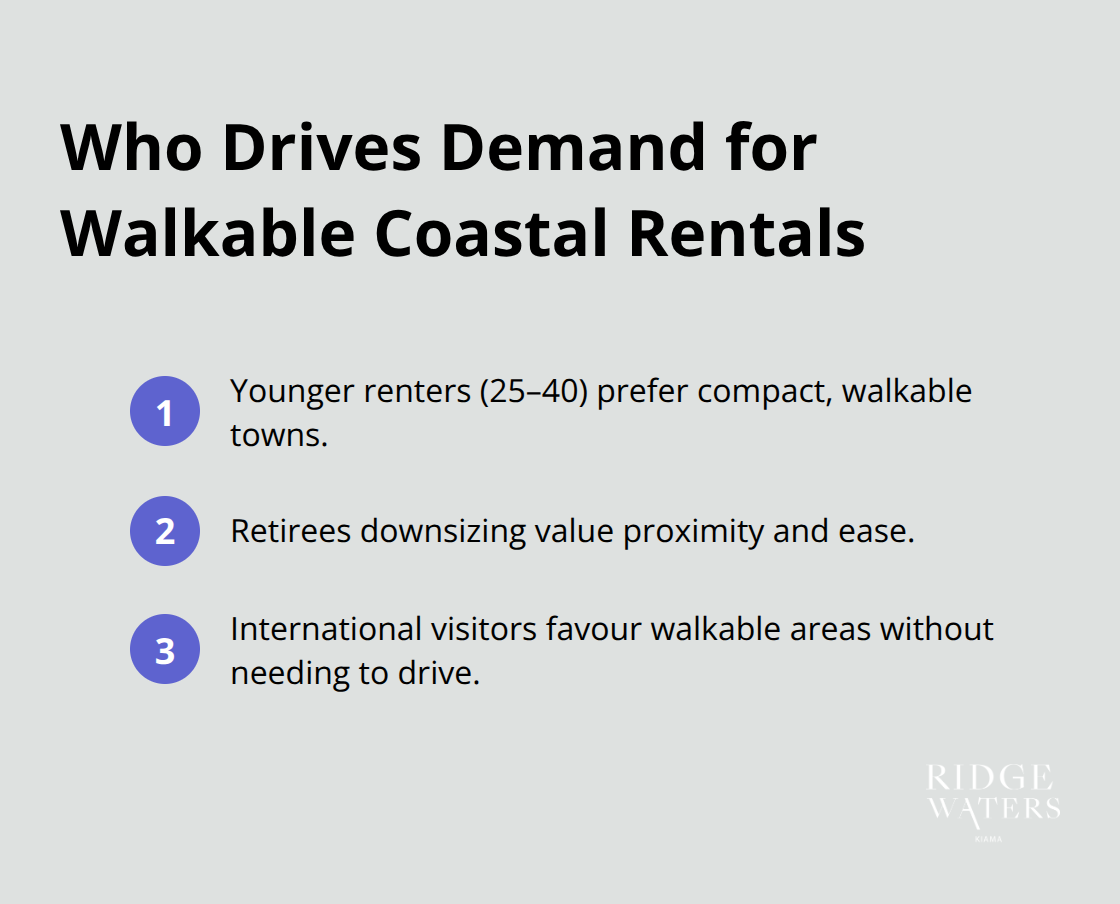
Demand isn’t abstract – it’s demographic and definable. Younger renters (25–40), retirees downsizing, and international visitors (many unfamiliar with driving on the left) all prefer compact, walkable towns. Kiama’s layout matches that profile. Properties marketed around walkability and transit access turn over faster and spend fewer days vacant – property management data across New South Wales coastal markets confirm this. Vacancy is stealthy destruction of returns; a few extra empty weeks a year compounds into thousands lost.
Investors who ignore walkability are leaving money on the curb.
Location Becomes Your Primary Marketing Feature
When proximity to everything – without a car – is the product, marketing gets easy. Sustainable coastal living isn’t a niche anymore; it’s an expectation for renters prepared to pay premiums for convenience and lifestyle fit. This isn’t about romance or saltwater sentimentality – it’s practical arithmetic that tenants see immediately when comparing options. So stop treating location as an afterthought and start treating it as your headline feature – because it is.
Final Thoughts
Car-free living at Ridgewaters Kiama isn’t a lifestyle experiment-it’s the arithmetic of place. Kiama’s topography, human-scaled streets, and dependable transport remove the small frictions that make a car feel like oxygen elsewhere. The outcome is obvious: residents keep money in their pockets, recover hours in their week, and get the coastal rhythm plus Sydney’s draw without the fixed – and hidden – costs of car ownership.
For investors the equation is equally tidy. Renters and holiday guests chase walkable, coastal addresses (and will pay for the convenience). Vacancy falls when a property sits where guests can stroll to cafés, beaches, and transit-and premiums rise as younger tenants and downsizers trade square footage for proximity. Demand compounds when lifestyle becomes the product.
Kiama’s sustainability is less a green manifesto and more urban history-the town grew up before sprawl became default, so density hugs the waterfront rather than being blasted across it. Schools, clinics, shops and recreation cluster within easy steps, and transport links stitch residents to Sydney without forcing a daily slog. Explore Ridgewaters Kiama to see how that locational advantage converts into better living – and stronger returns.