Beach erosion is carving into Kiama’s coastline faster than most residents realise — and by “faster” I mean property lines, council budgets and weekend beach rituals are all getting a rewrite. At Ridgewaters Kiama, staff have watched this slow-motion reshuffle touch everything from house prices to local infrastructure (roads, pipes, the bits people notice only when they fail).
This guide cuts through the noise — what’s actually pulling the sand away, how those changes ripple through the community… and which fixes are real versus fashionable theatre.
What Drives Erosion in Kiama
Wave Energy and Storm Damage
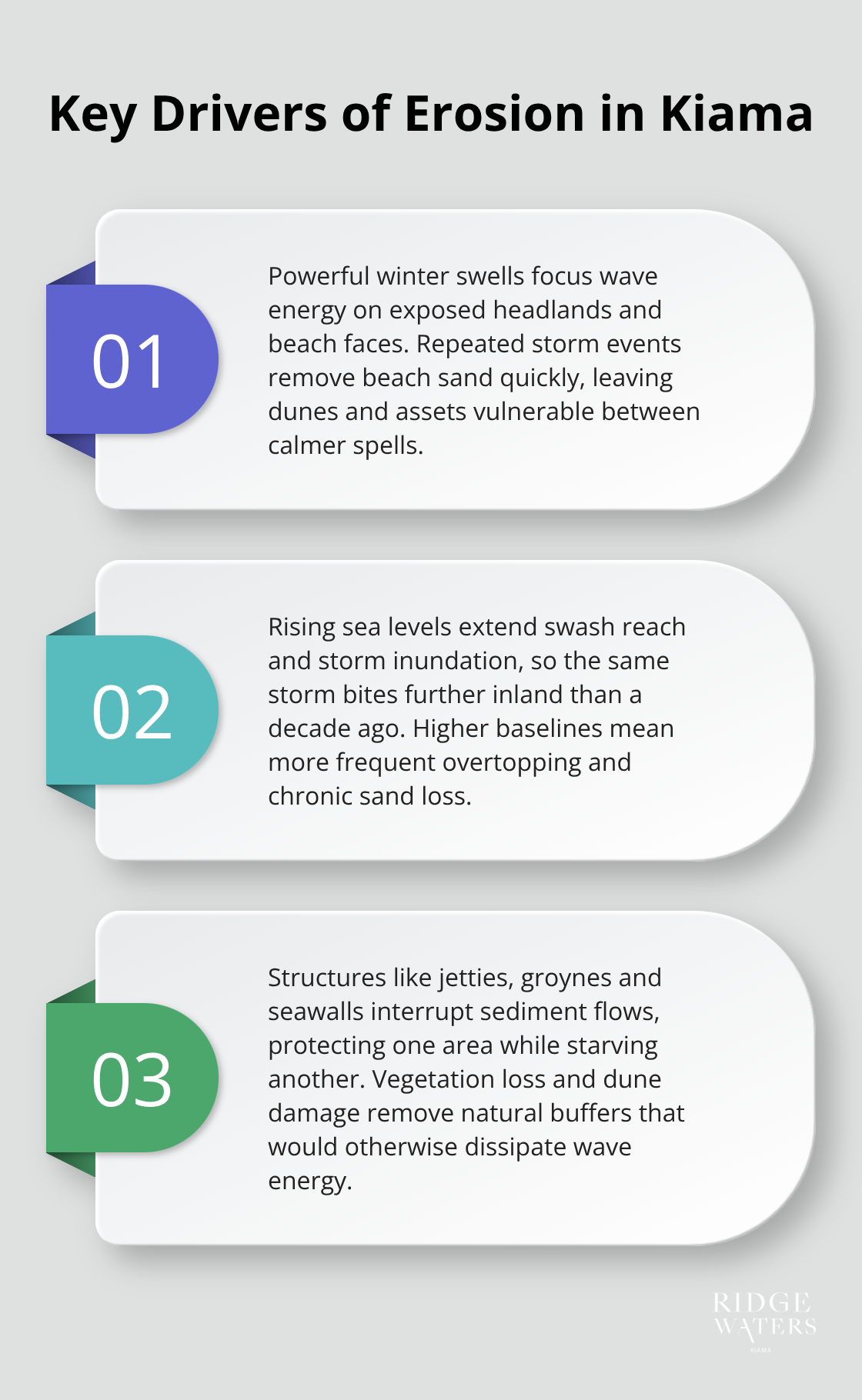
Wave energy on Kiama’s exposed coastline is the headline – winter storms are the hit single. In some places, erosion rates are as fast as 20 metres (67 feet) per year. Windward faces take the direct blow; lee zones hoard sediment and buy time – but they’re only masking the problem. Shoreline geometry funnels wave force into protruding ridges, so some stretches vanish faster than their neighbours. When dune systems are compromised, extreme storms can strip metres of land in days. Winter runs the show on temperate coasts like Kiama’s; summer’s calm just gives the coast a short, deceptive breather.
Property owners – keep an eye on your land after big storms, especially June through August when NSW gets the worst of it.
Sea Level Rise Amplifies Vulnerability
Sea level rise doesn’t politely nudge – it amplifies everything. The IPCC AR6 makes it plain: higher seas increase swash reach and storm inundation – the same storm today does more damage than it did a decade ago. That creeping rise makes properties within 100 metres of soft shorelines disproportionately vulnerable. Satellite monitoring through DEA Coastlines (free – covers the entire Australian coast from 1988 to present) provides annual shoreline positions and helps separate long-term retreat from seasonal ebb and flow.
Human Activity Compounds the Problem
Humans re-route sediment like they’re rearranging furniture – and then complain the floor feels uneven. Jetties, groynes, seawalls – they protect one patch and starve the next. Dredging and sand mining pull the rug out from other beaches. Infrastructure projects that remove coastal vegetation or degrade dunes eliminate natural buffers that would otherwise eat wave energy for breakfast. Plenty of coastal fixes solve a problem in one place by creating a bigger one down the line. For Kiama residents, the takeaway is simple: erosion follows predictable patterns shaped by geology, weather, and prior human choices. Those patterns affect property values, infrastructure stability, and community resilience – and they demand urgent attention from local stakeholders and property owners alike.
What Erosion Costs Kiama Residents
Property Values Drop Fast
Erosion doesn’t just steal sand – it steals equity, confidence, and good sleep. About 39,000 buildings sit within 100 metres of soft shorelines across Australia (Geoscience Australia) – and Kiama’s ridge-like, exposed shoreline puts houses and investment flats squarely in the firing line. A property 50 metres from today’s shoreline isn’t flirting with risk – it’s in documented danger, tracked by satellite via DEA Coastlines, which has been mapping annual shoreline positions since 1988.
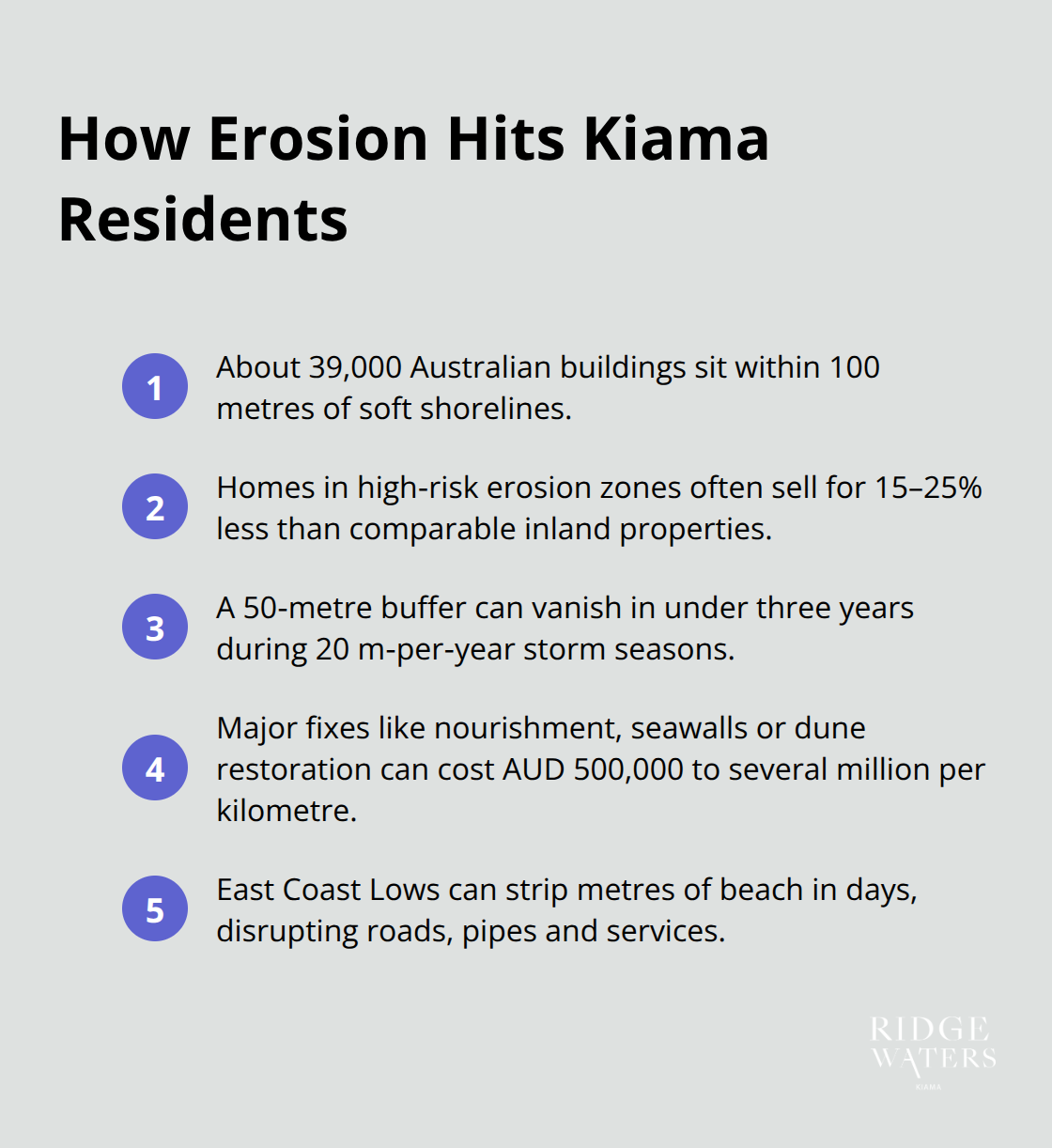
When winter storms punch erosion rates up to 20 metres a year, that 50-metre buffer evaporates in under three years. Poof.
Local agents will tell you – and the data backs them – homes with visible erosion or in flagged high-risk zones change hands for 15–25% less than comparable inland properties. Insurance? It spikes or disappears. And investors who like coastal cash flows (short-term rentals, anyone?) should remember: occupancy looks great until storm surge, rapid erosion, or failing infrastructure forces evacuations or collapses the rental market. Then the returns vanish faster than beachfront sand.
Assess Your Risk With Available Data
Geoscience Australia’s Smartline dataset maps dune mobility and climate-change sensitivity – use it. See whether your house sits in an accelerating erosion corridor or a relatively stable pocket. Fixing the damage after the fact (beach nourishment, seawalls, dune restoration) costs between AUD 500,000 and several million per kilometre depending on substrate and method (USACE guidelines) – and yes, that bill gets passed down to owners via special levies or council rate hikes. In short: ignorance is expensive.
Infrastructure Fails When Ground Destabilises
Erosion doesn’t politely stop at the sandline – it undercuts roads, pipes, power lines, sewerage systems… the whole service catalogue that keeps a town functional. Kiama’s cocktail of ageing infrastructure and accelerating shoreline retreat is basically a recipe for emergency spending. Winter storms on the NSW coast have produced rapid-onset events (remember the 2015–2016 East Coast Lows?) that stripped metres of shoreline in days – meaning infrastructure can go from “fine” to “out of service” in a single blow.
Natural Buffers Vanish, Flooding Increases
Lose your dunes and you lose your shock absorber – wave energy hits harder, inland flooding becomes routine, and freshwater aquifers face saltwater intrusion. The local ecology – coastal plants, seabird nesting grounds, rock-pool microcosms – can’t adapt fast enough when the shoreline retreats quickly. For Kiama that translates into fewer usable beaches, degraded tourist draws (which hit local economies), and higher municipal costs for emergency response and replacement infrastructure. Not pretty.
What Happens Next Matters More Than You Think
Erosion is not a distant-policy problem for someone else to fix. It’s active, measurable (free satellite tools, remember), and it’s eating property values, inflating insurance, destabilising infrastructure, and eroding the natural amenities that make coastal life worth paying a premium for. The smart move is to understand which protection strategies actually work – and which just push the problem down the coast. That means looking at both natural and engineered solutions that communities like Kiama can implement now – because waiting makes the fix far, far more expensive.
What Actually Works to Stop Kiama’s Shoreline Retreat
Dune Restoration Outperforms Expensive Barriers
Dune restoration and strategic vegetation planting beat expensive seawalls and groynes in most scenarios-and the data is not polite about this. Plants and rebuilt dunes don’t just look nicer in Instagram shots; they blunt wave energy before it eats the sand. Recreate dunes with species that actually belong on NSW coasts and they soak up storm surge, trap sediment, and come back on their own-over time, not overnight. The USACE Coastal Engineering Manual says the same thing: dunes first. Why? Because working with sediment cycles beats trying to beat them. For Kiama homeowners that translates to one clear ask-council-funded dune restoration for public beaches and serious vegetation rules (and enforcement) on private parcels. No cheap shortcuts.
Beach Nourishment Requires Long-Term Commitment
Beach nourishment-adding compatible sand to widen the beach-buys time, but it’s not a magic wand. Price tag: AUD 500,000 to several million per kilometre depending on substrate and wave energy. The kicker: it only lasts if the new sediment matches grain size and if there’s ongoing maintenance funding. A one-off dump of sand is basically throwing cash into the ocean. Meanwhile, hardening infrastructure (move power, water, sewerage inland or retrofit for saltwater)-that’s pricier than prevention, but unavoidable for assets within ~50 metres of the tide line. Practical move: push the council for a baseline shoreline survey using DEA Coastlines satellite records (annual positions since 1988) so we know what’s truly at risk-and what can wait.
Community Coalitions Drive Real Change
Engineering answers matter-but community action wins. Use Geoscience Australia’s Smartline data (dune mobility and climate sensitivity) to stop building in dumb spots-unconsolidated shorelines are not suitable for mansions or wishful thinking. Property owners in erosion zones should band together-neighbourhood coalitions that demand transparent council reporting on erosion rates, infrastructure plans, and any “special levies” before rate notices arrive. Local pressure keeps sediment budgets honest and prevents the kind of short-term fixes that simply move the problem down the coast.
Storm Preparedness Prevents Catastrophic Losses
Winter storms aren’t hypothetical-they’re calendar items. Prep is cheap and effective: secure drainage, reinforce dunes before June, have evacuation plans. East Coast Lows have shown they can eat metres of beach in days (2015–2016-remember?). Adaptation can’t be a slo-mo story-act now with dune work, sediment management, and true infrastructure audits, and you’ll spend a fraction of what a reactive scramble costs.
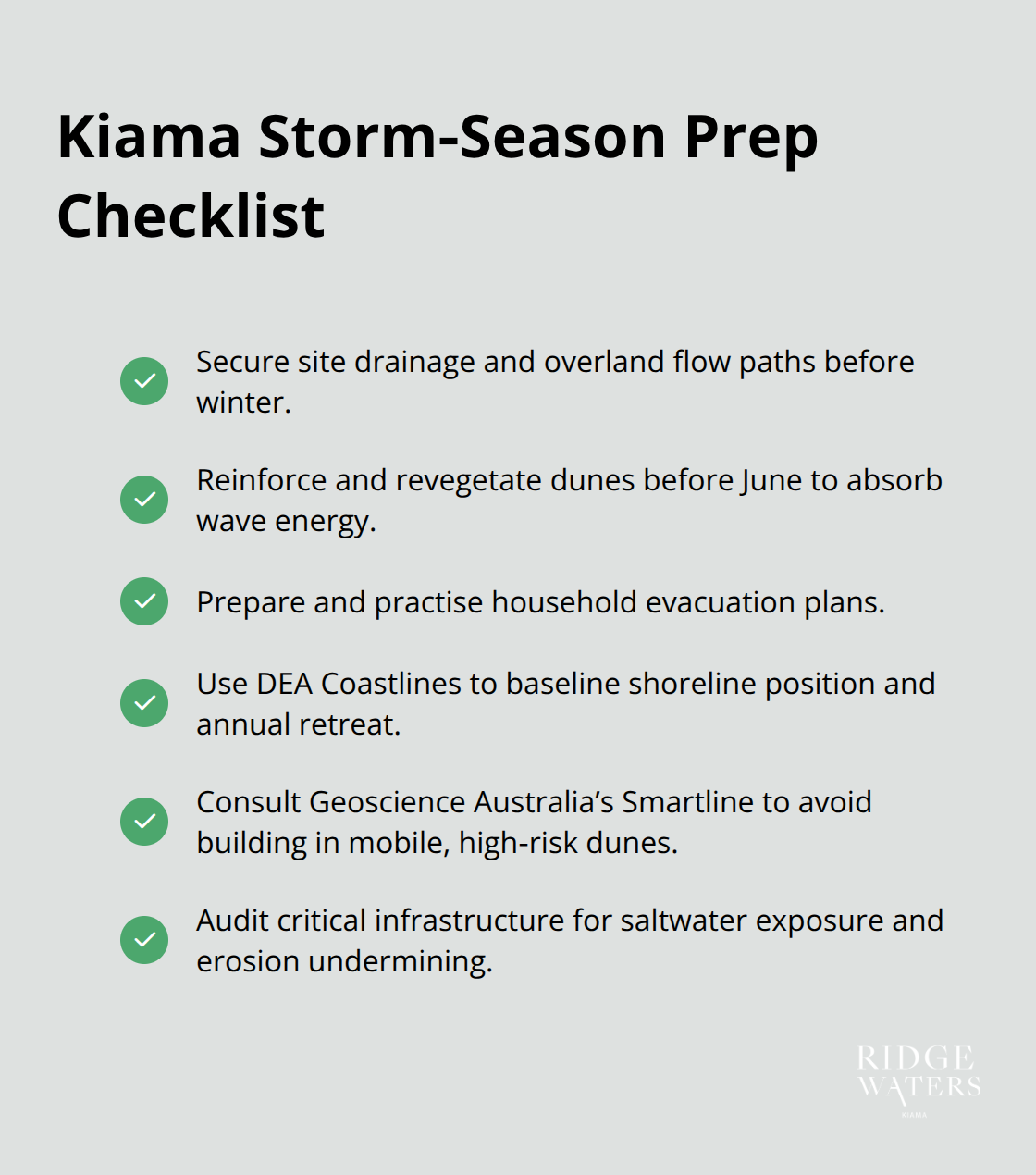
In a coastal town facing accelerating retreat, that investment-public or private-isn’t optional.
Final Thoughts
Beach erosion around Kiama isn’t a mystery novel – it’s a spreadsheet. Patterns follow wave energy, sea-level rise, and human choices (yes, choices) – predictable, measurable, actionable. If your property sits within 100 metres of a soft shoreline, you’re in documented risk territory; winter storms can steal metres of sand in days, and anything built too close to the tide line will eventually fail. Use DEA Coastlines satellite records and Geoscience Australia’s Smartline dataset – know your actual risk, then do something sensible with that data.
Communities that rebuild dunes, manage sediment, and retrofit infrastructure now will preserve both their coastline and their equity. Those that wait? Far steeper bills, far fewer options – and zero sympathy. Storm preparedness isn’t optional – it’s the difference between managed adaptation and catastrophic loss.
If you’re a resident or investor buying into Kiama’s coastal lifestyle, factor beach erosion into your calculus (don’t pretend it’s an afterthought) and back local efforts to protect the shore. Ridgewaters Kiama offers luxury apartments designed for coastal living – and smart coastal living means knowing what you’re protecting, and why it matters.