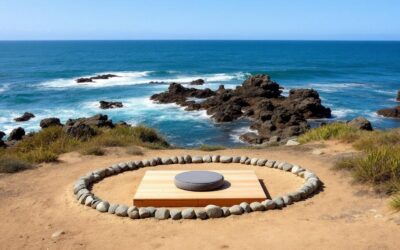
Kiama’s coastal vibe—perfect for stargazing. Why? Minimal light pollution and those clear ocean horizons. Dark skies meet accessible spots—astronomy fans, you’re in for a treat.
Here’s the deal from Ridgewaters Kiama: we’ve scoped out the top spots and the best times to catch the celestial show in Kiama. This guide? It’s got you covered, from the primo viewing locations to keeping your gear safe in those coastal conditions.
Where to Find Kiama’s Best Stargazing Views
Kiama Blowhole Reserve Delivers Prime Darkness
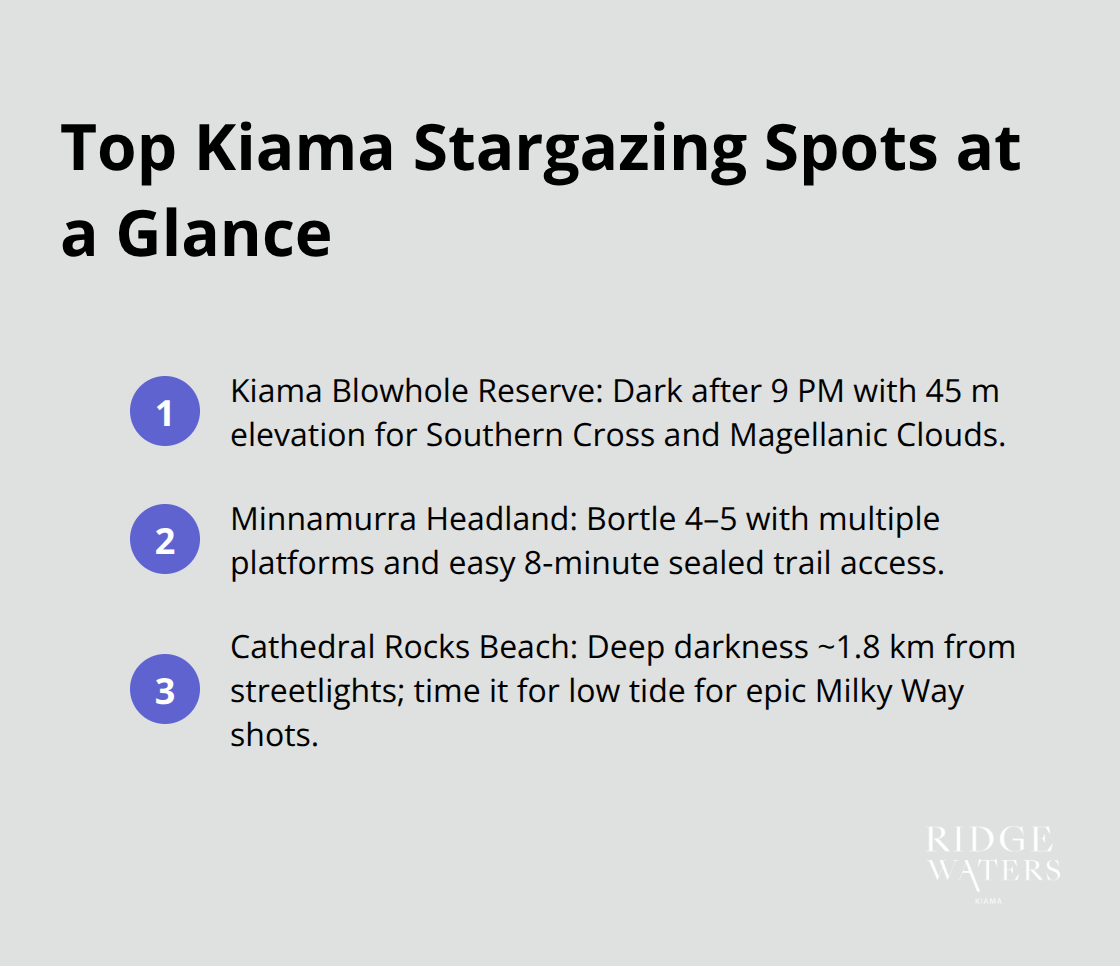
Right, let’s talk Kiama Blowhole Reserve-a prime slice of real estate for the serious star chasers among us. Just a hop, skip, and 2.5 kilometres south of Kiama town centre, this spot goes dark post-9 PM when the tourist crowds take a breather. It’s perched nicely at 45 metres above sea level, giving you pristine peeks into the southern and eastern skies… perfect for catching the Southern Cross and those elusive Magellanic Clouds.
Now, here’s the kicker-the concrete platform (by the blowhole, no less) gives solid ground for those tripods, while the ocean breeze acts like nature’s own anti-blur system. Those trusty park rangers keep the gates open ‘round the clock, so you can pull an all-nighter with Venus and Mars when they’re at their best.
Minnamurra Headland’s Strategic Advantage
Next stop, Minnamurra Headland. This place has your northern sky needs covered. Sitting pretty at 78 metres, it offers a line-up of viewing platforms to match any celestial craving. The main lookout points northeast, catching Jupiter strutting through its winter route. Swing east, and you’ve got Orion’s belt nailed from May through August. The southern edge? All about Centaurus during the autumn months.
Astronomy groups have this place pegged with Bortle Scale ratings at a respectable 4-5-not bad, considering Sydney’s urban glow rates an 8-9. And with an 8-minute stroll from the car park along a sealed trail, even lugging a heavyweight telescope feels like a walk in the park.
Cathedral Rocks Beach Access Strategy
Cathedral Rocks Beach is the poster child for astrophotography magic-those iconic rock formations? They make the Milky Way look even more epic. The access point near Bombo Quarry is where you’ll find the deepest dark, nestled 1.8 kilometres from any pesky streetlights.
Tide tactics are a must here-aim for low tide, extending your beachside stage. The rugged cliffs serve as natural equipment shields, and once the sun dips, expect a cool 15-degree drop that punches down that pesky atmospheric fuzziness. Essential for those long-exposure shots that we long for.
These spots are the crème de la crème of stargazing-nail the timing, and you’re in for a celestial showstopper.
When Should You Stargaze in Kiama
When it comes to coastal astronomy-timing crushes location. Every. Single. Time. The Southern Hemisphere is like that friend who only shows up for the party during certain months, and Kiama-sitting pretty at 34.67 degrees south latitude-is in the VIP section for prime star-gazing action, all year round. Hit it from April through September for top-shelf deep-sky objects-the Milky Way core is basically screaming “Look at me!” from May to August. Meanwhile, winter’s got your back with Orion and the Pleiades cluster, all sharp and bright like they’re in high-def.
Moon Phases Make or Break Your Session
New moon nights-love ’em for the darkest skies, but there’s a twist-you might stumble in the dark setting up your kit. Now, first quarter moon, that’s the sweet spot. Sets around midnight, and then… pure darkness takes over. Full moon? Just nope. Unless you’re out to catch Jupiter and Saturn, which shine through like stubborn party crashers even when the moon’s out. And oh, autumn and winter, they roll out clear nights like they ordered ’em in bulk, setting you up for prime stargazing time.
Coastal Weather Patterns Work in Your Favour
Kiama’s coastal location-it’s like having a secret weapon against inland weather chaos. After 10 PM, sea breezes call it a night, cutting down on star-blurring turbulence. And those temperature drops-8 to 12 degrees by sunset? Chef’s kiss. Dry, cool air slices through haze, leaving the sky clear as can be.

High pressure systems rolling in from the west? They’re like your alert for 3-4 nights of uninterrupted sky viewing.
Wind Direction Determines Success
Southerly winds? Yeah, no-they bring moisture and clouds like uninvited guests. Westerly winds, however, are your stargazing BFFs, clearing the skies after a day of gusty curtain-raising. And those light northerly breezes (under 15 km/h)? They keep everything chill, stabilising the air and cutting down that annoying ground-level shimmer that messes with your celestial sights.
Once you crack these weather and timing codes, you’re gonna need the right gear to catch the visual feast Kiama’s skies set out for you.
What Gear Works Best for Kiama Stargazing
Alright, stargazers-let’s talk gear. Gazing at the stars from Kiama’s coastline? You need equipment that laughs in the face of salt spray and humidity. Refractor telescopes are your best buddies here; they’ve got sealed tubes that say “no thanks” to moisture. Unlike those reflector scopes-yes, the ones that fog up faster than car windscreens on a nippy morning. Take the Celestron NexStar 6SE, for instance-it’s basically the MVP for handling coastal conditions. It comes with computerised tracking to ensure your 30-second astrophotography shots don’t end up as abstract art. And a word of advice-ditch those bargain bin scopes from department stores-trust me, they’ll give you more trouble than an old dial-up connection.
Salt Air Protection Methods
Let’s face it, salt air is a nemesis-corrodes metal quicker than you can say “oxidation.” It’s the same reason why the Moon is such a hotspot for deep space exploration-gotta protect your gadgets from the elements. Here’s your game plan: stash silica gel packets in your telescope case-they’re moisture’s worst enemy.
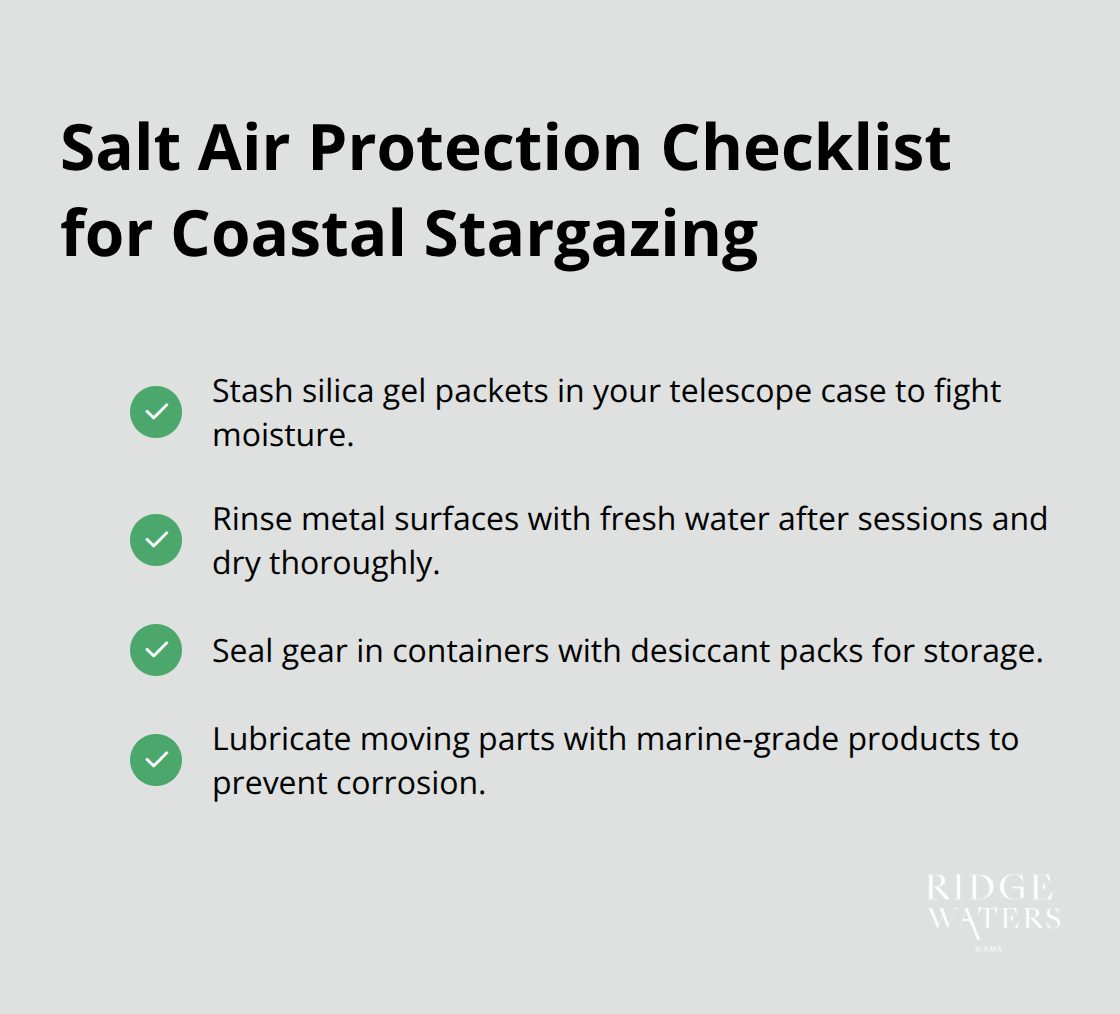
Give all metal surfaces a good wipe down with fresh water post-stargazing, and dry them like your life depends on it. Seal your gear in containers with desiccant packs (yeah, those packets you usually toss from new shoe boxes). And don’t forget to lather up your scope’s moving parts with marine-grade lubricants, because who likes a stiff tripod?
Digital Tools That Deliver Results
Sure, printed star charts are nostalgic, but let’s get real-your phone’s a planetarium with SkySafari 6 Plus. It shows you the night’s line-up in real-time. Plus, that nifty red-light mode? Keeps your night vision intact while it introduces you to constellations. PhotoPills? It’s like “Hey, there’s the Milky Way, ready for its close-up!” Just plug in your location and behold its cosmic path. And when cell towers along Kiama’s coast decide to take a nap, Star Walk 2 has your back-offline. These apps are the ultimate star guides, pinpointing celestial bodies in the sky when they’re really strutting their stuff.
Tripod Selection for Beach Conditions
Last but not least-tripods. In the coastal winds’ gladiatorial arena, heavy-duty tripods reign supreme. A little pricier carbon fibre legs-they’re rustproof champions. Go wide with those legs and anchor down with your camera bag for stability. Sand is everywhere, kind of like a bad penny-make sure you rinse off those tripod joints with fresh water each time, or you’ll end up with a gritty nightmare.
Final Thoughts
Kiama star gazing-let’s talk about the blend of coastal ease and top-tier stargazing conditions. This place dishes out Bortle Scale 4-5 darkness (you know, pretty darn good), with practically no light pollution and those dependable sea breezes to calm the atmospheric jitters. You’ve got three top-notch spots here for checking out the skies all year round-from the iconic Southern Cross to Jupiter doing its winter thing.
Here’s the kicker: coastal astronomy here isn’t just about starry skies; it’s about wide-open horizons, temps that drop and cut that haze, and westerly winds that swipe away moisture. Think of it as views on par with the best inland dark-sky sites, but with the added perks of the ocean at your side. The package transforms an evening chill into a celestial treasure hunt.
At Ridgewaters Kiama, we’re your go-to spot for all things astronomy (whether you’re mapping out constellations or snapping those Milky Way shots). Our luxury apartments are a neat 90 minutes from Sydney’s light show, offering secure parking for all your gadgets. The coastal vibe here is a match made in heaven for astronomy buffs, turning your doorstep into a launchpad for night sky exploring.