Vacation-rental owners are trading in charm for efficiency — and losing if they don’t. Smart-home features aren’t a novelty; they’re the price of admission. Properties with connected tech command higher nightly rates and pull more bookings than the ones stuck in analog mode…simple as that.
At Ridgewaters Kiama, we’ve seen firsthand how Airbnb automation and connected amenities flip the script on rental performance. Owners who invest in keyless entry, climate control, and high-speed internet consistently outperform their neighbours — higher occupancy, higher revenue (and fewer headaches).
What Smart Features Do Vacation Renters Actually Want
Friction-Free Entry and Access
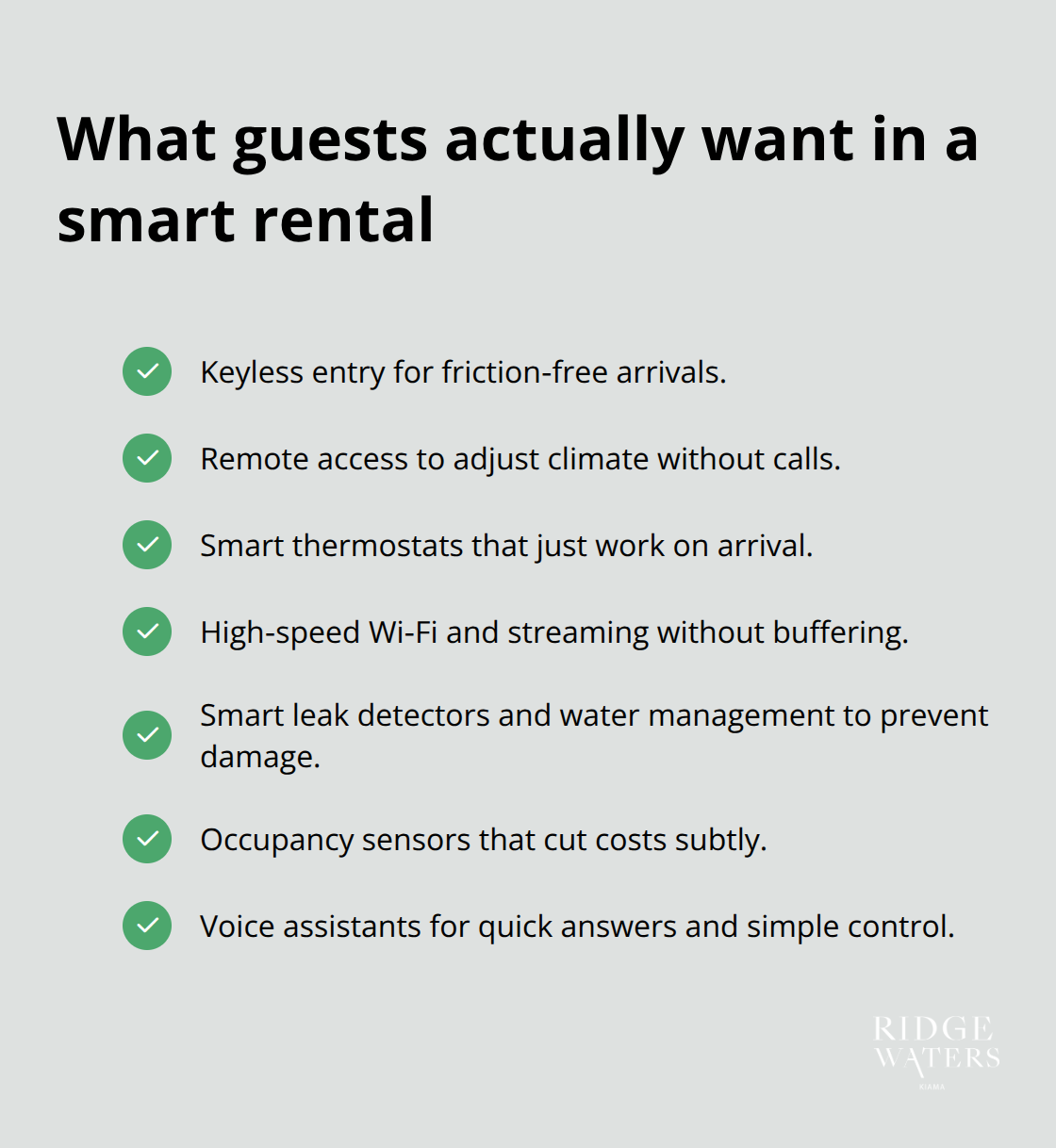
Vacation renters want one thing more than novelty – convenience. Keyless entry stops the awkward meet-and-greet with a property manager or the midnight spelunking for a hidden key. Remote-access systems let guests nudge the thermostat at 2 a.m. without phoning anyone – and that little freedom matters. According to Harvard Joint Center for Housing Studies, tenant demand for tech-enabled rental housing has risen sharply, and that trend applies directly to vacation rentals.
In markets like Kiama, competing with every other sun-and-surf option across Australia, your job is to remove friction – every gate, barrier, and chore that stands between a guest and the sweet spot of arrival.
Climate Control That Works Invisibly
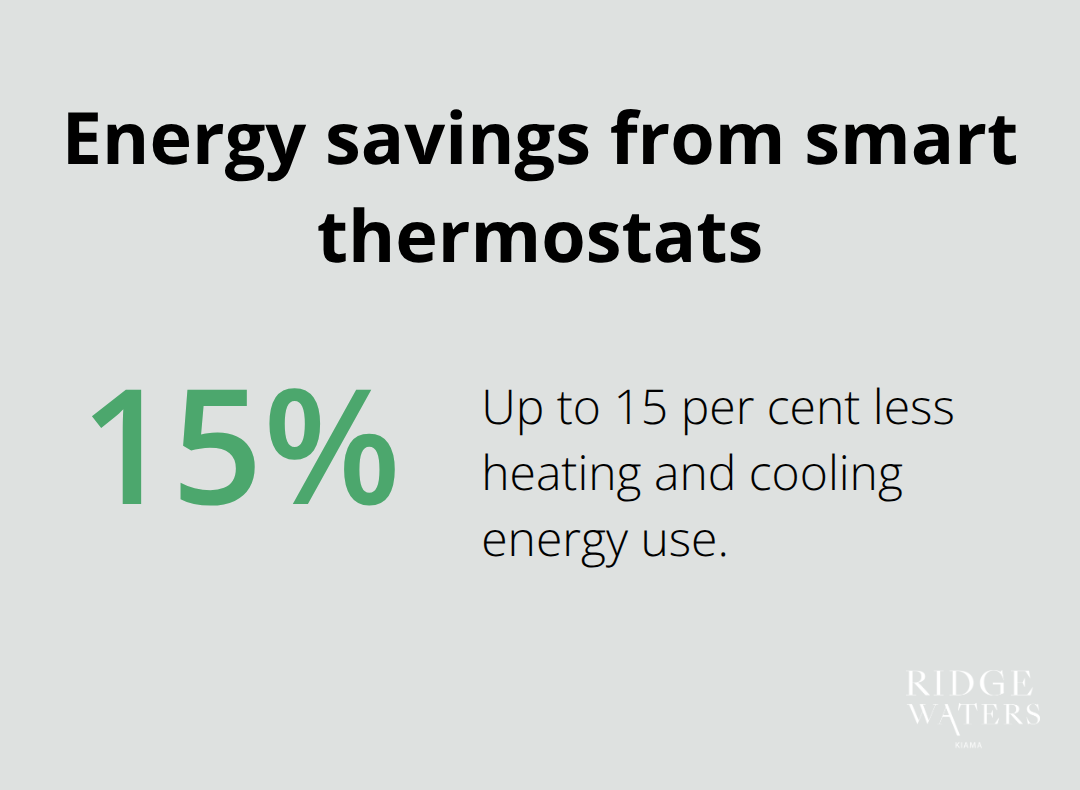
Smart thermostats cut heating and cooling energy use by up to 15 per cent, which translates to lower utility bills guests notice immediately. Renters booking a coastal escape near Kiama expect the place to be 22 degrees on arrival – and they expect not to fiddle with it. The headline isn’t “smart” – the headline is “works.” Guests want systems that hum in the background, not temperamental toys that kill batteries, require constant babysitting, or force a Google search at midnight.
Internet and Entertainment as Baseline Expectations
High-speed internet is no longer a luxury – it’s the table-stakes. Buffering is a deal-killer. Guests want Netflix, streaming services, and video calls to work without interruptions – period. A slick entertainment setup married to robust Wi‑Fi is the difference between a booked weekend and an empty calendar. RealPage data shows properties with smart home features achieve higher rents and faster lease-ups – meaning connected amenities don’t just make guests happier, they move your revenue needle.
Protection and Operational Efficiency
Smart leak detectors and water-management systems stop disasters before they become claims – and insurers notice (which means premiums fall). Occupancy sensors trim operational costs and give your property a quietly modern vibe. Voice assistants – Alexa, Google Assistant – handle the small stuff and reduce friction for visitors (think: “Where’s the Wi‑Fi password?” or “How do I work the espresso?”). These are the pragmatic tools that protect income and simplify operations – not buzzwords to plaster on a listing.
The Competitive Reality in Kiama’s Market
Properties that nail these fundamentals consistently smoke the analog competition. Guests will pay extra for places that remove friction at every touchpoint – and when guests are happy, reviews rise, bookings follow, revenue increases, and your smart-home spend pays back faster. It’s a compounding advantage – and in a tight market like Kiama, the little conveniences add up to a big moat.
How Smart Amenities Drive Higher Occupancy and Revenue
Premium Rates Follow Connected Apartments
Connected apartments command measurably higher nightly rates in coastal markets like Kiama-no mystery. Properties with smart home features lease up faster and pull higher rents-guests will pay for frictionless entry, a climate that’s already comfortable when they walk in, and internet sturdy enough for a work call without tears. In a place where beachfront options multiply like seagulls, smart tech stops being a badge of novelty and becomes table stakes. Owners who skip it watch their calendars thin while neighbours with connected units fill weekends at premium rates.
The math compounds quickly. A unit that nets extra occupied nights (even at modest premiums) turns into thousands of incremental dollars annually-simple multiplication, massive consequence. Guests booking Kiama escapes expect seamless check-in, climate that works on arrival, and internet fast enough for video calls. Miss those basics and you get cancellations, bad reviews, and a booking pipeline that leaks.
Five-Star Reviews Accelerate the Booking Cycle
Positive reviews are the engine of occupancy-and smart amenities are the turbo. Frictionless access, reliable climate control, entertainment systems that don’t make guests troubleshoot-those specifics get called out in five-star reviews. Those reviews boost search ranking and click-throughs on rental platforms-more eyeballs, more inquiries, faster bookings.
Repeat guests and word-of-mouth follow naturally (and cheaply). Smart leak detectors and occupancy sensors cut emergency maintenance calls-less chaos, fewer ruined stays, better reputation. High ratings plus proactive systems = bookings that happen faster than for places that react after the fact.
Seasonal Demand Peaks Reward Connected Properties
Kiama’s market spikes-summer, school holidays-so booking velocity equals captured premium nights. Owners who invest in smart systems nab those high-value nights while competitors sleep (or respond slowly). The advantage matters most when demand surges-properties that respond instantly and keep systems flawless lock in reservations before slower places can even reply.
Travellers compare dozens of listings in minutes-smart amenities are the quick signal of professionalism and reliability. Automate guest communication, streamline check-in, monitor systems proactively-and you convert browsers into bookers far faster than manual operators do. Simple truth: in peak windows, speed and reliability win.
How Smart Systems Turn Data Into Higher Rental Income
Dynamic Pricing Captures Peak Demand Instantly
Smart home automation at Ridgewaters Kiama – stop thinking thermostat and smart lock as jewellery for a listing – becomes a revenue engine the moment you bolt it to pricing and operations. Treating smart systems as set‑and‑forget amenities is a hobby. Treating them as signal and input into pricing decisions is a business. Properties that actually track occupancy patterns and guest behaviour consistently outperform those that don’t. Dynamic pricing based on actual demand-not gut calls or spreadsheets from 2012-is where the real money lives.
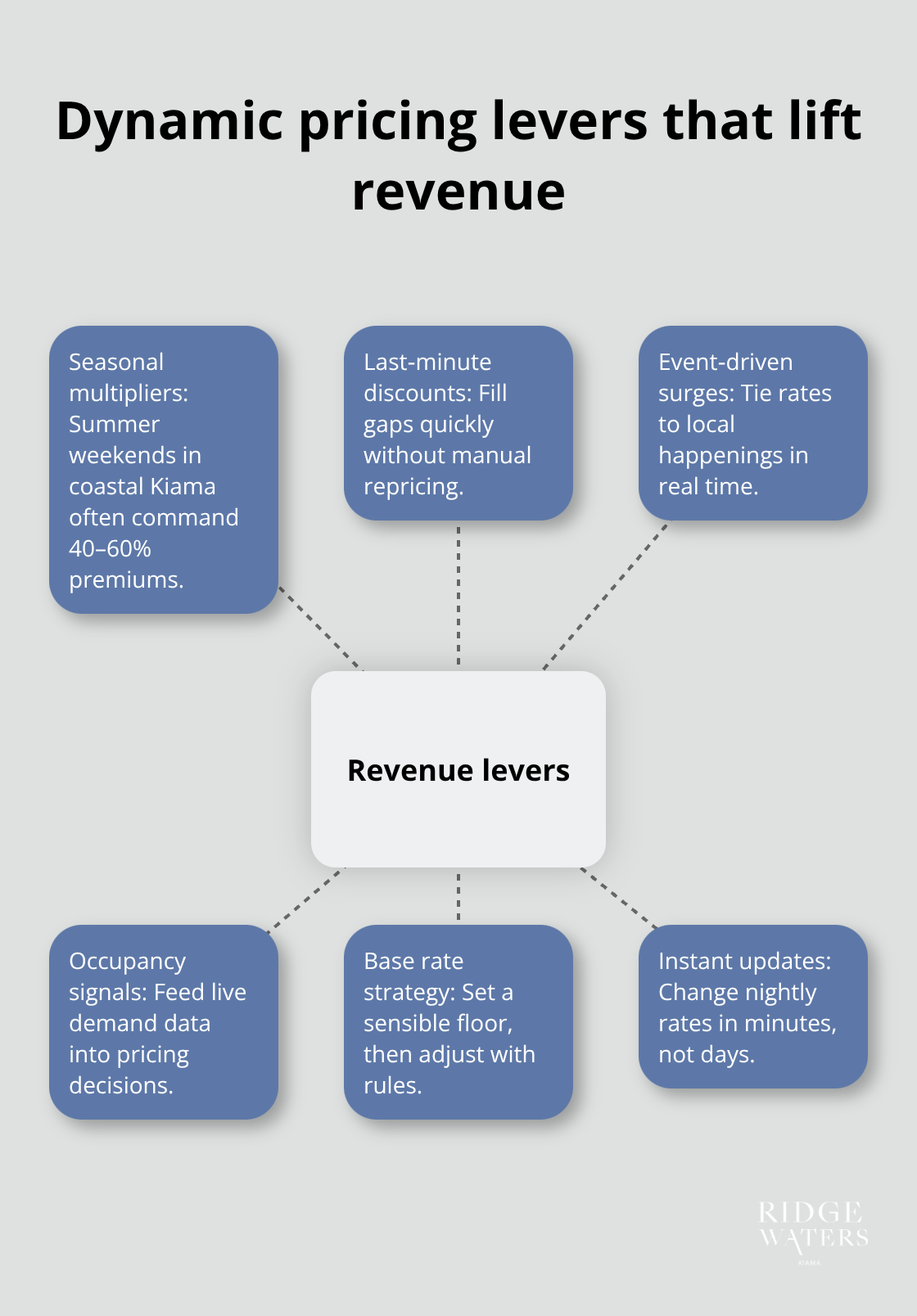
When school holidays hit or summer rolls in, automated pricing tools snatch premium rates in real time while manual operators are still hunting for their laptop power cord. RealPage data backs it up: properties that feed occupancy and demand signals into pricing see measurable revenue lifts. Set a sensible base rate, then layer in seasonal multipliers (summer weekends in coastal Kiama routinely command 40–60% premiums), last‑minute availability discounts, and event‑driven surges tied to local happenings. Smart systems let you change nightly rates in minutes-not days-and that time arbitrage translates directly to higher yield.
Automated Communication Eliminates Operational Friction
Automated guest communication isn’t about being fancy – it’s about killing friction. Keyless entry and remote access remove the coordination tax-no 2 a.m. texts about arrival times, no waiting around for a manager, no awkward handoffs. Guests get check‑in instructions automatically, access codes deploy instantly, and climate systems precondition the space before they step in.
Speed here equals occupancy. Faster response times reduce the soft costs that eat margins-less time chasing messages, more nights booked. When travellers in Kiama browse dozens of listings in a single scroll, they pick the places that respond fastest. Automation turns responsiveness into a competitive moat.
Preventive Maintenance Protects Revenue and Reputation
Maintenance tracking flips reactive chaos into predictable spend. Smart leak detectors, occupancy sensors, and HVAC monitors surface problems weeks before they cascade into cancellations and bad reviews. Smart thermostats shave energy use; that’s lower utility cost per guest night-not theory, real dollars.
When an alert flags a failing water heater early, you schedule a $300 preventive fix in the low season, not a $3,000 emergency replacement plus a lost weekend at peak rate. Fewer emergency repairs means fewer cancelled bookings, fewer bad nights, and a compounding revenue effect that static amenities simply can’t touch.
Data-Driven Operations Separate Top Performers
Owners who treat smart home data as a business tool (not a novelty) consistently report higher net income than those who install gadgets and ignore the data stream. Lower utility costs per occupied night, faster turnover, and fewer emergency repairs compound into measurable financial advantages. In Kiama’s crowded rental market, that operational discipline separates the top quartile from the pack.
The advantage scales. Properties that monitor energy, log maintenance patterns, and feed those signals into pricing build a cost structure competitors struggle to replicate. Smart systems don’t just add features-they provide the visibility to optimise every variable that touches profitability.
Final Thoughts
Smart-home tech is the difference between a rental that’s scraping by and one that’s actually a business – at Ridgewaters Kiama, that difference is dramatic. Keyless entry, climate automation, and robust Wi‑Fi aren’t bells and whistles – they’re margin drivers. Properties with those systems command higher nightly rates, book faster, and produce noticeably more annual income than the analog next door. In a market like Kiama, guests will happily pay for frictionless access, reliable systems, and connected comforts – and that willingness shows up in the ledger.
You get lower utility costs per occupied night, fewer 2 a.m. maintenance panics, quicker answers to guest questions (automation answers the easy stuff – humans tackle the rest), and pricing that reacts to real occupancy data rather than guesswork. Owners who treat smart systems as business tools – not toys – consistently beat competitors. Add Airbnb automation and occupancy tracking and you start to see patterns: pricing tweaks, smarter maintenance windows, fewer wasted cleaning slots. Each improvement stacks – and stacks – building a compounding advantage over time.
The math is simple: invest in connected tech now and you capture premium bookings, higher occupancy, and stronger net income. Or don’t – and watch the property down the street siphon your premium guests. Want to see how that looks in practice? Learn more about how Ridgewaters Kiama apartments can deliver both lifestyle and financial returns.