
Your Ridgewaters Kiama terrace is basically a front-row seat to some of the region’s most remarkable coastal birds — the kind of natural spectacle most residents walk past on their way to the mailbox. People live here and miss it; they stroll out with coffee and big plans and forget the wildlife show playing at eye level.
This guide is your cheat sheet — how to ID the rare ones, where to stake out (hint: the headlands and early morning tidal flats), and which practical tools actually move the needle. Binoculars, an app that won’t lie to you, and a little patience — that’s the toolkit.
Whether you’re a hardened birder (life list in the cloud) or someone who’s never owned binoculars, you’ll get actionable tips — immediate moves to wring the maximum out of your location. Small habits, big sightings… enjoy the show.
Which Rare Coastal Birds Actually Show Up Near Kiama
Kiama’s coast is a small theatre with three lead actors most locals never learn to recognise. Herring gulls-light grey wings, yellow legs-are the default. They’ll sit on rooftops, cliff edges, your neighbour’s boat… they’re the surgically precise opportunists of the shoreline. Once you know the silhouette, you won’t mistake them. Yellow-legged gulls have exploded along Australian coasts in the last two decades-Kiama right in the crosshairs. Look twice; they mirror herring gulls at first glance, but those neon-yellow legs give them away. They own feeding sites at dawn and dusk. Black-headed gulls are the tricksters-breeding season gives them a rich chocolate-brown crown; winter strips it away to a mostly white head with a dark eye spot. That seasonal makeover matters-migrants cruise through Kiama, and an ID error costs you time and credibility.
Plumage Details That Separate Species
Ditch the gut calls. Size and shape are your first line of defence. Great black-backed gulls are an unmistakeable headline-largest in the cast, blackish-grey wings, white head-once you’ve seen one, you don’t forget it. Lesser black-backed gulls are smaller than herring gulls and carry a noticeably darker back-that’s your primary separation point. Puffins pop up in spring and summer (rarer, but dramatic)-black-and-white tuxedos, bright orange legs, a triangular bill that reads like a billboard from a distance. Gannets are the showstoppers-paper-white bodies, golden heads, long black-tipped wings and a dive so explosive it deserves its own adjective. Cormorants and shags are the darker, brooding members of the troupe-rock-perched, fish-harvesting via underwater pursuit rather than aerial theatrics. They come out wet and bedraggled-no waterproofing like ducks-so you’ll see them drying on exposed rocks (easy ID tip).
Migration Windows and Call Recognition
Timing is the currency of good birding. Many seabirds are long-haul commuters-season matters. Late May through July is peak puffin season if you can get to an elevated vantage with a view of breeding colonies. Yellow-legged gulls are year-round players, but behaviour shifts when breeding starts. Mornings and late afternoons win-birds are more active around those windows; midday is often quiet. Calls are your second filter: high-pitched and cackling for some species, deeper, guttural gull calls for others. Listen before you look-save yourself a lot of walking. Coastal winds, tidal rhythms, and weather patterns funnel birds into predictable feeding zones. When conditions get rough, birds concentrate in sheltered spots-so a bad day for sunbathers can be a great day for observers.
Weather and Tidal Patterns Shape Your Sightings
Think of coastal conditions as an invisible map. Strong winds and rough seas (the ones that make your terrace feel exposed) actually help-they shove birds into coves and protected feeding grounds where they’re easier to find. Tidal flats reveal feeding grounds twice a day; rare species often stack into those exposed zones at low tide. Match your outings to the tide schedule-season alone isn’t enough.
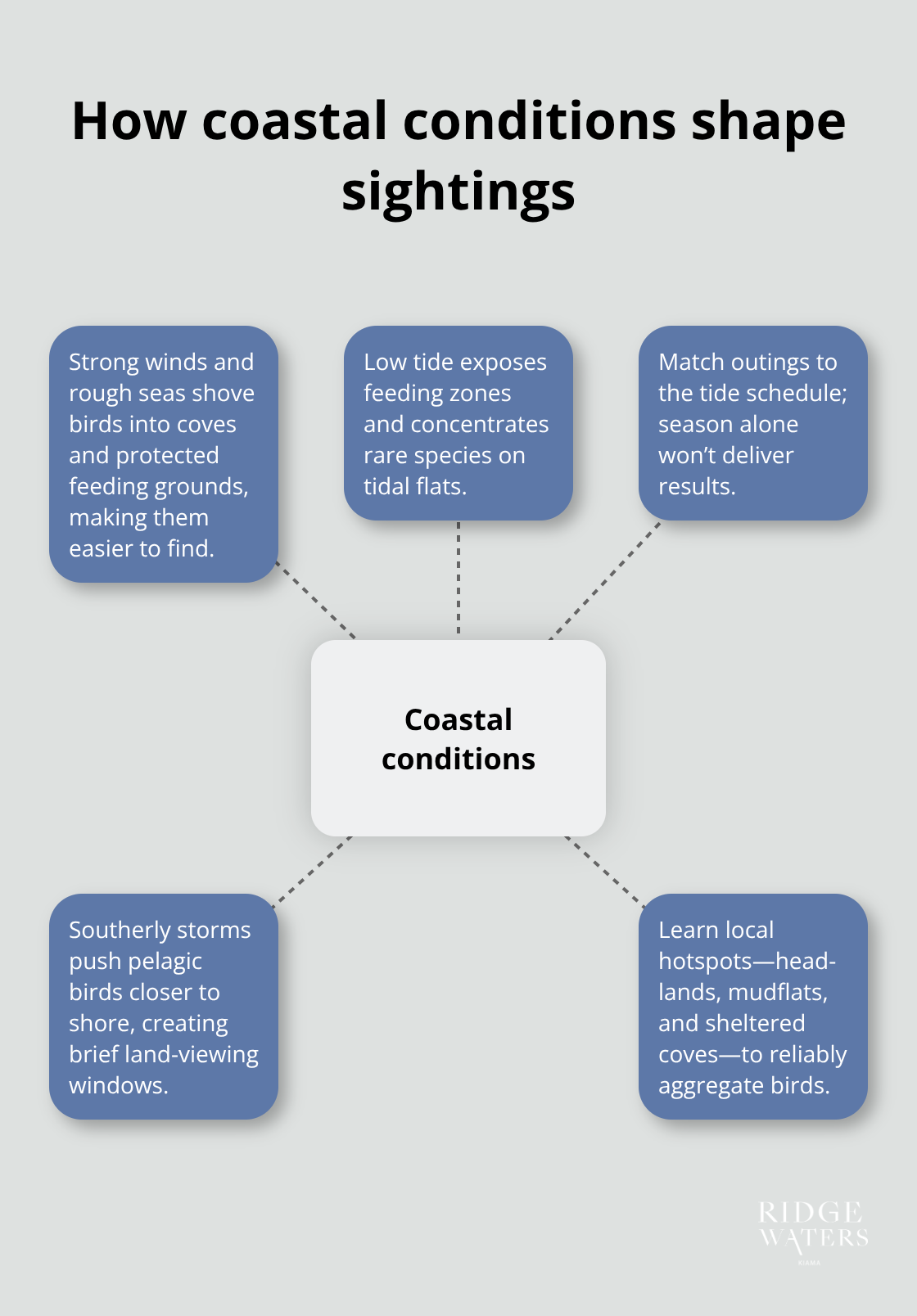
Storms from the south push pelagic birds closer to shore, creating temporary windows-sometimes only hours-when offshore species become visible from land. Last step: learn the local hotspots-the headlands, mudflats, and sheltered coves that reliably aggregate the birds. Get those nailed and the sightings follow.
Where to Look and When to Show Up
Headlands and Coastal Vantage Points
The headlands around Kiama are non-negotiable viewing positions – you want elevation, full stop. From up high you get sight lines across feeding zones and migration corridors that ground-level watching simply misses. Coastal cliffs are not scenery; they’re hunting perches and nesting real estate – prime spots to catch rare species in the act. If your terrace at Ridgewaters Kiama faces the coast, consider it an asset (but don’t be smug) – height and angle aren’t aesthetic choices, they determine whether a bird is a headline or a footnote, visible or hidden behind dunes and scrub.
Timing Your Visits: Dawn and Dusk Windows
Dawn – 6 to 8 AM – is the money window. Birds feed after the night; the light is cleaner and the air hasn’t turned into a thermal soup or a human-mosaic of noise. Late afternoon, 4 to 6 PM, is a second act – fewer sightings than dawn, but still useful.
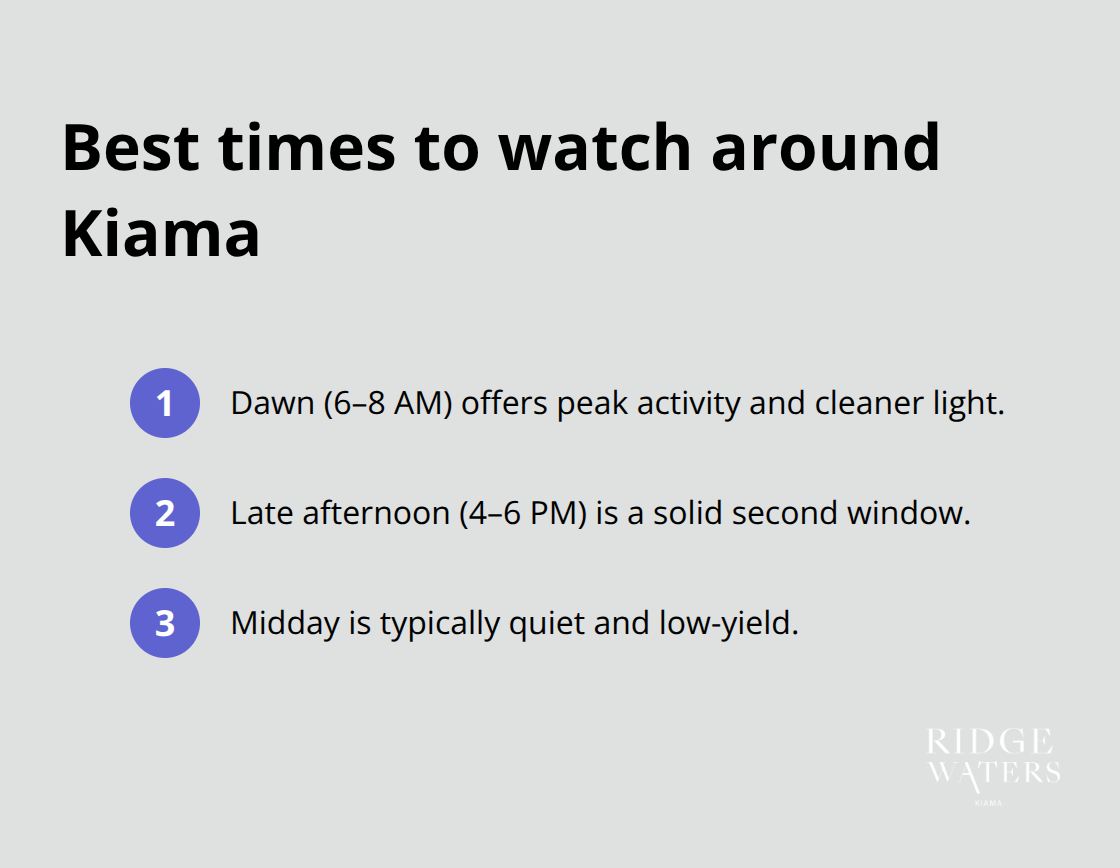
Midday is a waste of effort; birds tuck into shelter or nap, and your binoculars will mostly confirm disappointment. The difference between a productive morning and a quiet afternoon? Often the difference between spotting a rare species and seeing precisely nothing… which, yes, can sting.
Low Tide: The Hidden Feeding Ground
Mudflats around Kiama reveal themselves at low tide-check your local tide tables and plan outings around those windows. At low tide, feeding grounds are exposed and rare species get concentrated into visible zones – identification becomes a matter of attention rather than miracle optics. This isn’t theory; it’s ecology with a schedule. Tidal flats dump invertebrates and small fish onto the sand twice a day – show up then and you separate productive birding from wasted hours.
Seasonal Patterns and Weather Advantages
Late May through July is peak season for puffins if you’ve got access to breeding colonies with elevated views. Yellow-legged gulls are year-round, but their behaviour flips during breeding – spring and early summer are more entertaining. And here’s the counterintuitive bit: rough weather and strong southern winds are allies – they shove pelagic birds closer to shore, creating short windows when offshore species become land-viewable. Those windows last hours sometimes (not days) – so weather alerts are not optional. When conditions get ugly, birds compress into sheltered coves and protected feeding grounds instead of dispersing across open water. A storm day that empties beaches can be exceptional birdwatching if you pick the right vantage – coastal birding rewards the person willing to show up when everyone else flees to warmth and wifi.
Tools That Make the Difference
Binoculars and field guides turn blobs into species – they are the difference between a guess and confidence. An offline-capable app is a small, quiet godsend (signal and weather conspire against you on exposed headlands). Local birdwatching groups are invaluable – real-time sightings and hotspot tips compress a season of experience into a morning’s outing. Use them; they shortcut mistakes and elevate results.
Tools and Resources for Coastal Bird Identification
Binoculars: Your Primary Investment
Binoculars turn suspect smudges into species-non-negotiable. You want 8x to 10x magnification with an objective lens between 32mm and 42mm (written as 8×32 or 10×42). The 10×42 setup gives you crisper detail at distance-critical when you’re scanning headlands and tidal flats around Kiama and that rare bird is 50+ metres out, just sitting there like it owns the place. Cheap optics blur colour and crush detail-good luck telling a yellow-legged gull from a herring gull if your glass turns everything into grey mush.
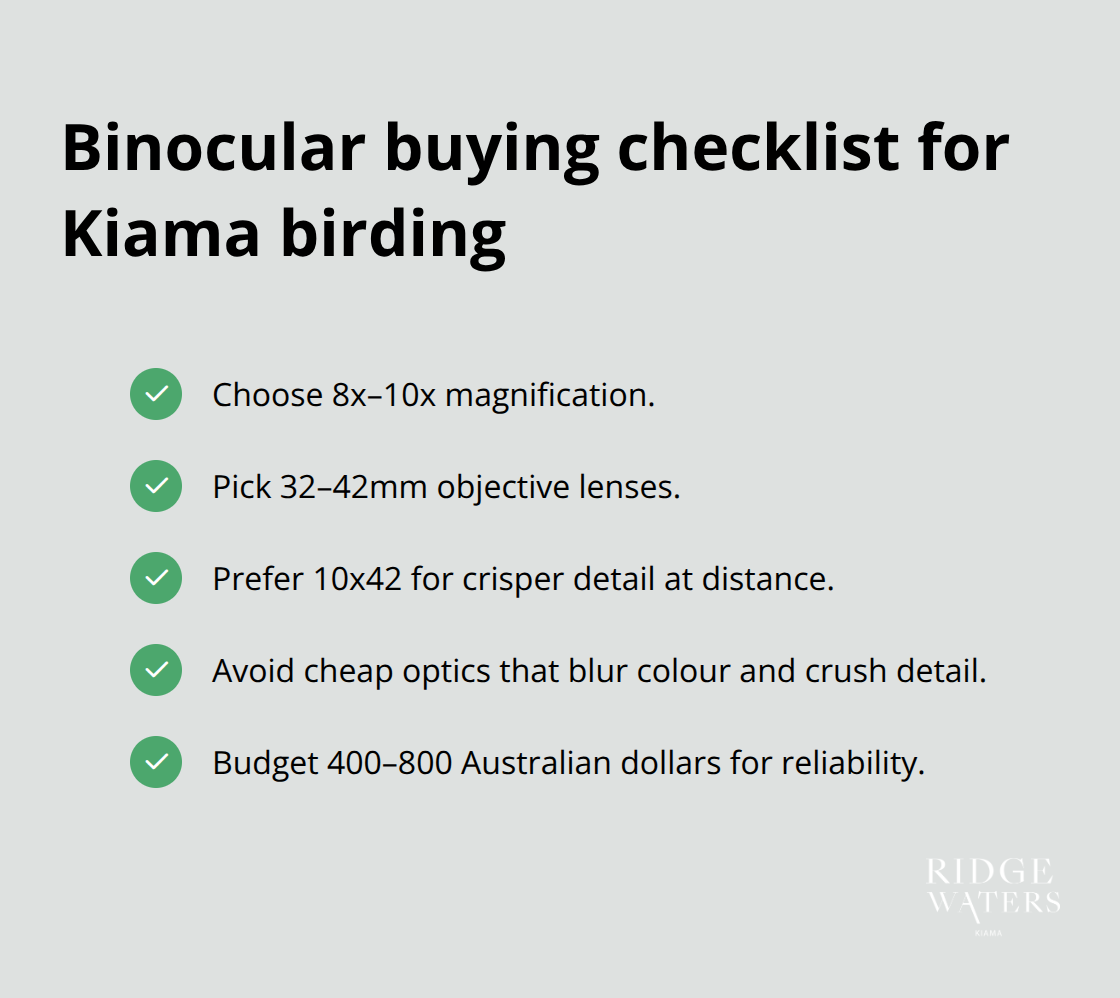
Budget for reliability: expect to spend 400 to 800 Australian dollars for binoculars that don’t make you angry after three outings.
Swarovski, Zeiss, Leica-those are the blue-chip names. Vortex and Nikon-solid value plays if your wallet is whispering “compromise.” A camera with a telephoto lens (at least 400mm) is useful for documentation and post-game analysis, but binoculars come first-real-time ID matters. You need to see the bird when it’s there, not discover it in your camera roll three days later.
Mobile Apps and Offline Resources
Apps matter more than field guides now-especially ones that work offline. eBird, from Cornell Lab of Ornithology, runs without signal and gives local species lists filtered by location and date-load Kiama’s coordinates before you leave the car. Merlin Bird ID (also Cornell) does sound recognition and photo ID…and it accelerates the learning curve in a way that’s borderline unfair. Neither app is perfect, but both beat guessing-and both beat lugging a soggy, wind-whipped field guide across a headland.
Local Birdwatching Networks
Local birding groups on the South Coast are worth more than any single piece of gear-they deliver real-time sighting alerts and hotspot intelligence that compress months of mistake-driven learning into actionable tips. Check the Shoalhaven Birdwatchers or similar regional chapters; join their WhatsApp groups or email lists. Members post rare sightings within hours, which buys you a 24–48 hour window to chase them. That’s the difference between seeing a roseate spoonbill (normally a Florida/Texas bird, but turned up as far north as Pennsylvania and Washington, D.C. in recent years) and missing it because you slept in. The folks who find rare birds first aren’t luckier-they’re networked.
Final Thoughts
Kiama’s coastal birds cycle like clockwork – some are anchors, some are seasonal showstoppers. Herring gulls and yellow-legged gulls stick around like bad habits; puffins show up for late spring and summer (they’re the festival guests); gannets patrol offshore like law enforcement; and every so often a southerly storm flushes rarer visitors into view. Your toolkit is almost criminally simple: 10×42 binoculars, an offline app like Merlin, and the willpower to be at dawn or low tide when birds actually do the things that make them identifiable.
A base at Ridgewaters Kiama puts you 90 minutes south of Sydney – direct access to headlands, tidal flats, and the neglected vantage points most people skip. Your terrace becomes an observation post – elevation plus proximity to feeding grounds separates casual snapshots from actual birding. You step outside and the coast delivers; you don’t spend half a day driving to earn a look.
Start. Right now. Grab the bins, download Merlin, and commit to three dawn sorties this month at a nearby headland or mudflat. Train the eye – yellow legs, dark backs, odd head patterns – and the ear (calls are the cheat codes). The rare birds aren’t secretive – they’re just patient. You show up; they show up. Simple, stubborn practice beats gear fetishism every time.