Most people don’t get it — Kiama’s tides carve out natural windows of beach access that you simply won’t find along the rest of the South Coast. It’s not subtle; it’s a geographic advantage.
The rhythm here at Ridgewaters Kiama shapes everything — from the only-times-you-can-safely-swim to the tempo of property appreciation. (Yes — timing the tide can be a lifestyle hack and an investment signal.) Understanding these patterns isn’t just about squeezing one more perfect beach day out of the weekend — it’s about unlocking genuine lifestyle and investment advantages that few coastal towns can match…if you bother to pay attention.
How Kiama’s Tides Work in Practise
Two Daily Cycles That Shape Beach Access
Kiama gets two highs and two lows every day – predictable, patient, and unforgiving. Those tides slide roughly 50 minutes later each day, which means your window to walk to Ridgewaters Beach moves like clockwork (but on island time). The Australian Bureau of Meteorology publishes Kiama-specific tide tables – use them.
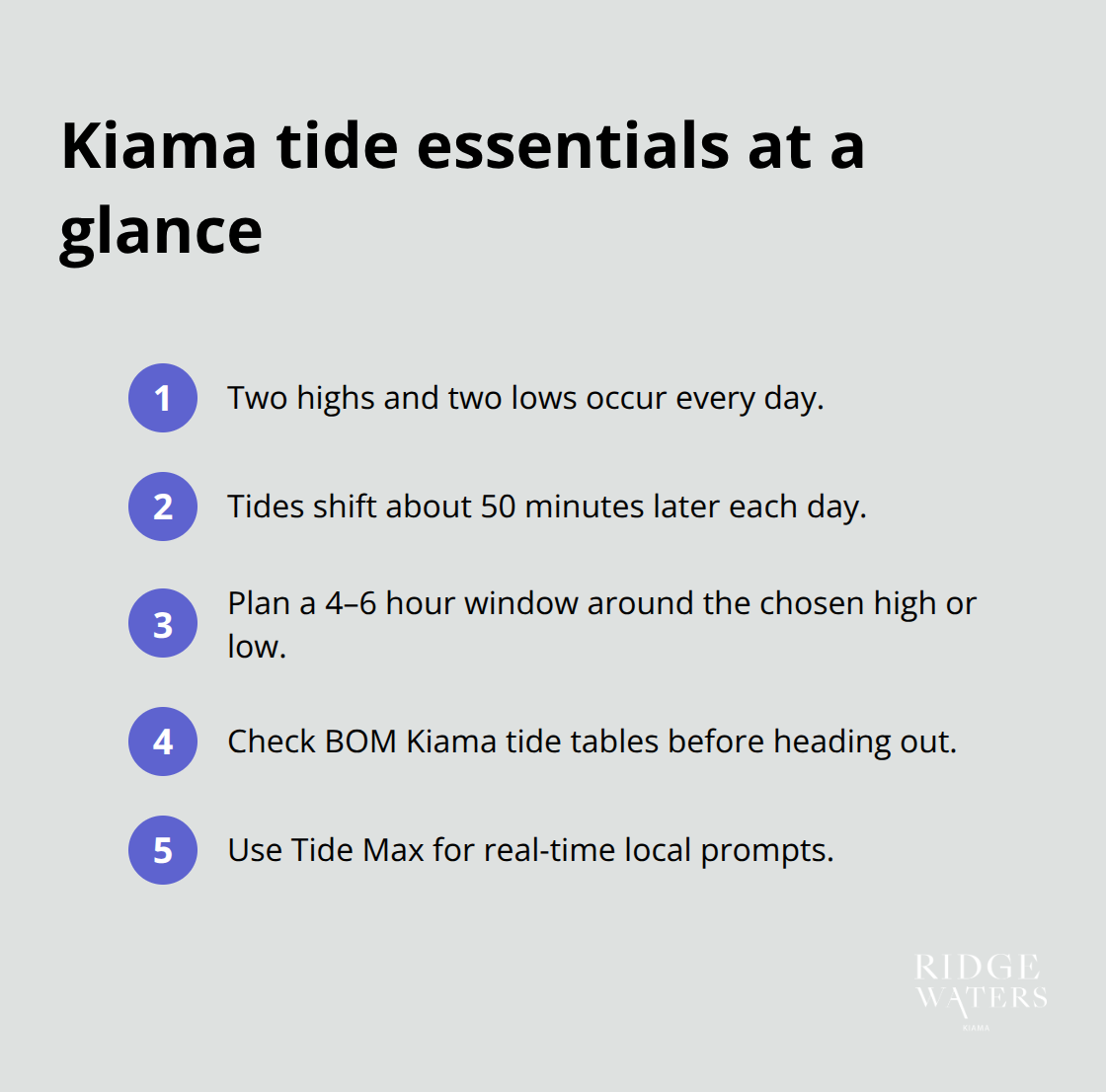
Apps like Tide Max give real-time nudges that factor local quirks. Plan about four to six hours centred on a high or low tide if you want to move safely between access points – otherwise you’re doing guesswork, and guesswork gets people stuck.
Spring and Neap Tides: The Monthly Swing
Full moon, new moon – spring tides crank the range up and suddenly miles of sand flats show up, opening routes you can’t touch on a neap week when the range squishes down. Mid-tide often hits the sweet spot – enough sand to walk, enough water for good photos. This isn’t a minor tweak – it changes which beaches are reachable from week to week. Learn the rhythm, and you stop being surprised.
How Tides Reshape the Beach Floor
The ridges and runnels you see on the sand aren’t decoration – they are the beach doing its job. The morphodynamics of Kiama (look it up) mean the sand ridge and channel patterns change with each tidal exchange – which entry points stay stable and which turn into traps changes constantly. See the CSIRO coastal research for the nerdy detail. Cross‑shore currents spike during tidal transitions around rocks and channels, so Surf Life Saving NSW tells you to steer well clear of those zones when the tide is shifting fast.
Weather and Tides: A Dangerous Combination
Tide charts are necessary – weather makes them urgent. Check Bureau of Meteorology wind and swell forecasts before you head out – winds over 25 knots turn an easy stroll into a gamble, storms can drop sea temps by 3–5°C and send waves to 15–20 metres. King tides or storm surges will straight-up flood access routes, so watch NSW SES warnings in extreme conditions. Kiama’s tides and the weather don’t just coexist – they amplify each other, and that’s where things get dangerous.
Why Tidal Knowledge Matters for Your Visit
Tides aren’t a footnote – they’re the headline for safe access in Kiama. Ignore them and you’re not inconvenienced; you’re exposed to real risk. Master the cycles and you get the local edge: safer swims, better photos, and the peace of mind locals pay extra for (which, yes, is why some coastal properties trade at a premium). Time your visits and the beach becomes opportunity; misread the tide and it becomes trouble.
When to Hit the Water at Ridgewaters Kiama
Timing Low Tides for Maximum Sand Access
Low tides at Ridgewaters reveal sand flats that disappear entirely at high tide – timing here is not optional, it’s everything. The Bureau of Meteorology gives you tide heights, not just times – and that’s the detail most people ignore. A low tide of 0.3 metres versus 0.8 metres? That’s the difference between a wide, walkable sandplain and a glorified puddle.
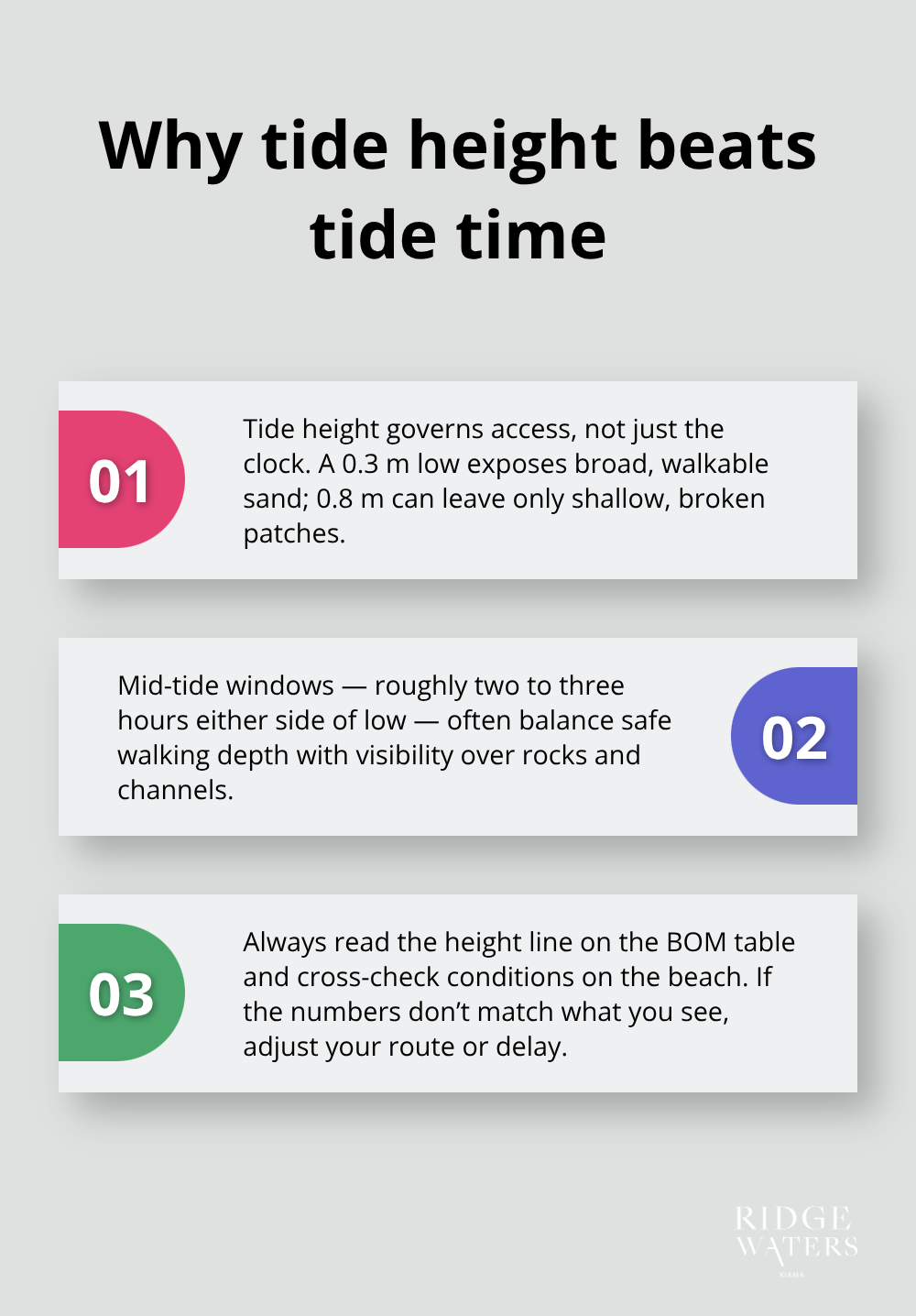
Check the height – not just the clock.
The sweet spot is mid-tide windows – roughly two to three hours on either side of the low – because you get the best of both worlds: enough sand to walk safely, enough water to avoid scraping your shins on rocks, and enough visibility to spot hazards before they spot you. Walk in blind and you pay with frustration (or worse).
Why Afternoon Sessions Beat Dawn Visits
Afternoons usually win – morning offshore winds can hide dangerous undertows, while afternoon sea breezes tend to calm things and weaken rip currents. Swim between the red and yellow flags – those are the lifeguarded zones and the folks on the sand are watching the water constantly. Rip currents aren’t theatre; they’re the lead hazard on Kiama beaches (Surf Life Saving Australia says so).
Spring tides – full and new moons – open massive sand flats and expand safe access windows. Neap tides (quarter moons) do the opposite – they squeeze your options. If you want the good stuff, plan spring tide visits weeks ahead – the routes the flats create simply don’t exist in neap weeks.
Avoiding Crowds and Finding Optimal Conditions
Kiama is 90 minutes south of Sydney – it fills up fast on weekends. Hit the water in shoulder hours – late morning or late afternoon on weekdays, or very early on weekend mornings – and you’ll find better conditions and fewer people hogging the safe entry points. Use BeachSafe Australia for real-time conditions and to locate the nearest patrolled beaches before you go.
Winter? Cooler water (15–17°C vs. 22–24°C in summer), more rain, stronger storms, and shorter daylight – but you still get access. It just compresses the window and raises the bar on planning and respect for conditions.
Reading Weather Forecasts Before You Go
Kiama’s weather flips fast – storms can drop sea temperature 3–5°C and whip up 15–20 metre waves in hours. Bureau of Meteorology wind forecasts are not suggestions. Winds over 25 knots are a hard caution; above that, rethink the plan. Storm surge warnings from NSW SES are more consequential than tide charts during extremes – king tides plus surge will flood access routes.
Year-round access at Kiama is real – but it requires respect for seasonal shifts and the willingness to adapt rather than fight the conditions. Once you’ve got timing down, the next skill is knowing which entry points hold during which tidal phases – and how to spot the safe routes before you step onto the sand. Simple, actionable, and worth the effort.
How to Plan Your Visits Using Tidal Data
Start with the Bureau of Meteorology Tide Tables
Every sensible beach day starts where the facts live – the Australian Bureau of Meteorology’s daily tide tables for Kiama. Open the BOM charts, note the precise times and heights for your day, then give yourself a four-to-six hour buffer around the high or low tide you care about – depending on which access points you’ll be using. Download Tide Max (it syncs with BOM live updates) and get notifications when conditions shift-way better than babysitting a printed chart every hour. Most folks wing it and either end up marooned on sand or sprinting back when the water steals their route; the planners get the long window, the safe entry, and that calm certainty that says: I know when the beach opens and closes.
Capitalise on Spring Tides for Maximum Access
Want premium beach real estate? Mark full and new moons on your calendar – spring tides push usable sand out by metres and reveal routes that disappear during neap weeks. Plan three months ahead if you want the best windows. Aim for mid-tide timing – roughly two to three hours either side of low – and you hit the practical sweet spot: plenty of exposed sand to walk, enough water to avoid shin-scraping rocks, and daylight buffer if the weather gets ornery. Kiama’s coastline is alive – sand ridges and channels shift with each tidal exchange – so those mid-tide windows usually deliver the most stable entry across different weeks.
Choose Afternoon Sessions Over Morning Visits
Pick afternoons – most of the time they beat mornings. Morning offshore winds can hide dangerous undertows; afternoon sea breezes tend to calm the surface and weaken rip currents (BOM wind patterns say so). Rips are the primary hazard at Kiama and account for a large share of drownings (see Surf Life Saving Australia), so schedule when the conditions naturally suppress them instead of fighting peak rip season. Check BOM wind forecasts before you go-winds above 25 knots are a hard caution threshold. Don’t be proud; move your visit.
Monitor Weather Warnings and Seasonal Shifts
When NSW SES throws a storm-surge warning, tide charts become decorative – king tides plus surge will flood access routes entirely. Use BeachSafe Australia for real-time conditions and to find the nearest patrolled beaches, especially if you’re testing an unfamiliar entry. Winter compresses your window – colder water, less daylight, nastier storms – but it doesn’t mean you can’t get out there. It means you adapt, respect the season, and plan smarter.
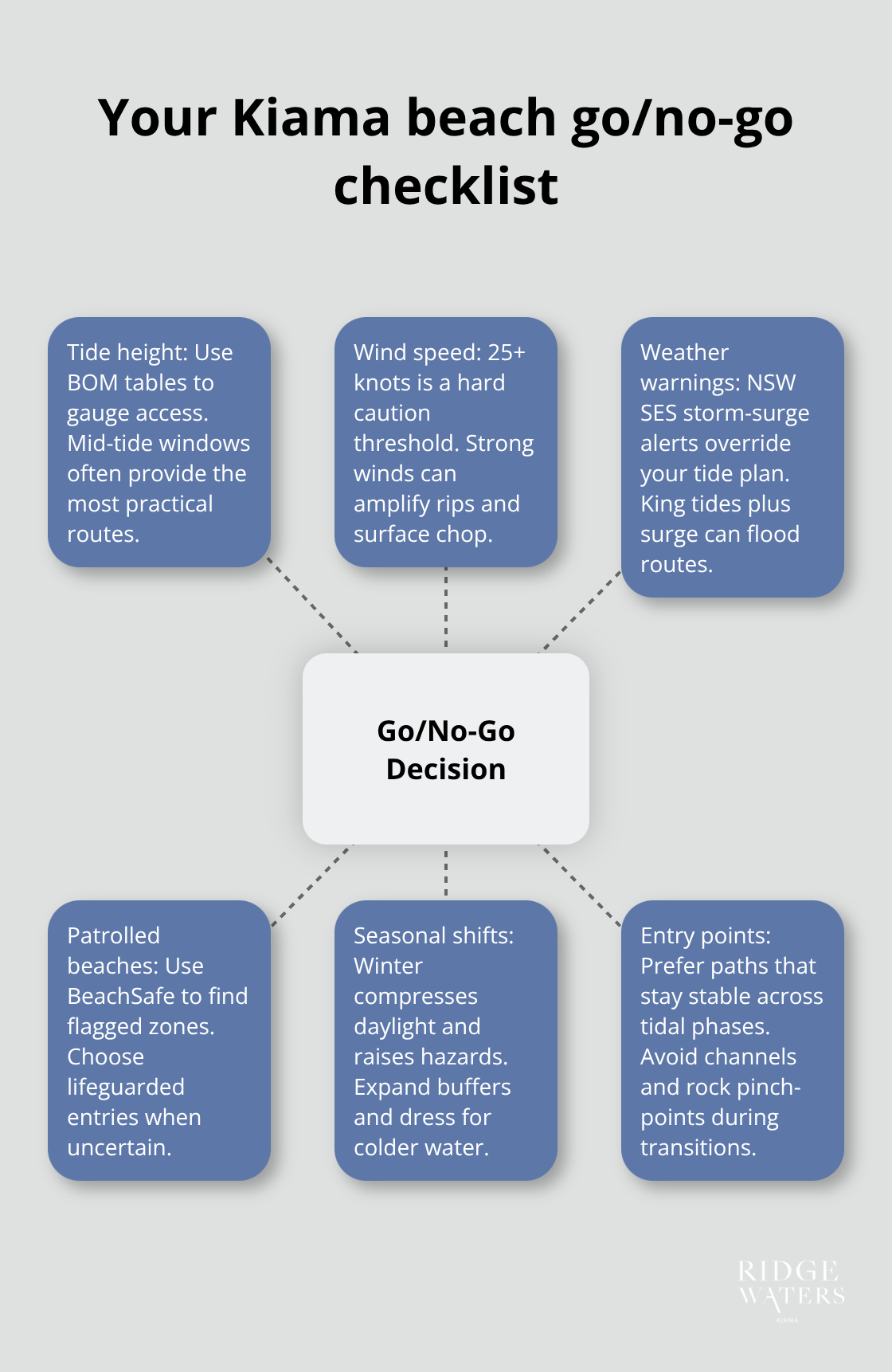
Combine the three inputs – tide height, wind speed, weather warnings – into a single go/no-go decision before you leave the house. Simple, pragmatic, and it saves both time and ego.
Final Thoughts
Kiama’s tides aren’t charming – they’re an advantage. Measurable. Predictable. Repeatable. Most coastal towns give you a beach. Kiama gives you four distinct windows every 24 hours – and during spring tides, metres of exposed sand that turn access from luck into a schedule. That matters when you’re setting a life, not just booking a weekend.
Property values have already priced that truth. Folks who learn the rhythm here get a real edge: safer swims, better launch times for kayaking or surfing, and the kind of local fluency that makes everyday decisions trivial. That compounding knowledge shapes behaviour – where people walk, when they surf, how they choose a home. Ridgewaters Kiama sits at the centre of that advantage, offering contemporary apartments for residents and visitors who want to live (or holiday) intentionally.
For investors, the tidal story is simple – it’s demand. Holidaymakers select coastal stays based on access and safety – and Kiama delivers both. Units that align with prime tidal windows command premium rates. Ridgewaters Kiama’s location and design – luxury apartments, secure parking, private lift access – provide the infrastructure short-term renters expect (and pay extra for).
Look, this isn’t just coastal romance. It’s an operational advantage – predictable windows that turn a coastline into a lifestyle product and a vacation commodity. Explore Ridgewaters Kiama and put yourself at the centre of Kiama’s tidal advantage.