
So, here’s the lowdown on bird watching in Kiama—absolutely spectacular. We’re talking the crème de la crème of avian encounters along Australia’s gorgeous South Coast. Imagine spotting over 200 bird species—yes, you heard right—from the dazzling Rainbow Lorikeets to the imposing White-bellied Sea Eagles.
The folks at Ridgewaters Kiama? They’ve got the inside scoop. They’ve seen, up close and personal, how this coastal gem delivers access to a mind-blowing array of habitats where rare species strut their stuff. Picture this: You’re sipping your morning coffee, and just like that… a Superb Lyrebird starts its jaw-dropping mimicry show. Unbelievable.
Where Should You Start Your Kiama Birdwatching Adventure?
Kiama Coastal Walk Delivers Epic Ocean Bird Encounters
This walk… oh, it’s a stunner. Stretching 22 kilometres from Kiama to Gerringong, but let’s zero in on the sweet spot-the 2-kilometre stretch around Kiama Headland Reserve. This place is a raptor’s paradise; White-bellied Sea Eagles doing their thing, gliding high up-50 to 100 metres, while those Peregrine Falcons are on a mission, diving at jaw-dropping speeds, like 300 kilometres per hour fast. From up here-80 metres above sea level-you’ve got a front-row seat to Mother Nature’s air show. Trust me, hit the path between 6:30-8:30 AM when the thermals are just right and these aerial hunters are at their peak.

Minnamurra Rainforest Centre Hosts Rare Lyrebird Performances
Welcome to the soundscape of Minnamurra Rainforest Centre in Budderoo National Park. Over 150 bird species, but the reigning champions? Those Superb Lyrebirds. Masters of mimicry-they belt out complex tunes from May to August. The fellows can churn out up to 20 different bird calls in just one show. You’re literally walking through a symphony on that 1.6-kilometre elevated walkway-at canopy level-where Eastern Whipbirds and King Parrots are brunching. Be an early bird yourself; get there by 7:00 AM, temperature around a crisp 12-15 degrees, just when the avian antics hit their peak-before the tourist traffic jam.
Seven Mile Beach National Park Attracts Seasonal Migrants
And at Seven Mile Beach National Park, we’re talking migratory madness. Between September and November, it’s like the grand bird migration highway. Over 30 species of shorebirds descend from the Arctic-Red Knots, Bar-tailed Godwits, the whole gang-clocking in at 11,000 kilometres non-stop. It’s a veritable bird-o-rama, with the wetlands teeming with 2,000+ birds when migration peaks. Stake your claim at the northern end of the beach, right there by Crooked River mouth. That’s where fresh meets saltwater, creating the buffet these long-haul travellers need after their epic flight.
These spots offer the perfect avian extravaganza-but timing your visit and packing right? That’s your ticket to success.
Which Rare Birds Make Kiama a Birdwatcher’s Dream
Kiama’s got this coastal vibe that’s just spot-on for Australia’s feathered celebrities. Picture this-Rainbow Lorikeets roll in with huge flocks, like 50-100 strong, turning the sky into a moving masterpiece from August to October. It’s eucalyptus season, folks, and their vibrant greens and oranges make a killer contrast with the ocean backdrop… This is the kind of stuff that makes an Instagram post go viral. Now, those King Parrots? They’re all about chilling in fig trees near Kiama’s homes, and if you’re up at the crack of dawn (between 6:30 and 7:30 AM), you’ll see them flaunting their red and green outfits. They hang out in smaller squads of 8-15-a perfect photo op!
Ocean Predators Rule Kiama’s Coastal Thermals
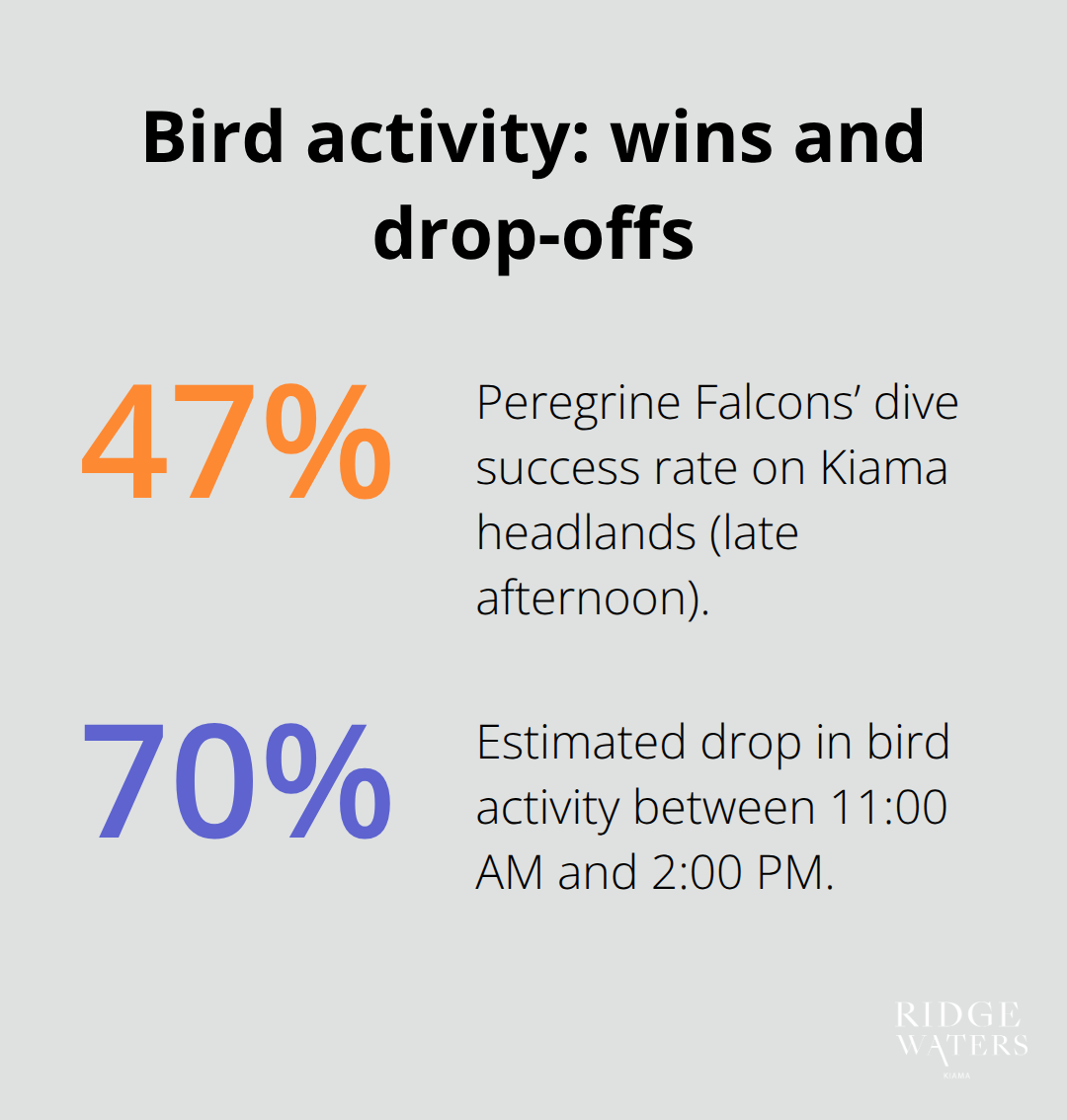
Enter the White-bellied Sea Eagles-the kings of the Kiama skies. These guys have wingspans that deserve their own fan club, soaring between 80-120 metres above the coast. Talk about committed relationships… These eagles nest in the same prime spots year after year from May to September. Meanwhile, Peregrine Falcons? They’re the F1 racers of the bird world. Stationed on headland rocks, diving with a 47% success rate, they own the 4:30-6:00 PM slot.
Coastal winds make their dives legendary (and worth a watch).
Rainforest Acoustics Stars Perform Year-Round
And what’s a rainforest without the Superb Lyrebirds? Kiama’s hinterland becomes a stage, and these guys are the headliners. They claim Budderoo National Park with territories stretching up to 2.5 hectares. Their mimic game is next level, pulling sounds from 35 species (and yes, even power tools and camera clicks… go figure). Then there’s the Eastern Whipbirds, whipping through the cooler months from April to August. Their whip-crack calls pierce the air, carrying like a gossip through dense rainforest-200 metres, folks (easier to hear than to see).
Bottom line? Nail your timing, prep like a pro-and you’re in for a birdwatching show you’ll be talking about for ages.
When Should You Time Your Kiama Birdwatching Expeditions
Peak Activity Windows Maximize Bird Encounters
Let’s talk timing. Your best bet? That magical 6:00-8:00 AM window. It’s like a nature documentary in real-time. Why? The temperature hangs around 14-18 degrees Celsius-just perfect for birds to get their morning stretch (before we’re all bumbling around). You’ve got White-bellied Sea Eagles up there, setting up their hunting routines by 6:30 AM, thanks to those coastal thermals. And if mornings aren’t your thing, the late afternoon-4:30-6:30 PM-is all about catching Peregrine Falcons turning dives into art during that golden hour. Midday? Forget it. Between 11:00 AM and 2:00 PM, you’d probably see tumbleweeds. Birds are hiding from the sun-activity nosedives by 70%.
Essential Gear Makes the Difference
Want to spot something more than a speck in the sky? Pack those 8×42 binoculars (seriously, any less and you’re just guessing). And ditch your phone app for a weatherproof notebook-it’s the real MVP when those 25 km/h coastal winds start showing off. Layer up because coastal climates love to surprise-swinging 8-12 degrees from dawn to dusk. And on your feet? Sturdy shoes with a good grip over designer boots, every time. Seven Mile Beach sand loves a good shift, and trust me, Minnamurra’s elevated walkways get slicker than a used car salesman when the rain hits (looking at you, winter months).
Migration Patterns Transform Your Success Rate
Thinking of upping your birdwatching game? September through November is your wild card. Kiama becomes the red carpet for migration. Bar-tailed Godwits take the early slot in September, then boom-Red Knots crash the party mid-month. You’re looking at 2,000+ shorebirds crowding Seven Mile Beach wetlands in October’s second week (thanks, BirdLife Australia, for that nugget). But December to February? Nope. Heat drags down bird activity, and tourists-yeah, they’re everywhere. The sweet spot? May to August. Solid as a rock for spotting resident species, especially Superb Lyrebirds.

Those cooler, still mornings? Perfect for their calls to echo at prime time (minimal wind interference).
Final Thoughts
So, Kiama bird watching-it’s not just a hobby, folks; it becomes an obsession once you dive into those 200+ species flitting around coastal and rainforest habitats. Seriously, the numbers here are insane: more than 2,000 migratory shorebirds chilling at Seven Mile Beach. And then, oh, the Superb Lyrebirds? They pull off the most impressive mimicry magic by imitating 35 species. Throw in White-bellied Sea Eagles casually soaring 120 metres up, and you’ve got experiences that stick with you for decades.
At Ridgewaters Kiama, we get it-nature’s grip is strong here. It’s all about location, baby… 90 minutes south of Sydney, where the coastal thermals and rainforest vibes collide. Imagine waking up to King Parrots right at your window, then strolling just minutes away to catch rare species in their natural performances.
And let’s talk about redefining your morning coffee ritual-sure beats the usual. Picture this: Peregrine Falcons making those epic 300 km/h dives just beyond your balcony. That’s some high-quality natural entertainment! Whether you’re after a forever home by the coast, a quick escape, or a smart investment with Ridgewaters Kiama, you’re placing yourself right in the heart of Australia’s birding epicentre. This isn’t just accommodation-it’s your ticket to Kiama’s legendary community of bird lovers.