
Ocean views, walking paths, the smell of salt…they’re not aesthetic accessories. They’re mechanics of calm — coastal meditation and quiet reflection folded into your routine so stillness stops being a luxury and becomes habit.
This isn’t whispery marketing — it’s architecture and landscaping doing what mindfulness apps promise but rarely deliver. Built-in stillness. Everyday life, reimagined.
Why Coastal Living Actually Works for Your Mental Health
The Science of Saltwater and Stress Relief
The science backs what coastal residents already know – living near the ocean measurably reduces stress. A 2019 study published in Frontiers in Psychology found that people living within 1 kilometre of the coast reported significantly better mental health outcomes than inland populations. Not mystical – straightforward biology.
Saltwater air carries negative ions that nudge serotonin levels upward, and serotonin is the brain’s palette-cleanser for mood regulation. Crack a window in Kiama and you get that benefit passively – no apps, no intention, just physics and geography doing the heavy lifting.
Natural Light and Sleep Architecture
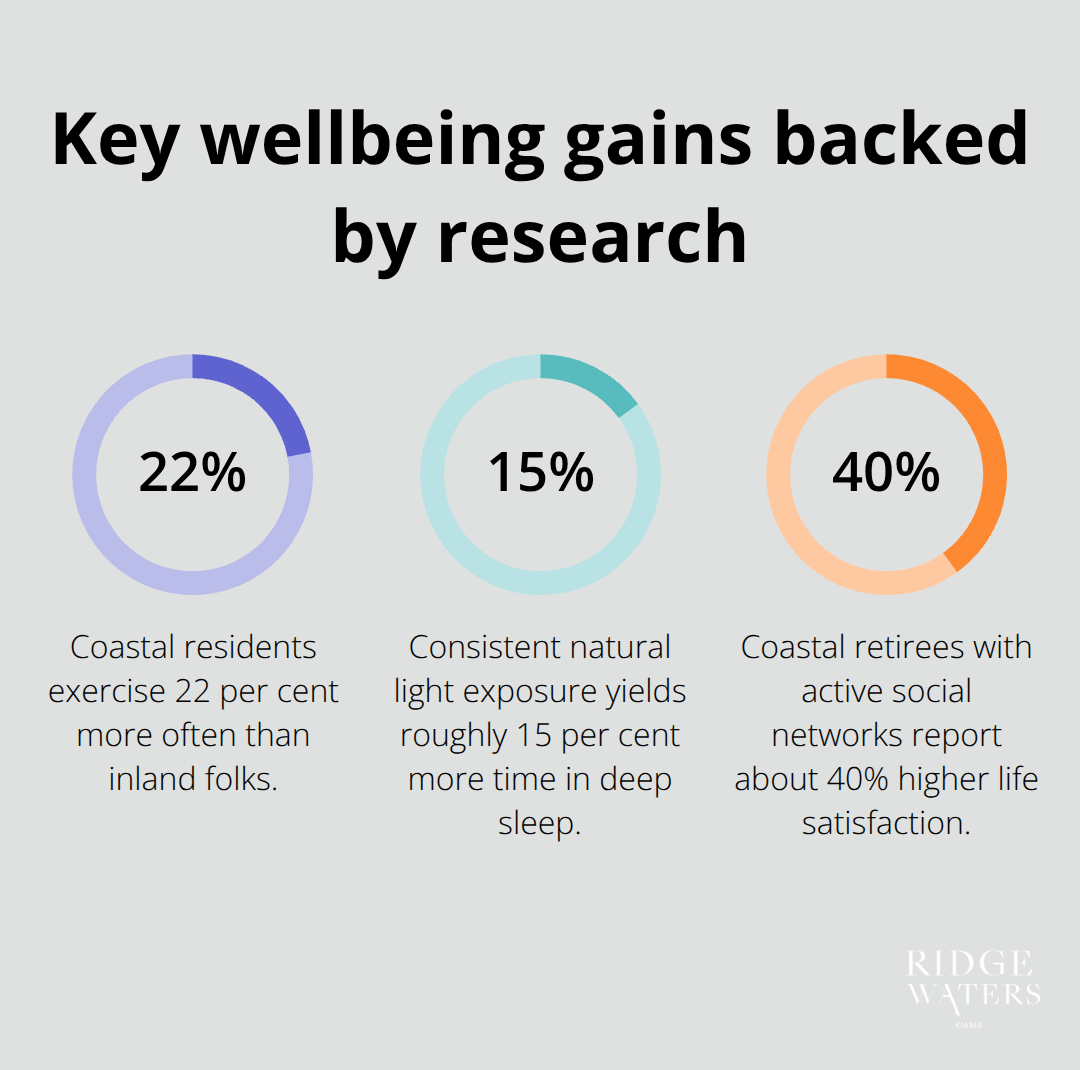
Natural light exposure synchronises your circadian rhythm with actual daylight rather than whatever artificial schedule your devices insist on. The result is dramatic: people with consistent natural light exposure fall asleep about 23 minutes faster and spend roughly 15 per cent more time in deep sleep. Translation – retirees and remote workers don’t just sleep more, they sleep better. Wake up refreshed, not foggy, and you sidestep the whole pharmacological treadmill of sleep aids and caffeine dependency.
Movement Without Friction
When the beach is five minutes away, exercise stops being a choice and becomes a consequence. A 2021 UK Active report found coastal residents exercise 22 per cent more often than inland folks – largely because water and sand remove the little obstacles that kill habits (the commute, the gym fee, the willpower tax). Walking on sand burns about 1.6 times more calories than pavement because your stabiliser muscles are in constant micro-fight – which is a delight if you like efficient, invisible effort. Kiama’s natural paths mean your daily movement is embedded in your environment – no membership, no guilt, just actual motion.
The Compounding Effect
Reduce stress hormones. Improve sleep architecture. Move more. Those three things don’t just stack – they compound. Meditation apps and supplements can help – sure – but they don’t redesign the world you live in. Here, your environment does the work for you. You’re not fighting against your setting; your setting fights stress for you. And that’s the real payoff – a foundation of restoration that makes having space to pause and think not a luxury, but a built-in feature of daily life.
Where Stillness Becomes Architecture
Intention Over Aesthetics
Calm is not a wallpaper – it’s an intention. At Ridgewaters Kiama, communal areas were sited to interrupt the daily cacophony, not amplify it. Quiet courtyards turn their backs on parking lots. Seating clusters look out over water and native scrub, not internal foot traffic. One study found people who spend time in thoughtfully designed outdoor spaces show measurable drops in cortisol levels comparable to meditation sessions – which means when you step into a space engineered for reflection, your nervous system answers the invitation within minutes.
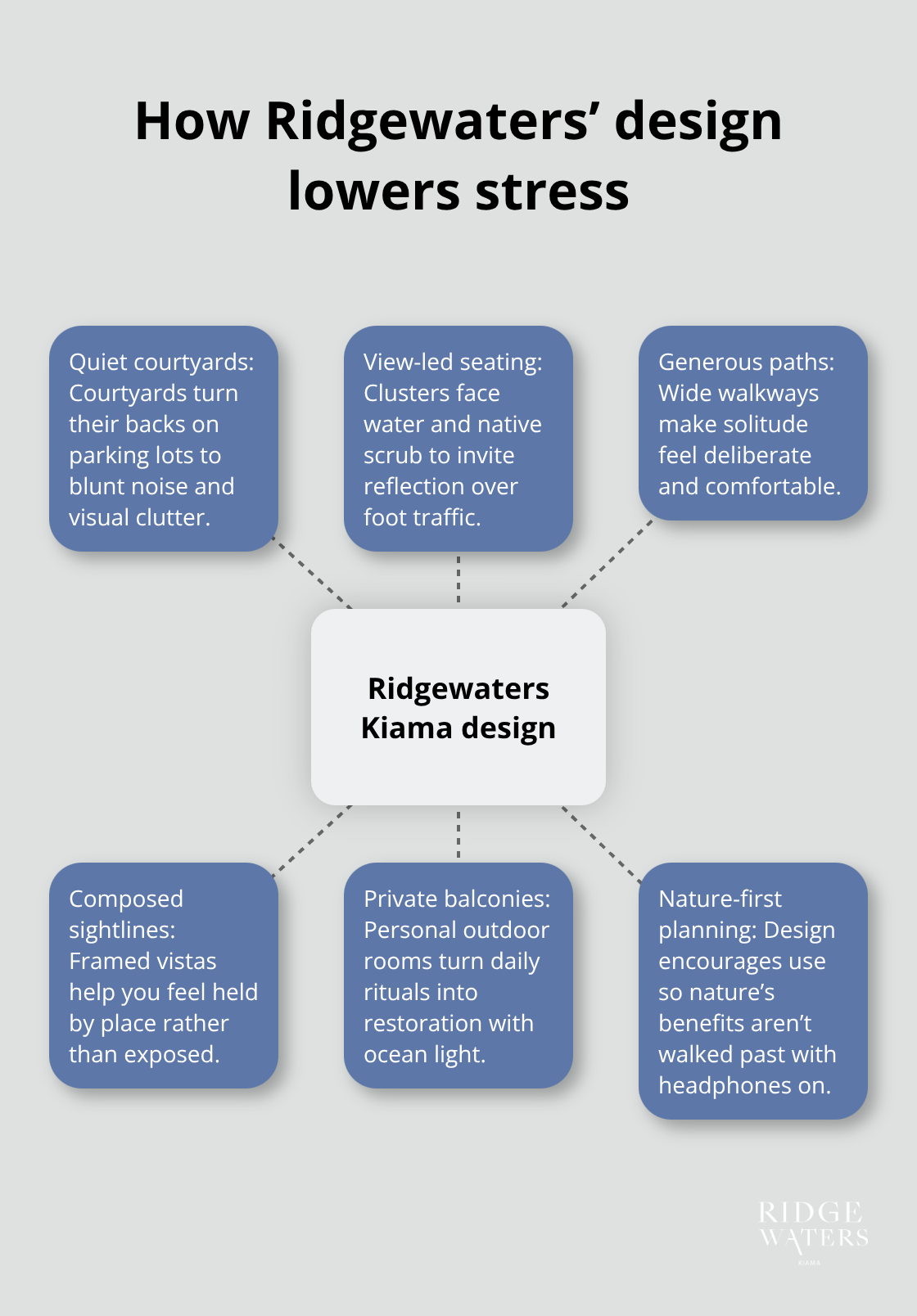
Nature does the heavy lifting; design decides whether residents use those gifts or walk past them with headphones on.
How Space Design Shapes Behaviour
The paths at Ridgewaters Kiama are generous – wide enough so solitude reads as deliberate, not lonely. Sightlines are composed so you feel held by place, not exposed. Why does that matter? Because poor design drives people away from the very spaces meant to soothe them. When elements are arranged with intention – seating height, plant placement, the angle of a view – residents move through with less friction and more purpose. You pause when the environment conspires to make pausing easy.
Private Balconies as Personal Restoration
A balcony is not a balcony – it’s a tiny clinic for the self. Private outdoor space is where ritual happens, where you control the variables. A balcony that opens to coastal vistas means morning coffee with ocean light – salt air on the cheap, no commute required. Research in the Cognitive Psychology Bulletin shows window views of natural elements reduce mental fatigue and restore focus in about 40 minutes of exposure. For remote workers or folks navigating retirement, this is not decoration. It’s built-in restoration – mundane, powerful, and repeated daily.
Movement With Purpose
Kiama’s walking network extends the restoration – not just a treadmill in the landscape, but paths that lead somewhere real. These trails connect to headlands, tidal edges, birdlife, variations in elevation – actual destinations. Movement with purpose rewires behaviour differently than looped exercise walking. When there’s somewhere worth going, people go – and they keep going, with less resistance. The coastline supplies tidal choreography, wildlife moments, and seasonal shifts in light that keep the view fresh rather than static.
The Foundation for What Comes Next
Those spaces – communal and private – do more than look good in a brochure. They create the conditions for depth. When your environment supports calm instead of battling it, you gain capacity for connection. That’s when community at Ridgewaters Kiama becomes more than proximity – it becomes something you actually feel.
Creating Your Personal Sanctuary at Ridgewaters Kiama
Interior Design That Cuts Through Mental Noise
Design that truly reduces stress fights clutter – it doesn’t camouflage it. Studies (and common sense) show that a minimalist environment calms the nervous system; your brain stops triaging stuff and starts doing the actual thinking. The Journal of Environmental Psychology found lower cortisol in people who enter tidy, pared-back rooms – measurable within 20 minutes. So: prioritises negative space over ornamentation. If an item doesn’t perform a function or anchor a real memory – toss it, tuck it away, or donate it. Paint walls in muted tones – soft greys, warm whites, pale blues – not screaming accent colours that demand attention. Clear surfaces. One study from the Princeton University Neuroscience Institute showed physical clutter competes for your brain’s attention resources – meaning focus frays and fatigue arrives early. Your bedroom should be a sleep chamber, not a storage unit. Temperature matters – research in Sleep Health Journal confirms the sweet spot is 60–67°F for deepest sleep. Kiama’s coast helps regulate swings, sure – but blackout curtains and a decent mattress matter more than most people think.
Making Coastal Access a Daily Habit
Coastal living is aspirational only if you actually show up for it. Too many residents treat balconies and walking paths as optional – nice-to-haves for good weather. That’s a waste. The 2023 Australian Psychological Society report found consistent outdoor exposure – even 15 minutes a day – beats sporadic, longer sessions at easing anxiety. Morning coffee on the balcony isn’t décor; it’s medicine – natural light that cues your circadian rhythm and suppresses cortisol for hours. Walk the same path at the same time each day – your nervous system learns the pattern and anticipates calm.
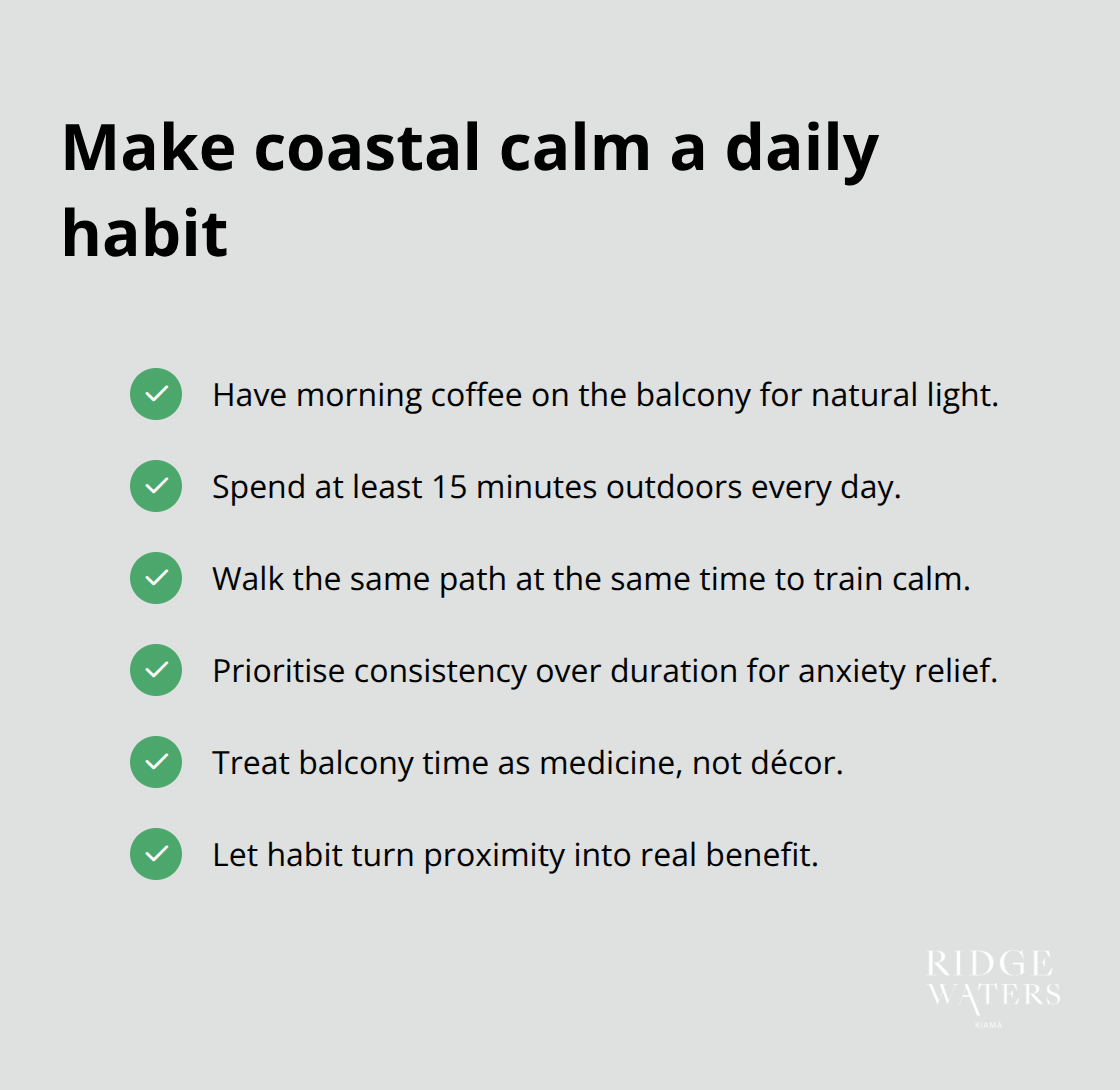
Consistency matters more than duration. Habit turns proximity into benefit.
Building Real Connections With Neighbours
Community won’t build itself. You can have the best architecture and the most convenient location – and still be lonely. Show up: attend communal gatherings, join beach walks, introduce yourself in shared spaces. It’s simple math – AARP research shows coastal retirees with active social networks report about 40% higher life satisfaction than equally situated but isolated residents. The difference isn’t design; it’s the willingness to be slightly vulnerable and consistently present. Proximity is the raw material – relationship is the work.
Final Thoughts
Ridgewaters Kiama offers luxury and serenity – without the usual sacrifice. Ninety minutes south of Sydney, the development delivers contemporary apartments for retirees chasing genuine restoration, families wanting space without chaos, and investors who read demand like it’s a headline. The short-term rental markets along the New South Wales coast have been ticking up consistently… and Kiama sits in that sweet spot – close enough for weekend traffic, far enough to feel like you actually left the city.
THe architecture is deliberate – not the same coastal cookie-cutter. Secure parking, private lift access, and contemporary lines mean you can live here without daily friction (yes, that matters). Communal spaces, walking paths, balconies oriented to the water – these aren’t afterthoughts; they’re the infrastructure of calm. People use apps and weekend retreats to chase this; here, it’s built into the address. Retirees find peers, proximity to nature, and a quiet that compounds; families find space, safety, and an outdoor life for kids that doesn’t require negotiation.
Investors see a growing coastal community with meaningful demand and constrained supply – a basic recipe. Visit Ridgewaters Kiama to explore your options – the stillness you’ve been reading about is available now.