
A good night’s sleep isn’t a luxury — it’s the foundation of a stay people actually remember. Guests arrive at Ridgewaters Kiama expecting comfort… and luxury linens are where that promise begins.
Bedding quality isn’t decorative — it’s determinative. It dictates whether guests return, whether they rave to friends (or don’t). We didn’t earn our reputation by accident — we earn it in those first, glorious seconds when someone sinks into bed and realises: this trip was worth it.
Why Sleep Quality Determines Guest Loyalty
The Data Behind Guest Satisfaction
Sleep quality ranks as the top factor guests mention in positive reviews. This isn’t random-sleep is the plumbing of hospitality. Travel 90 minutes south of Sydney to Ridgewaters Kiama and you show up tired, fuzzy-headed… one lie-down, one verdict. Guests don’t audit your amenity list-they feel your promise. That assessment? It’s immediate. Seconds, not hours.
The First Night Sets Everything
Premium bedding is the delivery of the promise you sold at booking. Cheap sheets, a sagging mattress, limp pillows-those things don’t annoy guests; they betray them. They don’t pore over thread counts or fabric science (who does?)-they feel disappointment and, fast, start scanning for Plan B. One bad night determines whether someone becomes a return customer or a competitor’s guest next time. That’s brutal-and true.
Premium Bedding Commands Real Revenue
Luxury properties charge 30–40% more at night because people believe they’ll sleep better there. That’s economics, not marketing fairy dust. Invest in real bedding and you don’t just get nicer reviews-you get measurable lifts in repeat bookings within a year. A restful night produces an advocate; a restless one produces a sceptic.

For destinations like Kiama-where word of mouth and repeat visits are currency-the math is simple: good sleep drives revenue, bad sleep destroys it. The gap between those outcomes? Largely bedding quality (and the room environment around it).
The specifics of creating those conditions require understanding what actually matters in your guest rooms.
What Actually Works in Your Guest Rooms
Fabric Quality and Thread Count Reality
Sleep quality-real sleep, the kind that makes guests feel human again-hinges on three things: fabric, support, and control. Thread count gets fetishised like it’s a magic number. It isn’t. Above 400 threads per inch you hit diminishing returns-what actually matters is fibre quality.
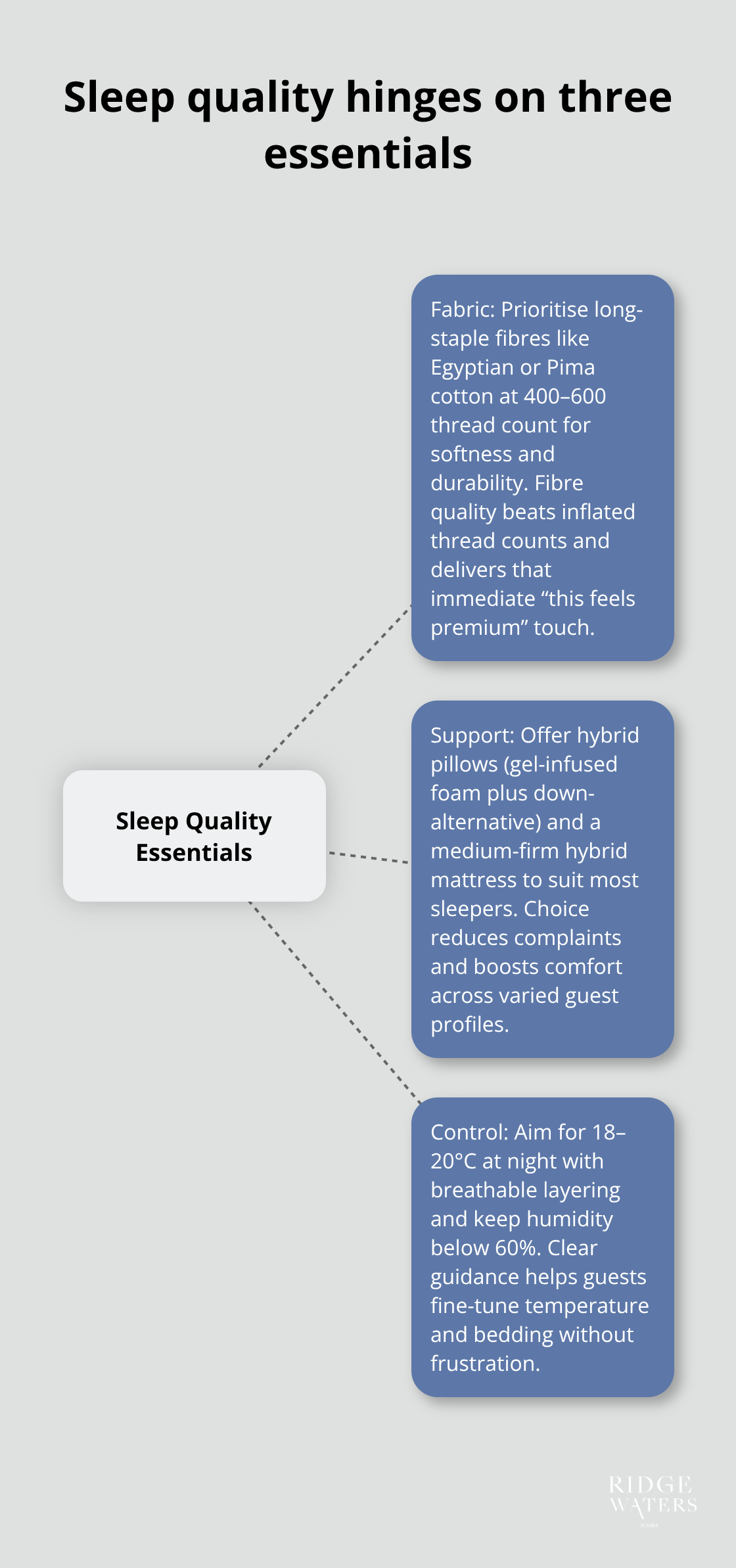
Egyptian cotton or Pima cotton at 400–600 thread count will beat a 1,200-thread-count polyester flex every time. Why? Long fibres equal softness and durability. They make fabric smooth, resist pilling, and give guests that “this feels expensive” micro-second when they touch the sheet.
Pillowcases deserve a separate PSA. Microfibre feels like a plastic bag and traps heat-instant regret for anyone who moves in their sleep. Cotton at 300+ thread count breathes, feels luxe, and sells an attention-to-detail story without shouting. Change pillowcases every two days during stays-tiny effort, huge perceptual ROI.
Pillow and Mattress Selection
Pillows are not one-size-fits-all. Memory foam is great for some-but it’s a sweat trap in warmer months. The winner: hybrid pillows-gel-infused foam plus a down-alternative layer. Guests get options (and options beat ideology). Flexibility here is the feature-not a single “perfect” pillow.
Mattresses? Know your guests. For a place with mixed traffic-families, retirees, couples-a medium-firm hybrid is the Swiss Army knife: comfortable for most, offensive to few. Avoid extremes-ultra-soft or rock-solid mattresses alienate half your guests. And think lifecycle: quality mattresses last 8–10 years before sag becomes a complaint; cheap ones start asking for trouble in 4–5. Replacement costs plus bad reviews add up fast.
Temperature Control and Layering Strategy
Temperature control separates rooms people tolerate from rooms people crave. Coastal climates mean humidity swings-most properties ignore layering and lose points. Start with a breathable cotton base sheet, add a mid-weight duvet for shoulder seasons, and keep a lightweight summer cover on hand-not one monster blanket guests have to wrestle. Guests prefer to tweak layers, not fight a thermostat.
Set AC to 65–68°F (18–20°C) for sleep-good default. But give guests a clear, simple card on how to adjust both temperature and bedding. Humidity is the silent saboteur: above 60% sleep quality drops and dust mites throw a party. A small dehumidifier in larger suites costs $150–300 and pays back through comfort and repeat bookings.
The Investment That Drives Returns
Spend more where it matters-quality sheets, hybrid support pillows, the right mattress, layering options, and humidity control. Expect to pay roughly 40–60% more than the cheapest alternatives. Sound steep? It’s not when you track review scores and return bookings. Better sleep equals better reviews equals more bookings. Simple chain reaction.
Those first-night impressions-sheets that feel right, a pillow that doesn’t betray you, temperature you can control-set the stage. What guests do after that (explore the property, recommend it, come back) depends on that foundational comfort. Get the basics right and you don’t just get a one-night stay-you get repeat customers.
How Premium Bedding Drives Bookings and Revenue
Sleep Quality Commands Premium Pricing
Sleep quality ranks at the top of guest review priorities – and that simple fact translates directly into pricing power and occupancy. Properties with consistently high sleep-quality ratings don’t just look nicer on paper; they command premium pricing versus competitors whose bedding is an afterthought. This isn’t cosmetic markup – guests will pay more when they genuinely believe they’ll rest. At Ridgewaters Kiama, where short-term rentals and Airbnb bookings sit alongside permanent residency, this shows up in real time. Sleep poorly – you get a 3-star review and the guest goes elsewhere next trip. Sleep well – 5-star review, repeat booking inside 12 months, friend referrals. The difference? Pillows that actually support your head and sheets that don’t feel like sandpaper.
How Hotels Recovered Revenue Through Bedding Investment
Hotels that moved-decisively-on bedding upgrades in 2023–2024 saw repeat bookings climb inside a year. That’s operational reality, not marketing spin. The mechanism is boringly straightforward: comfortable sleep creates positive online reviews; positive reviews attract new guests; those guests become repeat customers when reality matches the promise. Rinse and repeat.
Repeat Bookings Outpace Price Increases
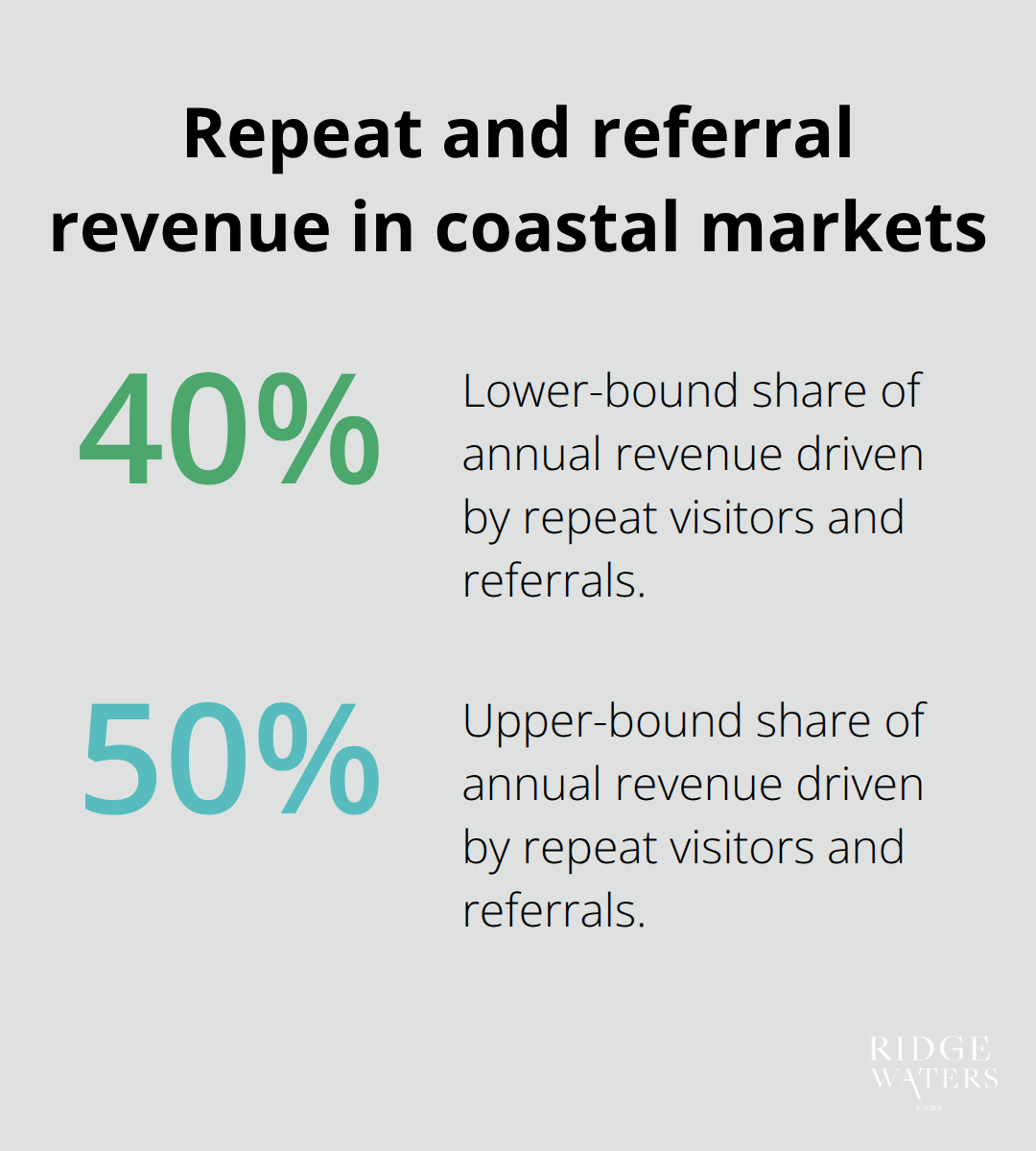
Want faster revenue lift? Focus on repeat bookings – not just raising rates. A first-time guest might tolerate mediocre bedding and file a neutral review. A returning guest expects improvement – and premium bedding signals you listened. Coastal markets like Kiama – where holidaymakers dominate – often pull 40–50% of annual revenue from repeat visitors and referrals.
Cheap bedding corrodes that pipeline. Premium sheets, proper mattresses, and good temperature control? They turn once-in-a-lifers into regulars who book multiple times per year instead of every two years.
The Financial Payback Timeline
The math stacks: one satisfied guest becomes three bookings, which become five referrals – compounding revenue. Spend $2,000–3,000 per apartment on quality bedding and you typically recoup that through incremental bookings within 8–14 months (variables: occupancy, seasonality, local demand). After that you’re not just covering cost – you’re improving margin. Beachside properties already get repeat traffic; premium bedding removes the smallest friction that prevents those guests from returning. Simple, effective, and cheap insurance against disappearing revenue.
Final Thoughts
Premium bedding – boring to shop for, holy-crucial for the business – is the reason guests come back to Ridgewaters Kiama. Sleep quality drives reviews. Reviews drive bookings. Bookings drive revenue. It’s a chain reaction that’s not theoretical – it’s measurable and merciless.
When someone arrives at our luxury apartments after a 90-minute drive south of Sydney, the first night is decisive. One great night and they’re a repeat guest; one mediocre night and they’re a one-off (and they’ll tell three friends). Luxury linens and proper mattress support aren’t décor – they’re balance-sheet moves. They pay back in months, not years.
Guests pay for a coastal retreat – not just four walls and a key. They want a serene beachside lifestyle with access to nature, plus simple conveniences (secure parking, private lift access). Deliver that through thoughtful bedding choices and attention to the sleep environment, and you don’t just meet expectations – you fortify your reputation as a place people recommend.
The math is clean: one satisfied guest becomes three bookings; three bookings become five referrals. Upgrade the linens and mattresses – prices that guests will happily absorb – and the investment recoups through repeat business and higher nightly rates. Short-term cost, long-term moat.
Visit Ridgewaters Kiama to see how superior bedding sits at the centre of the product – not off to the side. It’s central to the brand, to the experience, to the economics.