
Coastal gardens at Ridgewaters Kiama face unique challenges that most inland properties never encounter — salt spray that corrodes, sandy soil that drains ambition (and nutrients), and winds that don’t bother with subtlety. These are not minor nuisances; they demand a different approach to landscaping than the conventional, cookie‑cutter garden playbook.
The right coastal flora transforms those obstacles into advantages — literally. Pick species that laugh at salt, sink roots into sand, and hold their ground in gale-force moods. Learn how to select plants that thrive in our South Coast environment and design gardens that stay beautiful year‑round (low maintenance, maximum kerb swagger).
What Makes Kiama’s Coastal Environment So Demanding for Gardens
Salt Spray and Soil Salinity
Salt spray slams Kiama’s gardens harder than the brochures let on – and it’s not polite about it. The Central Coast’s coastal climate throws a triple threat at plants: wind-driven salt spray, elevated soil salinity, and king-tide flooding… all conspiring to make conventional plant choices look naïve. This isn’t a cosmetic problem that trims a leaf here or there. It rewrites the survival rulebook – quickly.
Most newcomers underestimate salinity until their carefully curated shrubs show up with brown-edged leaves and growth that looks like it took a long vacation – within the first season. The smart play? Start with salt-tolerant plant species and build mitigation into the plan – raised beds, aquaponics, windbreaks – rather than praying that inland strategies will perform miracles. Spoiler: they won’t.
Sandy Soil and Nutrient Retention
Kiama’s soils are basically a high-drainage relay team – great at moving water, terrible at holding on to nutrients. Sandy soil is a feature if you hate waterlogging; it’s a liability if you want plants to actually feed themselves. Nutrients leach away faster than most gardeners can top them up.
So you’ve got choices: fertilise like it’s your side hustle, layer mulch like a hoarder of organic matter (in a good way), or plant species built to be lean and fast-draining. Your decision here is the difference between a thriving coastal palette and a garden that’s technically alive but mostly apologetic.
Seasonal Temperature Shifts
The South Coast doesn’t do subtle. Winters are cooler, summers warm – and those swings carve out a specific rhythm. Spring and early summer are your shoot-and-flower window; winter is when the garden presses pause, harder than inland beds. That rhythm dictates when you plant, when you prune, and when you stop expecting instant gratification.
Timing is not optional – it’s tactical.
Native Species That Handle Coastal Stress
Seaside Celery, Pigface, Ruby Saltbush, Warrigal Greens, Purslane, Scurvy Weed, Quandong, Tea Tree, Bottlebrush – these aren’t botanical curiosities. They’re the locals that evolved to thrive in Kiama’s mix of salt, wind, and sand. Pigface blankets the ground like it owns the place; Tea Tree and Bottlebrush give you structure and a backbone; Warrigal Greens? Edible, resilient, and unpretentious.
Sure – non-natives can work. Star Jasmine smells glorious, Yucca and Agave give you dramatic verticals, Hibiscus brings the theatre – but they require choreography (read: careful placement) and often raised beds or aquaponics if the property gets heavy salt exposure. Natives, by contrast, are low-drama and low-maintenance because they’ve been doing this for millennia. Know your microclimate – that’s the architecture of good plant selection. Get that right, and you build a garden that behaves the way you want.
Native Plants That Thrive in Kiama’s Salt and Wind
Salt-Tolerant Natives That Handle Coastal Stress
The plants that actually succeed in Kiama didn’t get lucky – they were hand-picked by millennia of salt, wind and sand. Pigface sprawls across the dunes, stitches the soil back together and pops bright pink flowers with zero drama (zero fussing) – it’s the workhorse of salt-tolerant groundcovers and laughs at salinity that finishes off conventional ornamentals. Tea Tree and Bottlebrush supply the architectural backbone – Tea Tree keeps things compact and dense for windbreak duty, Bottlebrush reaches up and waves dramatic cone-shaped blooms that wildlife RSVP to. Ruby Saltbush shrugs off drought and salt spray with minimal water – ideal when king-tide decides to audition on your lawn. Warrigal Greens and Seaside Celery are edible, salt-hardy underdogs most gardeners overlook – a huge oversight, because they prosper where supermarket veg give up. Quandong is the multi-tool: a salt-tolerant tree that also produces edible fruit – solves two problems at once. For texture and motion, Scurvy Weed and Spiny Head Mat Rush bring strappy, wind-friendly foliage that bends rather than breaks.
You can plant Star Jasmine, Yucca or Agave and watch them try – but expect raised beds, strategic placement and more babysitting. In short: imports ask for infrastructure; natives arrive with credentials. The coast rewards evolutionary résumés, not Instagram-ready novelty.
Compact Coastal Plants for Year-Round Colour
Brachyscome Pacific Reef is the modest hero – a drought-tolerant native daisy that bursts into pink in late spring and summer, spreads politely and won’t stage a takeover. Isotoma axillaris serves starry pinks and purples, self-seeds like it pays rent and brings blue-banded bees to the party (the Fizz N Pop cultivar is a Sydney crowd-pleaser). Tetratheca thymifolia explodes into spring – tip-prune young plants for tidy, rounded forms, then give it a hard prune after flowering and you’ve got low maintenance spectacle.
Pelargonium australe gives you freebies – self-seeds, supplies plants and flowers into autumn with white petals streaked magenta. Flannel Flowers will play ball in coastal Kiama if you sow seeds or seedlings – two years to bloom typically (wetter springs accelerate everything). Crowea exalata is the underrated long-player – star-shaped flowers from autumn through winter and tidy foliage most of the year.
Extended Blooms Without the Maintenance
Hibbertia pedunculata hands you long-lasting yellow flowers without hogging the scene like some larger Hibbertias. Lawrencella rosea is the neat annual paper daisy – self-seeding, bright pink, and requires almost nothing. These compact natives perform across Kiama’s microclimates and fill beds with colour across seasons – without constant fuss.
The real upside is composition – layer low borders into mid-height shrubs and then connect to taller structural plants. It’s visual interest engineered to be realistic for coastal properties. Once these natives are established they handle salt spray, sandy drainage and seasonal swings that would make conventional ornamentals throw in the towel.
With the right palette your garden stops being a battle and becomes an asset – working with the coast instead of battling it. Next move: design hardscape and shelter systems that protect these plants and create functional outdoor rooms for the household – practical, durable, and yes, a little bit beautiful.
Designing Shelter and Managing Water in Coastal Soil
Windbreaks Stop Salt Spray and Reduce Water Stress
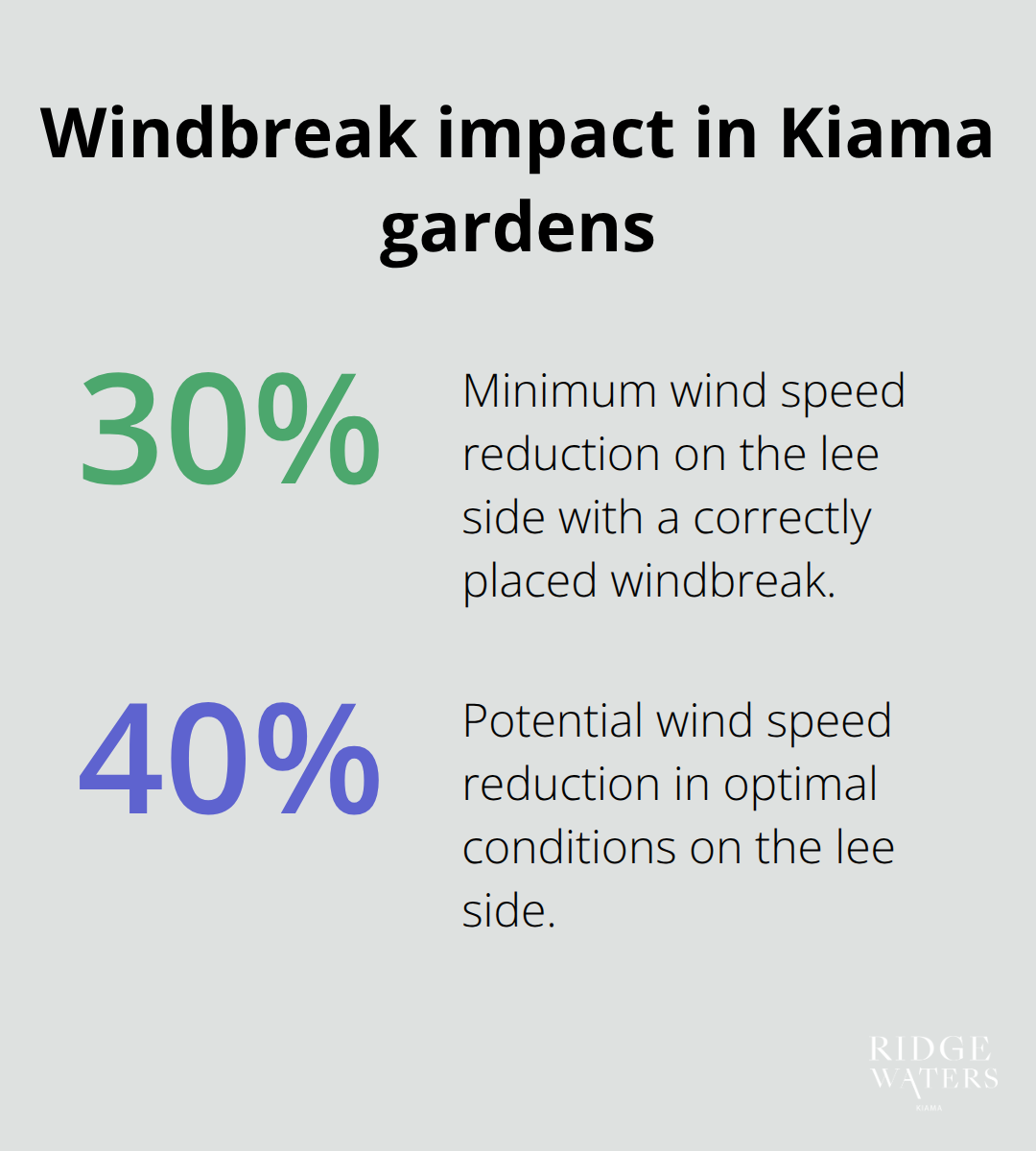
Windbreaks at Kiama aren’t a nice-to-have – they’re the difference between a garden that thrives and one that actually performs. The Central Coast’s salt-laden winds do more than bend plants; they desiccate foliage, snap branches, and suck moisture out of sandy soil faster than any sensible irrigation plan can keep up. A correctly placed windbreak will cut wind speed by 30–40 per cent on the lee side – that’s not trivia; that’s a straight line to lower water demand and less salt burn on exposed foliage.
Plant Tea Tree or Bottlebrush as your primary barrier. These natives establish fast, shrug off coastal abuse, and build dense canopies that deflect wind without creating dead zones. Put them on the windward side and stagger them – not a rigid line – so air slips around them instead of funnelling over the top. Short on space? Westringia fruticosa is your compact hedging MVP – salt-tolerant, tough, and low maintenance.
Bonus: windbreaks warm the lee-side microclimate by 2–3 degrees Celsius in cooler months – that buys you a longer season for heat-sensitive natives like Flannel Flowers and Isotoma axillaris. Small degrees, big outcomes.
Drip irrigation outperforms sprinklers in sandy soil
Sandy soil at Kiama drains like it’s got somewhere urgent to be – so conventional sprinkler schedules go obsolete within weeks. Drip irrigation delivers water where plants actually use it – at or near the root zone – with minimal loss to wind and evaporation. In sandy profiles where water moves through quickly, drip just works better.
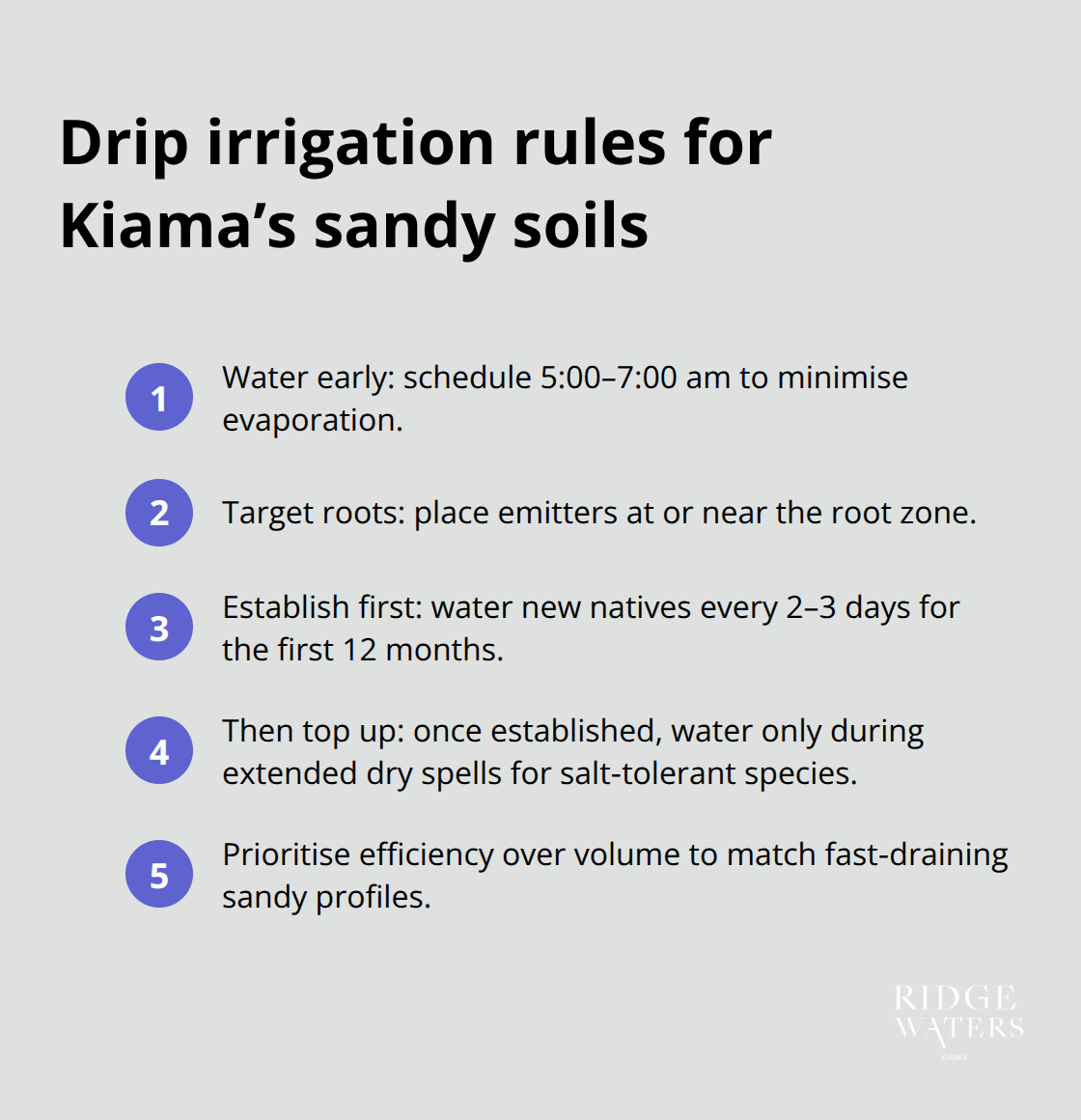
Set drip lines on a timer for early morning (5:00–7:00 am) – you minimise evaporation and let plants drink before the day’s salt spray arrives. During establishment (the first 12 months), new natives need consistent moisture every 2–3 days; once rooted, truly salt-tolerant species like Pigface, Ruby Saltbush, and Tea Tree only need topping up during extended dry spells. Efficiency beats volume – every time.
Mulch and Soil Management Keep Roots Protected
Mulch heavily – 3–5 centimetres of organic material or gravel – to hold moisture and dampen temperature swings that wreck shallow roots. Avoid peat-based mulches; in coastal conditions they compact and repel water (yes, ironic). Use coarse bark chips or native gravel instead – they breathe, don’t crust, and they actually help water get in.
Watch salt buildup. If leaf tips brown despite watering, flush the root zone with fresh water to leach salts downward – don’t wait for a crisis. Spring is your heavy watering window; autumn and winter need less hands-on intervention. Simple rhythms, smarter outcomes.
Seasonal Pruning Removes Salt Damage and Strengthens Plants
Hard-prune salt-tolerant shrubs like Bottlebrush and Tea Tree right after their main flowering – you force denser, wind-resistant growth and remove salt-damaged foliage before disease gets a foothold. Tetratheca thymifolia and Pelargonium australe respond brilliantly to tip-pruning in early summer – it forces branching and keeps plants full instead of lanky and sad.
And remember: winter is recovery – don’t give into the urge to hack when growth is slow and plants are already stressed by cold and low light. Timing matters – always.
Final Thoughts
A thriving coastal garden at Ridgewaters Kiama rewards those who work with the environment – not wage a guerrilla war against it. Salt spray, shifting sand, and relentless wind stop being villains and become design inputs when you pick the right natives and shelter them intelligently. Pigface, Tea Tree, Bottlebrush – these aren’t décor choices, they’re survival strategies honed over millennia; once they’re in, they ask for very little, shrug off salt like a pro, and keep the place looking alive year-round with almost no nagging.
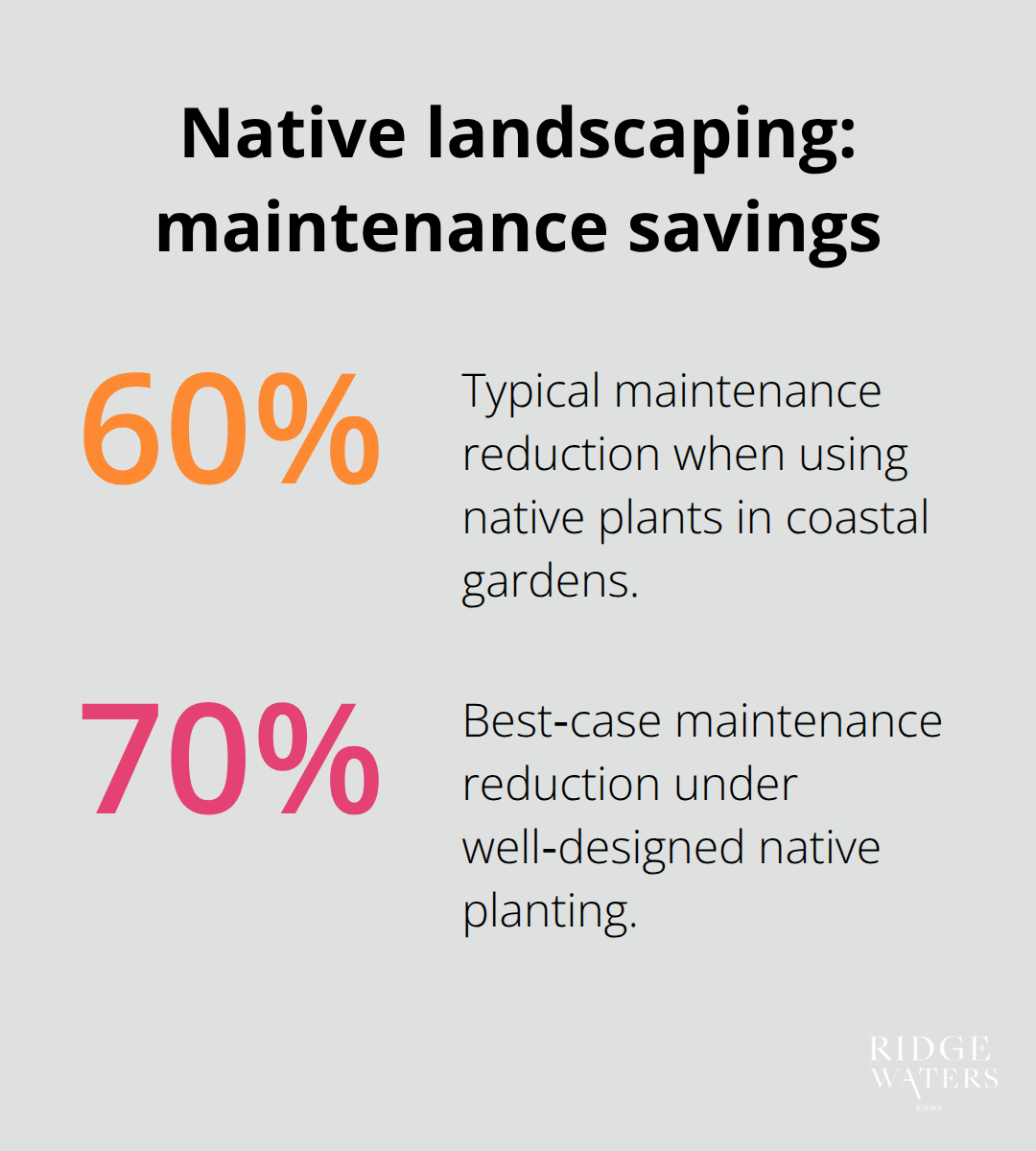
Want hard numbers? Native plant landscaping slashes maintenance by 60–70 per cent versus the glossy ornamental setups people insist on (and then regret) – which translates to far less fertilising, pruning, and the ritual of replacing the plants that never really belonged. Water bills fall because salt-tolerant species need far less watering once established.
Property values rise because outdoor spaces that are beautiful and climate-smart are worth more – obvious, but often ignored. A smart coastal garden also brings pollinators and local wildlife back into the picture – your property becomes an ecosystem, not just a manicured monoculture.
Hire someone who knows Kiama – really knows it: soil quirks, salt corridors, seasonal moods – to guide plant choice, windbreak placement, and irrigation that actually fits your microclimate. We at Ridgewaters Kiama work with South Coast property owners to design gardens that last – practical, resilient, and frankly, handsome. A one-on-one consultation centres your vision and grounds it in what will actually survive and thrive here. Reach out to Ridgewaters Kiama to start your coastal garden project today.