Most swimmers worry about rip currents and unpredictable water conditions — and with good reason; the ocean has moods. Around Ridgewaters Kiama, though, the currents behave differently… almost like traffic cops, gently guiding swimmers rather than throwing tantrums (yes, physics can be polite) — which means the water there is, empirically, safer than many other coastal stretches.
This guide is built to give you the facts — no fluff — about how local water patterns protect swimmers and what you absolutely need to know before you step in: tide timing, current seams, shallow channels to respect, and the small visual cues that separate “fine” from “not today.” Read it, internalise it, then go enjoy the sea.
How Ridgewaters Kiama’s Seafloor Shapes Safer Currents
The underwater geography that protects swimmers
Everything that happens on the surface of the ocean – the pleasant float, the sudden tug, the full-on panic – starts with what’s underfoot. At Ridgewaters Kiama, the seafloor isn’t trying to make a statement; it’s quietly sensible. The underwater topography there produces predictable current patterns – nothing like the concentrated, angry jets you get where ridges and tight sandbar gaps funnel water offshore. NOAA explains rip currents form when waves break near shore and water finds a corridor out – guided by sharp ridges and narrow gaps. Kiama simply lacks those extreme, funnelled shapes. Instead you get a gradual slope and a scatter of underwater features that let wave energy bleed sideways rather than all at once. Translation: currents at Ridgewaters Kiama pull you away more gently and in ways you can read – not in lung-busting bursts of speed. For context: rip currents elsewhere can hit speeds up to 8 feet per second – faster than most recreational swimmers can handle – and NOAA notes U.S. lifeguards pull roughly 30,000 people a year from rip currents. Kiama’s geography quietly reduces your odds of being part of that statistic.
How seasons shift current strength
Currents at Kiama are not the weather – they’re responsive. Winter brings bigger southern swells and more overall motion, but the broad continental shelf here soaks up a lot of that energy instead of turning it into concentrated offshore flows. Summer? Calmer surfaces, weaker currents – the best time if you’re not looking to audition for a rescue video. Spring and autumn are the trickier windows: moderate swells, mornings with offshore winds that can disguise undertows (short version: a calm surface can be lying to you). NOAA recommends checking surf-zone forecasts before you go in – good advice anytime, but essential during transition seasons. Tides matter too: rip currents are typically strongest at low tide according to NOAA research, so aim for mid- or high-tide swims to reduce exposure.
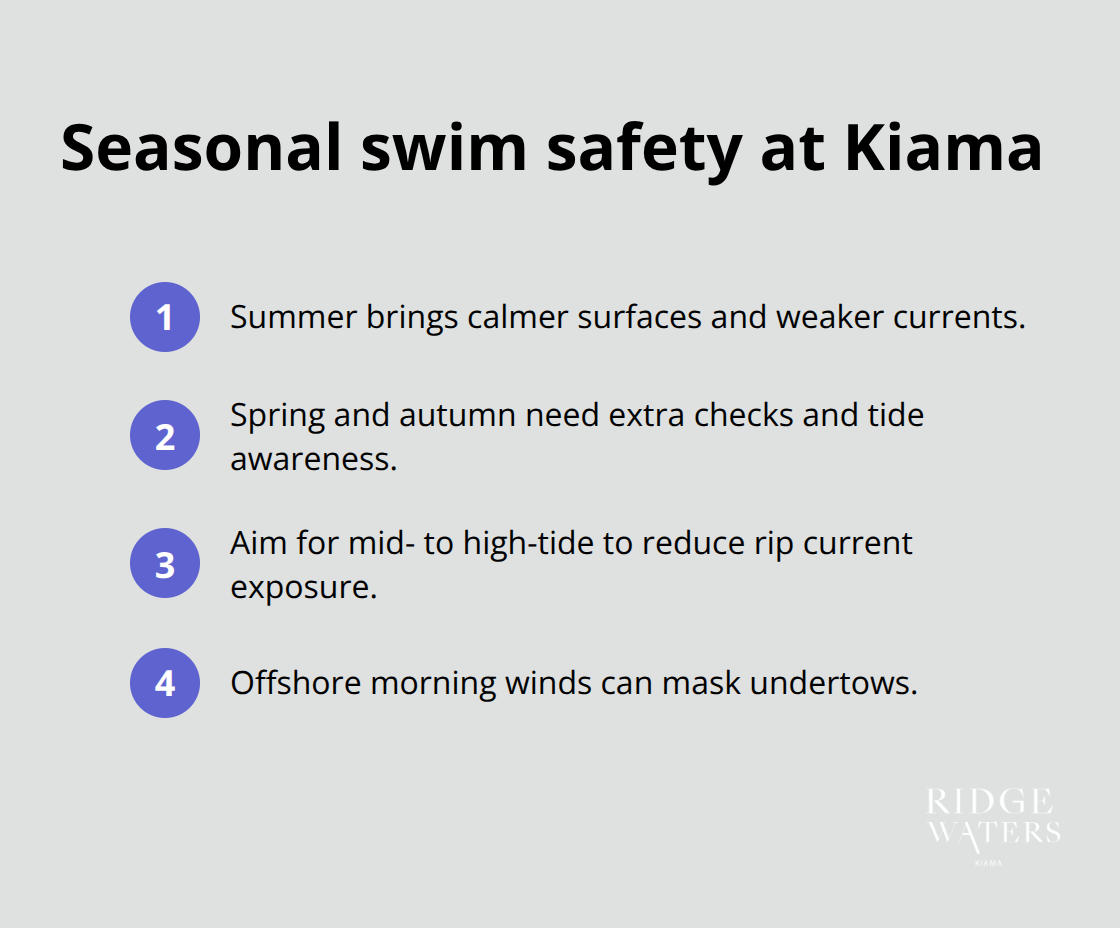
The local pattern at Kiama means these seasonal swings tend to be manageable – not the kind of extreme hazards you’ll find at more exposed beaches.
What this means for your next swim
Know the pattern – that’s half the safety play. Read the shore, check tide and surf forecasts, pick mid- or high-tide, and favour summer if you’re easing back into open-water swimming. The next section will walk through simple, practical steps to read the water at Ridgewaters Kiama and choose the safest time to enter – no drama, just a little preparation.
Why Kiama’s Water Patterns Beat Other Beaches
The numbers that separate safe from risky
This difference shows up where numbers live – in the data. According to NOAA, rip currents in tight underwater formations reach speeds that outpace recreational swimmers – full stop. U.S. lifeguards haul about 30,000 swimmers to safety every year because of rip currents, and roughly 100 people drown in them annually. Those are not abstractions – they’re the stakes.
Kiama sidesteps the trap because its seafloor simply refuses to cooperate with concentrated jets. No narrow channels funneling all that returning water into a single, murderous river. Instead, a broad continental shelf and a scatter of underwater features let wave energy bleed sideways, not pile up offshore. Translation: the odds of finding yourself in a sudden, powerful offshore pull are materially lower at Kiama.
How Kiama’s geography protects you
The practical impact is immediate – you swim with less mental burden, fewer horror-movie scenarios running through your head, and more confidence that the water isn’t about to betray you. Locals prefer Kiama because the currents behave predictably – they move you, sure, but they don’t try to eat you. Tides remain the main variable (NOAA notes rip currents strengthen at low tide), so aim for mid- to high-tide if you want to reduce exposure – any season.
Even when winter swells crank up southern ocean energy, Kiama’s wide shelf soaks up most of the punch before it ever becomes a problem in the shallows. In short: nature’s layout does the heavy lifting for you.
Seasonal patterns you can count on
Summer is the low-drama window – weak currents, minimal offshore flow, and the best time for anyone getting reacquainted with open-water swimming. Spring and autumn demand a bit more attention – check forecasts, mind tides – but the baseline hazard still undercuts what you’d face at exposed beaches where sharp ridges and sandbar gaps concentrate flows like a nozzle. Winter tests the system more, yes, but Kiama’s topology blunts that stress better than many comparable coastlines.
What separates Kiama from other options
Consistency – that’s the edge. At Kiama you’re not gambling on ocean moods; you’re engaging with a system that responds logically to tides and seasons. Do the basics: peek at a surf-zone forecast, favour mid- to high-tide swims, and if you’re building confidence, pick summer. The water there cooperates with those choices rather than conspiring against them – and that cooperative behaviour compounds into real safety over time. Learn to read the patterns (visual cues, timing strategies) and you’ll make the safe call on any given day – reliably.
When to Enter the Water at Kiama
Timing Your Swim for Maximum Safety
Timing is everything – it separates the smart swim from the headline-making mistake. Mid- to high-tide windows at Kiama are your friend because rip currents strengthen at low tide (NOAA says so). The continental shelf here is broad – that means even when tides dip, the pull tends to be gentler than at beaches with tight sandbars. Summer is the safe season: minimal offshore wind, calmer surf, and the lowest overall hazard profile. If you’re new to open water or rebuilding confidence after time away – make summer non-negotiable.
Spring and autumn demand attention – offshore winds can dress the sea up to look harmless while the undertow is plotting. Check a surf-zone forecast before you step in. Winter swells come from the south and test the system harder, but Kiama’s wide shelf eats most of that energy before it reaches the shallows. Practical rule of thumb: check the tide calendar, aim for the two hours around high tide, favour summer if unsure, and never get in without reviewing current conditions on a forecast tool.
Morning Versus Afternoon: Which Works Better
Morning swims sneak up on people – early offshore winds can make the ocean seem calmer than it is. Afternoon? Usually better – sea breezes change direction and often calm waves, reducing rip strength. This flip surprises a lot of swimmers, but it’s just physics and routine wind shifts. Learn to read the day – don’t assume dawn equals safe.
Reading the Water Before You Go In
Rip currents leave marks – if you know where to look. Scan for gaps where waves aren’t breaking; that’s often the water being pulled offshore. Foam, seaweed, or discoloured water moving away from the beach? Red flag.
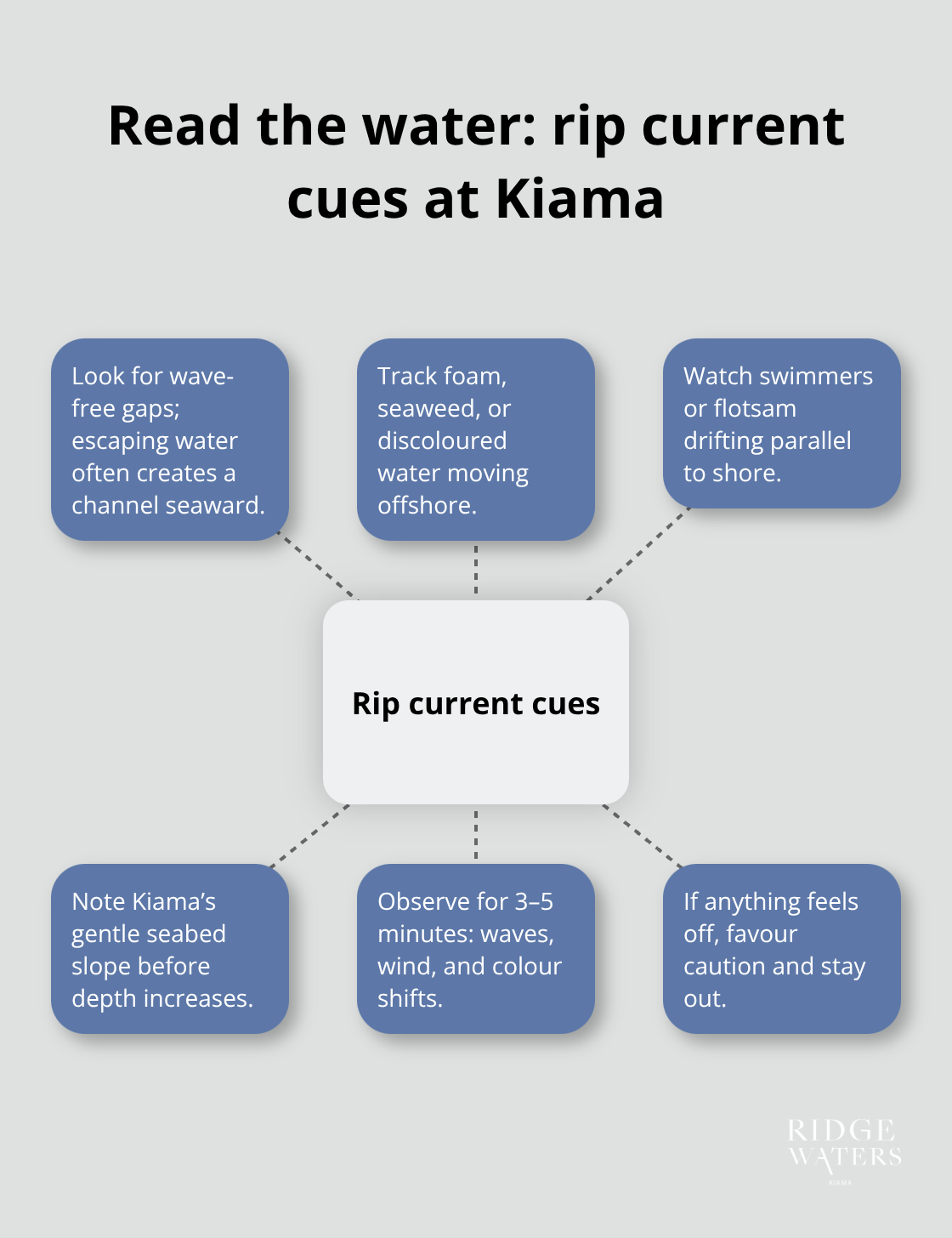
NOAA notes these zones typically span 50 to 300 feet (think multi-lane road) – so yeah, they’re visible if you pause and actually watch.
Watch swimmers and flotsam – if something drifts steadily parallel to shore, there’s a current doing the work. Check the seabed slope – Kiama’s gentle shelf means you can wade further before depth becomes a problem. Spend three to five minutes at the waterline observing wave patterns, wind direction, and colour shifts in the water. That tiny habit prevents most bad choices. If anything feels off – wind shift, bigger waves, churned water – trust that gut and stay out.
Gear and Precautions That Matter
For kids: Type 1 or Type 2 life jackets are mandatory for children under 12 in open water (Australian Maritime Safety Authority) – no debate. Pool floats = zero protection in surf; they create false confidence. Adults: never swim alone. One person should be the designated watcher – not scrolling, not distracted. Rotate that duty every 30 minutes – attention fatigue is real.
Supervision rules: children under four require touch supervision; kids five to twelve need an adult within six metres; teens should check in every 15 minutes. Sunscreen: SPF 30+ broad-spectrum, applied 30 minutes before entry and reapplied every two hours or after swimming – Cancer Council Australia recommends zinc-based formulas (sprays fail in wind, so go lotion). Rash guards cut sun exposure and reduce the need to reapply constantly.
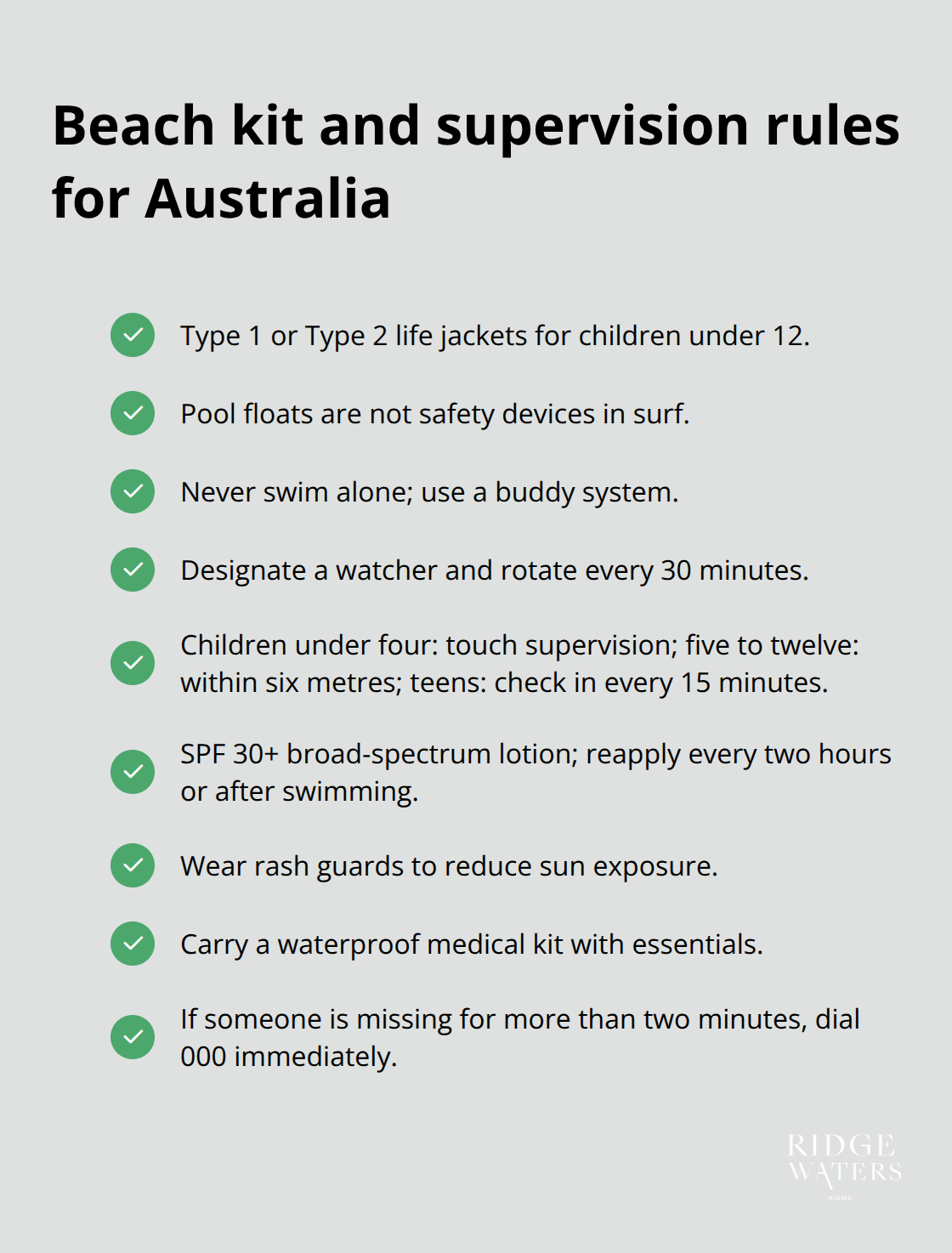
Bring a waterproof medical kit: antiseptic wipes, waterproof bandages, cold packs, paracetamol, antihistamines for stings, hydrocortisone cream, and a digital thermometer (spot heat exhaustion early). Keep emergency numbers on a waterproof card in the kit. If someone is missing in the water for more than two minutes – dial 000 immediately – speed matters. These are not decorative suggestions; they’re the difference between a great day and a crisis.
Final Thoughts
Kiama’s seafloor and current patterns give swimmers a genuine advantage-geography doing the heavy lifting, not luck. The broad continental shelf and gentle underwater topology mean you don’t fight the concentrated offshore pulls that trap swimmers elsewhere… NOAA data shows U.S. lifeguards rescue roughly 30,000 people annually from rip currents; at Kiama, the odds tilt in your favour because ocean currents here behave predictably rather than aggressively. Time your swim around mid- to high-tide windows, check surf-zone forecasts, and read the visual cues on the water before you step in-those small, boring habits compound into real safety over time.
Living at or visiting Kiama means you access a coastline where preparation and basic awareness actually work. You don’t gamble on ocean moods; you engage with a system that responds logically to seasons and tides (summer swims carry the lowest hazard profile; spring and autumn demand a forecast check). The practical gear-Type 1 or Type 2 life jackets for kids under twelve (non-negotiable), designated water watchers, SPF 30+ sunscreen, and a waterproof medical kit-transforms any swim from risky to managed.
Residents at Ridgewaters Kiama benefit from this geography every time they step into the water. The luxury apartments offer a serene beachside lifestyle with secure parking and private lift access-positioned 90 minutes south of Sydney. Whether you’re planning a short getaway, seeking permanent residence, or exploring investment options via short-term rentals… Kiama’s coastal setting combines safety with convenience.