Living at Ridgewaters Kiama — steps from some of NSW’s most rewarding fishing waters — means you’re never more than a short walk from the next tug on the line. Whether you’re a seasoned angler or picking up a rod for the first time, Kiama delivers reliable opportunities year‑round…and yes, “reliable” is a bold claim in the marketing world, so lean in.
The techniques, spots, and resources you need to succeed are closer than you think (and easier to master than the internet would have you believe). This guide walks you through everything local residents should know — where to go, what to use, and how to turn a casual afternoon into a catch-worthy day — so you can make the most of our coastal location.
Fish Species and Timing in Kiama Waters
What Bites in Kiama Right Now
Kiama’s water is like a seasonal playlist – predictable, sometimes surprising, and if you tune in at the right moment, very forgiving. Flathead run the shallows and rock ledges from September through April – peak is November to February when water temperatures climb above 20°C (translation: they get lethargic… and greedy). Bream are the estuary residents – year-round hangers-on – but autumn (March–May) is when they bulk up for winter and your catch rate jumps. Kingfish? They show up with spring warmth – think October onward – and patrol the deeper channels where the shelf drops off. Snapper live on reefs and structure – they migrate a bit shallower to feed from April through June, so those months are your best bet.
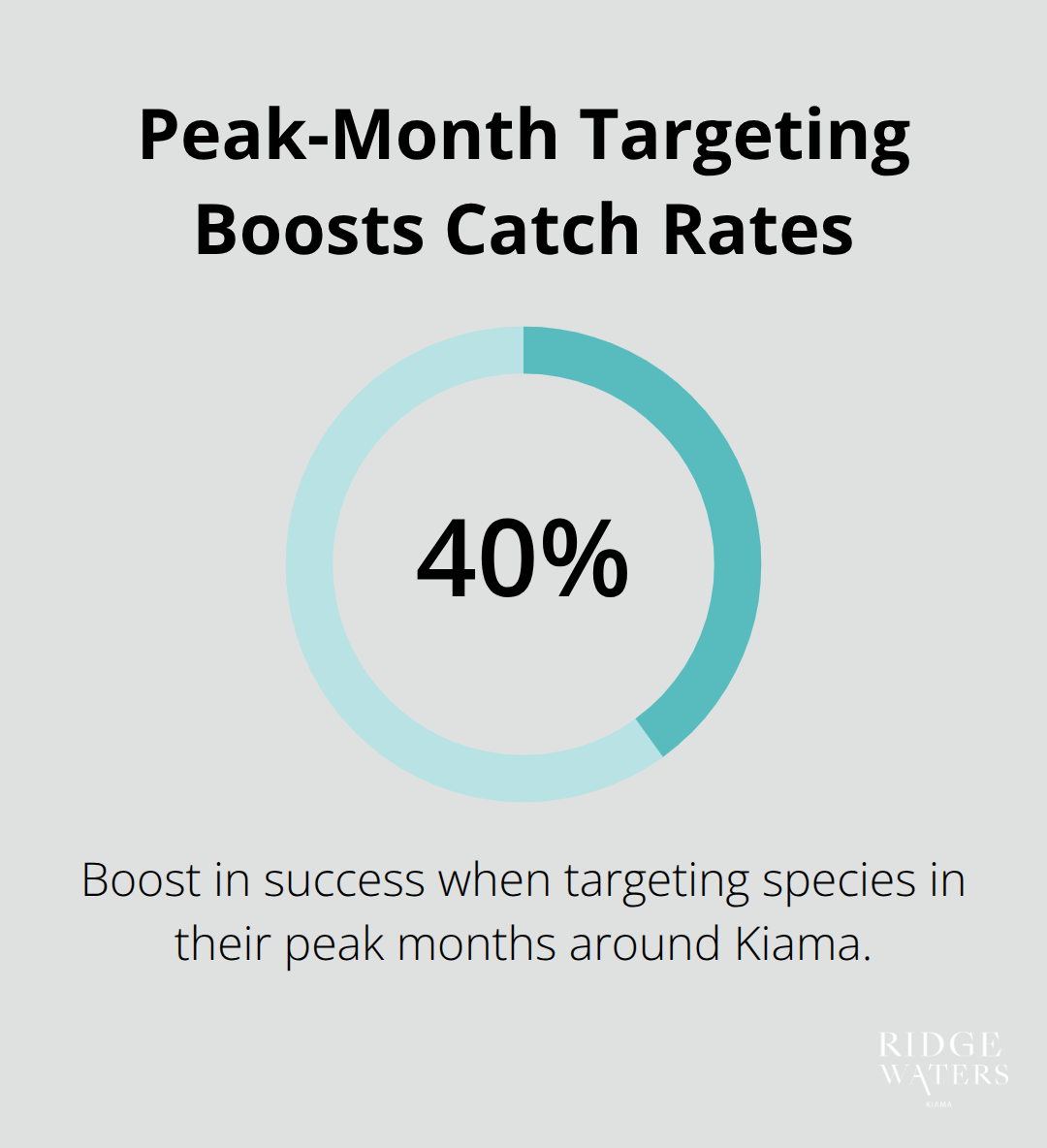
The NSW Department of Primary Industries maps these rhythms; local tackle shops confirm the obvious but vital truth – target species in their peak months and you boost success by roughly 40 per cent versus off-season scrambles. Simple maths. Less time guessing, more time catching.
Dawn, Dusk, and Tidal Windows
Forget midday heroics – dawn and dusk beat the sun-high slog every time. Flathead get aggressive in the two hours before sunset and the first two hours after sunrise – light is changing, bait is moving, fish are hungry. Bream love low light – 5 AM to 7 AM is often the sweet spot. Kingfish work daylight hours but spike early and in that last hour before dark. Tides matter more than your watch – incoming tides push bait toward structure and flip a feeding switch; outgoing tides herd fish into deeper channels where your rig can meet them. Check tide tables – the hour before high tide and the first two hours of the falling tide consistently deliver the goods around Kiama. And yes, full moons usually mean stronger feeding in deeper water – bream and snapper especially.
Productive Spots Within Easy Reach
North of Kiama Point, the rocky outcrops and submerged boulders in 3–6 metres hold steady numbers of flathead and snapper – dependable structure equals dependable fish. The sheltered bay south of town is bream country – sandy bottom, seagrass beds – fish it on slack water for best results. The deeper channel running east from the headland funnels kingfish and bigger bream in spring and summer – overcast days help (less light penetration, more confidence from the fish). Local knowledge trumps generic maps; walk the foreshore between Kiama and neighbouring towns and you’ll spot structure that doesn’t shout from the shore. The estuary mouth shifts species with salinity and tide – bream dominate in autumn, flathead in summer. Residents at Ridgewaters Kiama get immediate access to these grounds – no long drives, no wasted windows.
With species, timing, and location dialed, next up is technique – the baits and methods that actually trigger strikes in Kiama’s water. Then you stop hoping and start catching.
Techniques That Work in Kiama Waters
Structure and Positioning Beat Distance
Casting distance and accuracy – beloved obsessions of weekend anglers – matter far less than people brag about. What matters is putting your bait or lure where the fish actually eat. In Kiama, that means reading structure and water movement, then parking your rig in the transit lanes where hungry fish pass predictably. Surf casting from the beach? Stop flinging to impress your mates and aim for the gutter – that deeper channel running parallel to shore where flathead and bream hunt in about 1–3 metres. Cast beyond the sandbar (usually 30–50 metres out depending on swell), let your sinker settle, then work the retrieve slow; flathead like a crawl, not an assault.
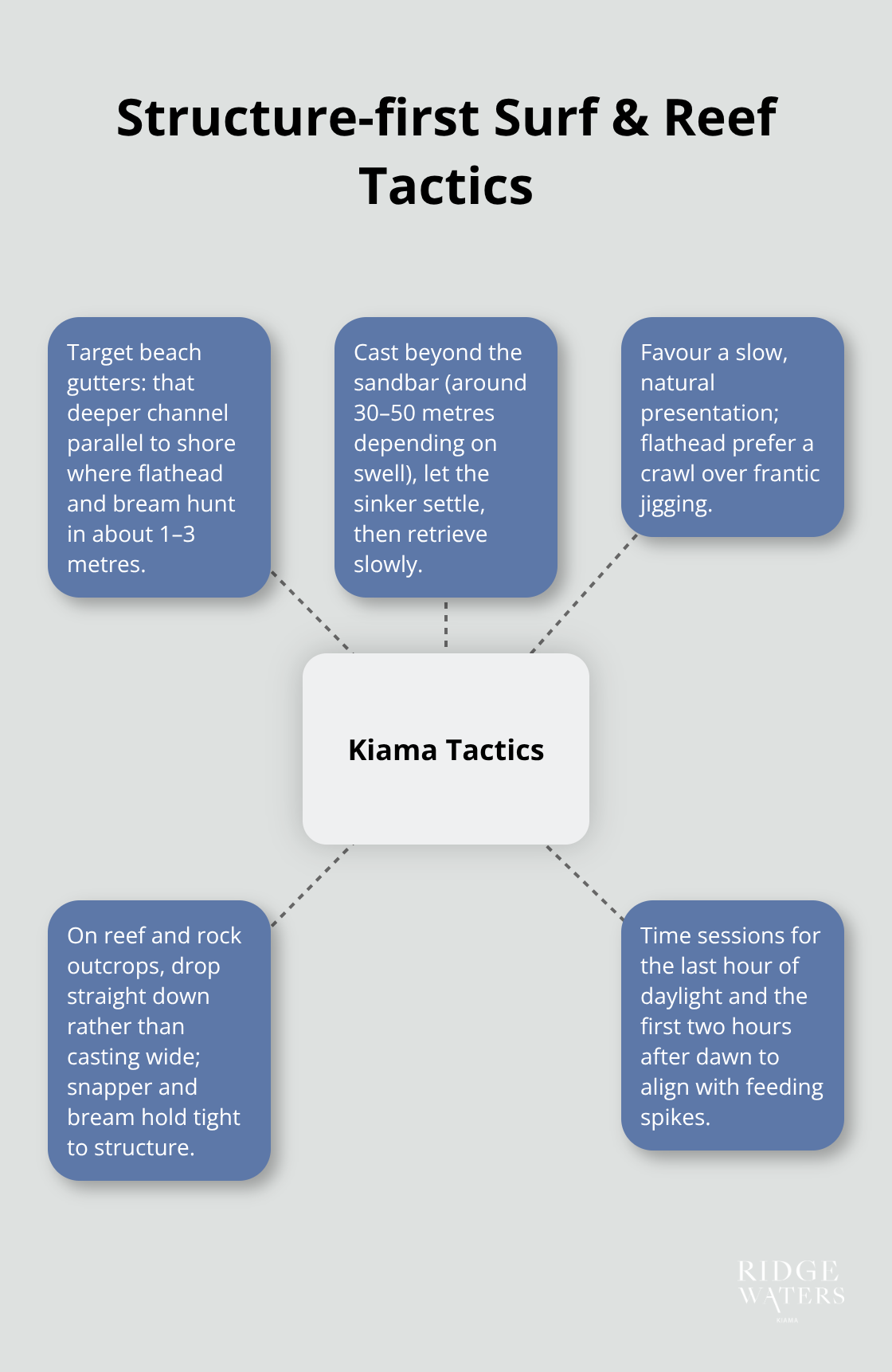
Slow and natural beats frantic jigging every time.
The NSW Department of Primary Industries backs this up – flathead success spikes in the last hour of daylight and the first two hours after dawn. Combine that timing with gutter-targeting and you’ll stop calling it “luck.” Around rock outcrops and reef north of Kiama Point, drop down straight – don’t cast sideways and hope. Snapper and bream hug structure; they don’t enjoy cardio as much as us humans do.
Weight, Depth, and Current Control
Use enough sinker to hold bottom in current – typically 2–4 ounces depending on tide strength – but not so much the rig is glued there. A little give (slight lift and drop on the rod tip) is the doorbell reef species answer. Kingfish play a different game; they’re active hunters and will chase motion. For them, cast across current and retrieve with steady, deliberate cranks – think measured, not manic.
Bait Selection Demands Specificity
Live mullet outperforms dead bait for flathead-local tackle shops aren’t making that up; it’s predatory instinct. Bream want small, subtle presentations: live or dead prawns (2–3 centimetres), small pilchards, fresh yabbies on light 1/0 to 2/0 hooks with minimal weight. Snapper on reefs? They read scent and texture – fresh squid strips (2–3 centimetres) or live garfish/herring win when current’s moving. Squid carries scent through structure in a way a limp strip just can’t.
Hook Placement and Bait Presentation
Hook placement is the fine line between a hookup and a lost opportunity. For live bait, hook through the nose or just behind the dorsal so the bait swims like it means it – a lively bait sells the lie. Dying bait gets ignored. For dead bait and strips, thread the hook through the thickest muscle (belly for fillets, head for whole baits) so it survives the cast and the fight – no one wants to lose a prize because the presentation tore.
Water Clarity Changes Everything
Clarity alters the game plan: in clear water (common around Kiama when it’s calm), fish go deep and cautious – fish the bottom or just off structure. After storms or heavy swell the water turns turbid and fish move shallow and greedy – you can fish higher in the column and be more aggressive. Kingfish want size – they’re looking for protein on sight: live mullet (10–15 centimetres), mackerel fillets, or garfish. These tweaks apply across Kiama’s variable bottoms – but they only work if you also know where local shops source bait and which shops actually stock the hooks and weights that match Kiama conditions. Knowledge of gear supply is boring-until it’s the difference between skunking and filleting dinner.
Local Fishing Resources and Community
Tackle Shops Stock What Actually Works
A good day on the water isn’t random – it’s logistics and locals. Kiama’s got a handful of dedicated tackle shops within a 10–15 minute drive, and these aren’t the big-box, one-size-fits-all places that sell optimism and poor hooks. They stock what actually works in local waters. The staff? They read the tides and bait runs like a short-form novel – which bait is moving this week, which reef is hot, which hook size will stop you spending an hour wrestling with nothing. Mail-order from Sydney looks neat on a credit card statement – but it often arrives late, or with the wrong sinker weight for Kiama’s structure. Dead money.
These shops also fix rods, re-spool line, and bring in fresh bait every morning – mullet, prawns, squid – and during peak season it’s gone by mid-afternoon. If you’re planning dawn, you need bait that was landed the night before or grabbed at opening. Speed and local sourcing beat convenience stores and online retailers, every time.
Fishing Clubs Cut Through Trial-and-Error
You can learn by banging your head against rocks – or you can join a club and shortcut the misery. Kiama’s fishing clubs run monthly meet-ups and group outings to marks that actually produce. Members share real-time intel (what’s biting, where), which collapses months of trial-and-error into a few useful tips. They also aggregate buying power – bulk discounts on gear, sometimes a charter for snapper and kingfish trips. Membership is $50–$150 a year and, realistically, pays for itself in saved bait and fewer wasted mornings within one month. The community factor matters too – local anglers see micro-patterns you’ll miss solo, and they’ll point you toward marks that don’t advertise themselves. Social capital turns into fish.
NSW Regulations: Non-Negotiable Rules
Regulations aren’t suggestions – they’re legal guardrails, and ignorance is expensive. You need a recreational fishing licence to fish in NSW waters. Carry it – always.
Bag limits are specific: flathead 10 per day, bream 25, kingfish 5, snapper 10. Not guidelines. Fisheries officers patrol Kiama with predictable frequency – especially weekends in peak season – and fines for breaching limits kick off at $220 and escalate rapidly.
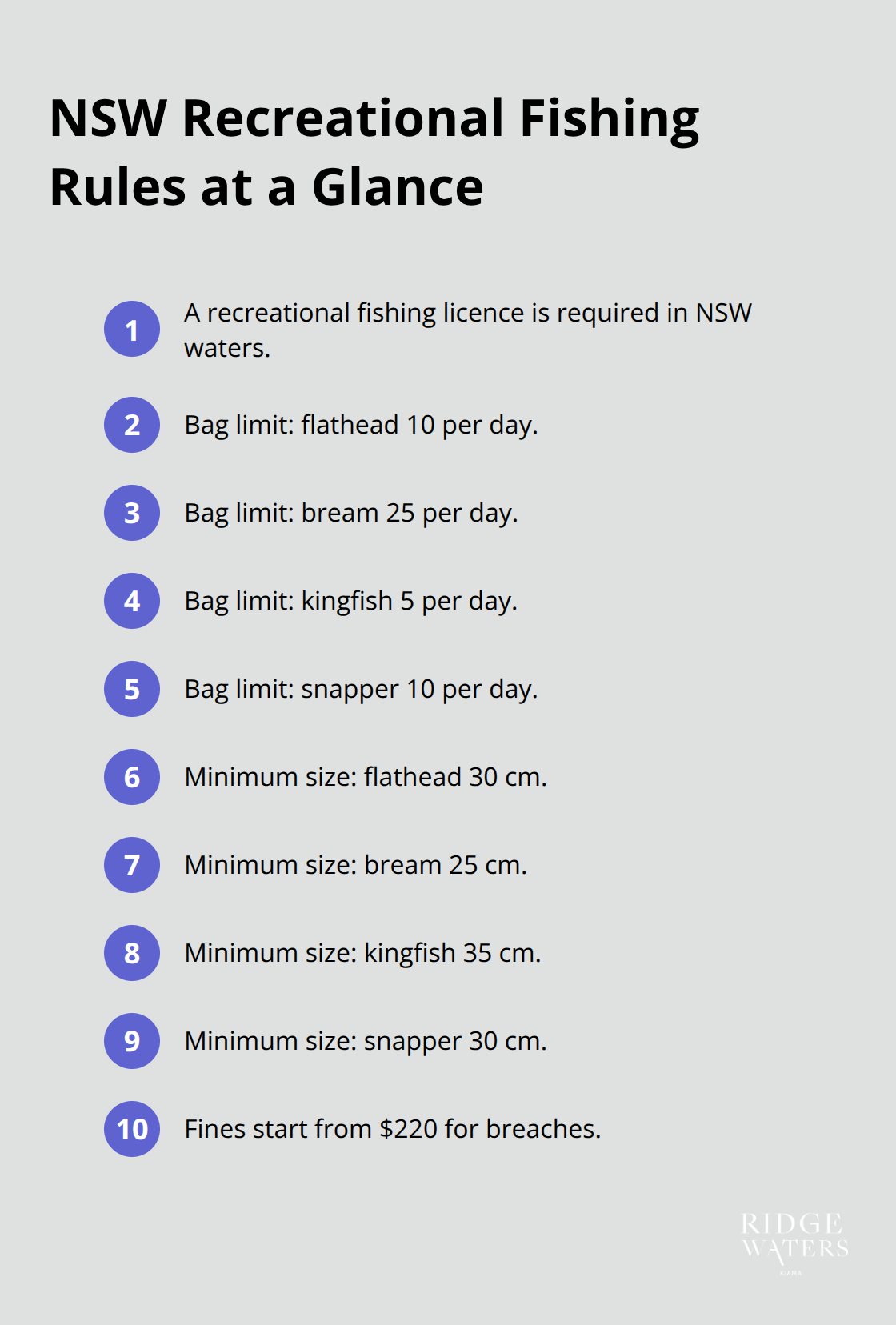
Size minimums matter too: flathead 30 cm, bream 25 cm, kingfish 35 cm, snapper 30 cm. If it’s undersized – it goes back. No debate.
Stay Current on Regulation Changes
Rules shift – sometimes quietly, sometimes not. The NSW Department of Primary Industries posts current regulations and updates, including protected species you can’t keep. Don’t rely on last year’s memory. Before each trip, check the official guidance. Local tackle shops usually print the current regs and pin them by the counter – grab a laminated card and tuck it in your tackle box. That tiny habit prevents fines, saves a day, and keeps you fishing (which is the point).
Final Thoughts
Kiama fishing rewards preparation and consistency – not luck. Species rotate on a clock you can learn, timing windows are measurable, and techniques work when you match them to the conditions. Structure beats distance; dawn beats midday; local knowledge beats guessing. Simple hierarchy. No drama.
Starting is easy: grab a recreational fishing licence, source fresh bait from the local shop, pick a dawn or dusk window that matches the tide – then fish structure in the gutter or around the rocky outcrops north of Kiama Point. Flathead and bream will answer the call. Want results faster? Join a club – instant intel, fewer dumb mistakes.
Living at Ridgewaters Kiama means you’re steps from those waters year-round, so Kiama fishing becomes habitual, not a once-a-year pilgrimage. The early light, the predictable seasons, the rock and gutter that hold fish – that’s what coastal living actually delivers (and yes, it’s worth the trade-offs). Show up. Learn the patterns. Repeat.