Coastal living—it’s a sandbox of opportunity for those who want a shot at sustainable living that cities… just can’t match. The natural setting comes with built-in advantages for shrinking that carbon footprint.
At Ridgewaters Kiama, we’ve designed our development to squeeze every drop out of these eco-friendly perks. Our game plan? Marrying cutting-edge green tech with the natural sustainability that coastal life already brings to the table.
Sustainable Design Features at Ridgewaters Kiama
So here’s the thing about sustainable construction: Every single material choice? It matters. Half-baked attempts? They just end up burning cash. Our approach? Spot on. We’ve got recycled steel frames slashing embodied carbon and locally-sourced timber? It keeps those transport emissions low and backs up local suppliers-within a neat 200 kilometres from Kiama.
Water Conservation Systems That Deliver Results
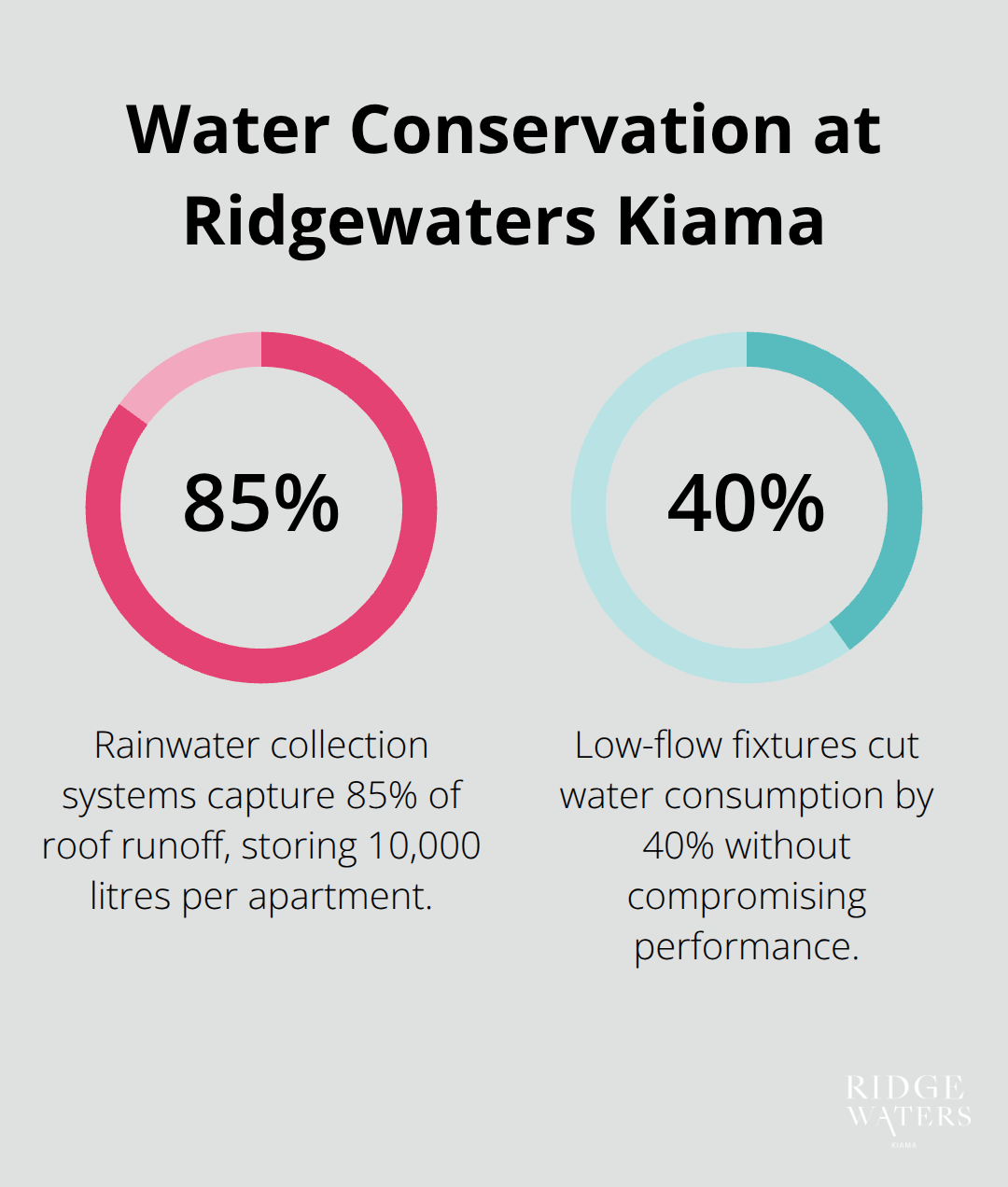
Water conservation-it’s not rocket science, folks. We kick things off with rainwater collection systems snagging 85% of roof runoff. That’s a whopping 10,000 litres per apartment. And those low-flow fixtures? They cut consumption by 40% without denting performance. Greywater recycling-shower and laundry water gets a second life with landscape irrigation.
Stats check: The Australian Bureau of Statistics says coastal properties with these smart water moves chop utility costs by 30% annually. Permeable paving? It lets natural groundwater recharge do its thing, protecting those local aquifers that keep Kiama hydrated.
Solar Power Systems That Work
Solar panels-each apartment pumps out 6.5 kilowatts, covering 80% of typical household electricity demands (Clean Energy Council backs this up). Battery storage? It stores excess vibe from peak times, cutting the grid dependency when evening rolls around.
Smart inverters-optimising energy on their own. And LED lights? They slash electricity usage by 65% in common areas. Oh, and about that solar rebate from the NSW Government? Up to $2,400 off installation costs. Makes diving into renewable energy a no-brainer for anyone looking for lower bills and a lighter footprint.
Materials That Make a Difference
Construction materials-crucial for long-term sustainability. Recycled concrete aggregates? They hack landfill waste by 30%, while still standing tall with Australian building standards. Low-VOC paints? Indoor air quality upgrade, with fewer nasty chemicals messing up the ecosystem.
These eco-friendly features? They’re the launchpad for a sustainable coastal lifestyle. The real kicker? When residents lean into all that Kiama’s natural environment offers-because that’s where the magic happens.
Why Kiama Coastal Life Cuts Your Environmental Impact
Kiama lets you trade the urban grind for a life with some actual green cred. It’s walkable – or should I say, ridiculously walkable. Say goodbye to your car; most daily errands put you within a leisurely stroll of cafes, shops, and the train station. That’s right, 400 metres and you’re there. Oh, and public transport? It sees a solid 65% bump when folks ditch their suburbia-mobile lifestyle for the charming pathways of Kiama.
Local Food Networks That Cut Carbon
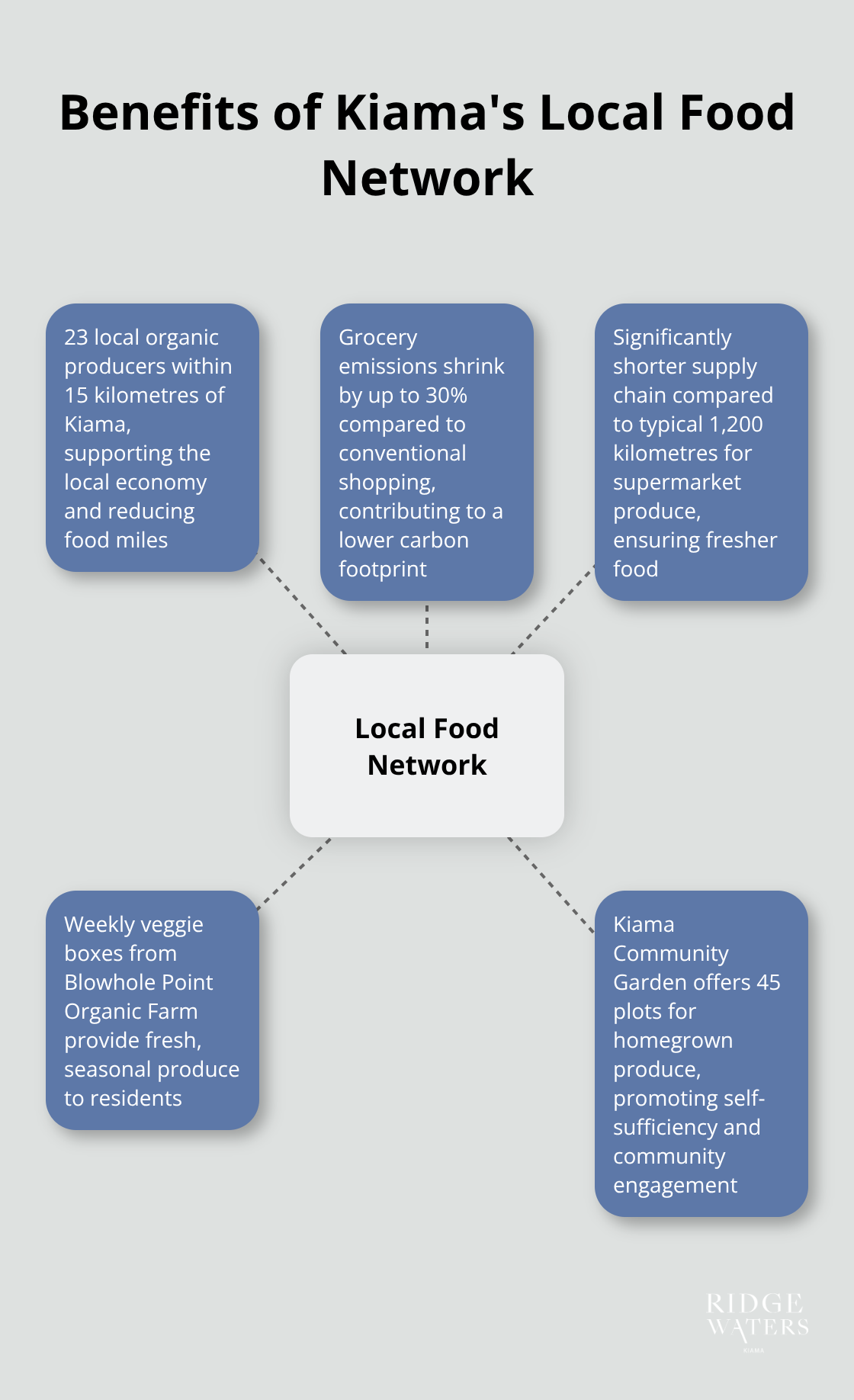
Saturday mornings mean the farmers market – 23 local organic producers strutting their goods from within a stone’s throw (15-kilometres, to be precise). Compare that short hop to your typical 1,200 kilometres for supermarket veggies. Let that sink in. There’s also the Kiama Community Garden with 45 plots-your homegrown goodies right there on Collins Street. Grocery emissions shrink by up to 30%, not to mention the fresh-off-the-farm weekly veggie boxes from Blowhole Point Organic Farm. Shorter supply chains, fresher food, and a carbon footprint that your city cousins can only dream about.
Ocean-Based Wellness That Heals
Let’s talk calorie burn – ocean swims clock in at 400 calories per hour, albatross-sized wingspan and all. No emissions, nada. Pair that with Kiama’s 12-kilometre coastal trails – good for your heart, great for the planet. Beach yoga at Surf Beach? Year-round and minus the gym’s energy meter. Those ocean waves? Negative ions boost serotonin naturally, cutting down on mood meds. Take your kids rock pooling at Cathedral Rocks-real marine biology lessons for life.
Transport Choices That Matter
Board the train station, bound for Sydney Central in 90 minutes, and you’re riding in style while your car gathers dust. Buses run every half-hour, like clockwork. Oh, and biking? Eight kilometres of coastal paths say, “Hop on!” Seventy-eight per cent of locals are hoofing it rather than driving (thanks, 2024 survey). Cheap, eco-friendly, and health benefits that no gym membership can top.
The perks of seaside living go beyond personal gains; they ripple outward, creating vibrant communities and healthier ecosystems. It’s transformation, not just for you, but for the world around you.
How Much Does Coastal Living Actually Reduce Your Carbon Footprint
Okay, folks, let’s break this down. Urban high-rise living? It’s like an all-you-can-eat energy buffet – slurping up 40% more juice per square metre than our chill coastal comrades in places like Kiama. That’s not just my opinion; it’s the Australian Energy Market Operator talking. Now, let’s get into the nitty-gritty: high-rises need a gazillion kilowatts for elevators, central air, and artificial lights in those fluorescent tube tunnels they call corridors. Meanwhile, coastal pads? They just kick back and let the wind do its thing – slashing those HVAC loads. When ocean breezes and big, beautiful windows light your way, who needs anything else?
Energy Consumption Patterns in Coastal vs Urban Properties
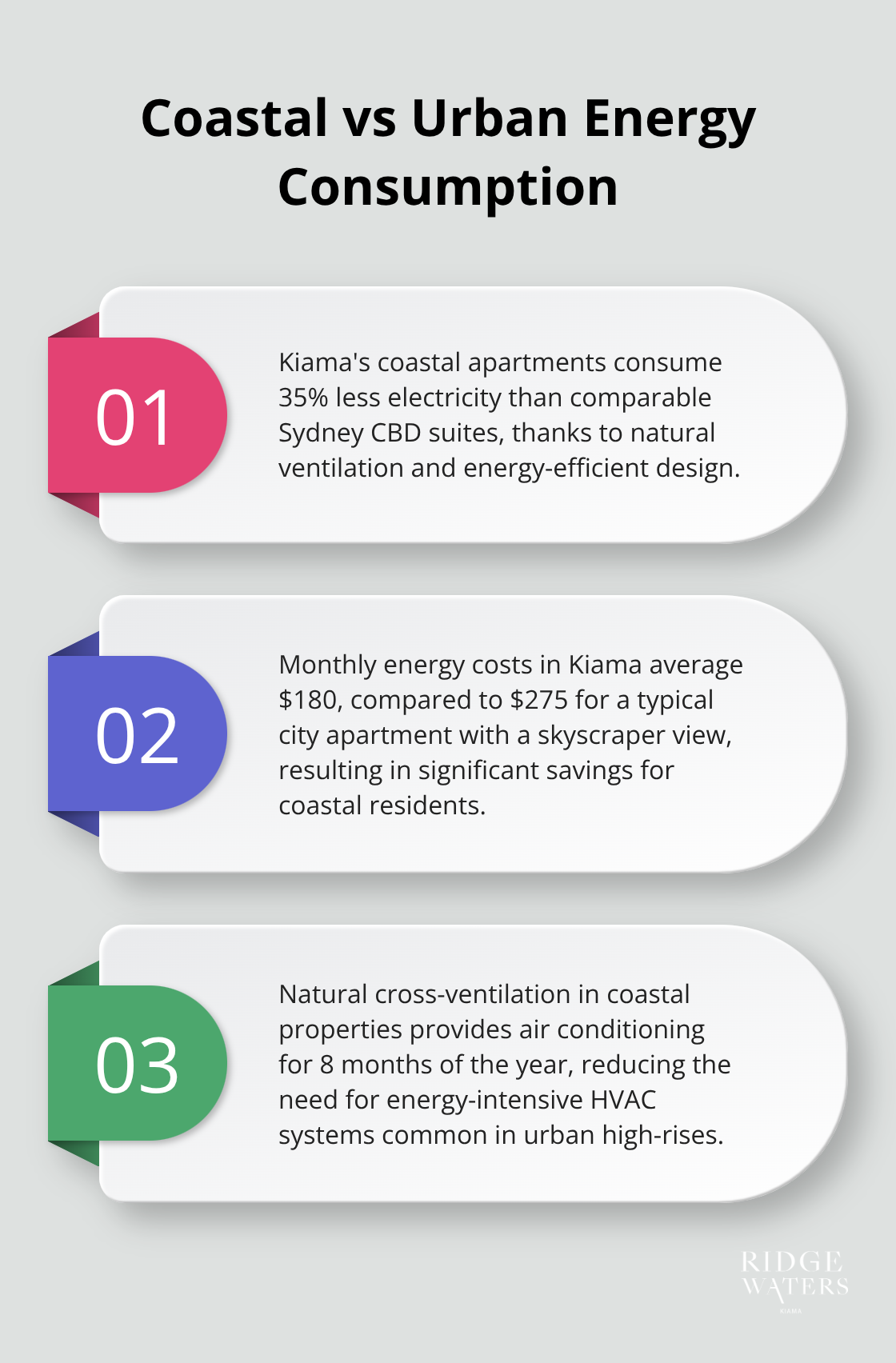
Kiama’s coastal apartments – and this isn’t a guesstimate – gobble up 35% less electricity than a Sydney CBD suite could dream of (thanks, Energy Australia 2024). Why? Simple. Natural cross-ventilation – it’s nature’s air conditioning for 8 months a year. Ground-level digs? Kiss elevator energy demands goodbye. Then there’s shared walls – they act like a warm hug of thermal mass, unlike those glass encasements in the sky. Result? You’re looking at $180 a month on your energy tab instead of coughing up $275 for a room with a skyscraper view.
Construction Impact and Material Sourcing
And construction? Let’s talk localised, people. Local developers nab 85% of their materials within a casual 200 kilometres – way less fuel burned trucking stuff around. Construction’s carbon footprint? It’s a lazy 35% lighter compared to city skyscrapers. Kiama’s rules let you frame with timber, not just steel up the wazoo, which cuts embodied carbon by 45%. Plus, sand and aggregate come from right next door, not halfway across the planet, while concrete plants are practically in your back yard.
Tourism Revenue That Supports Conservation
The cherry on top? Sustainable tourism that pours $392 million into Kiama’s coffers without trashing the turf that lures folks in the first place. Kiama Council Visitor Economy Strategy keeps an eagle eye on density – no overbuilding here. That means you can kick your shoes off and stroll to the beach in 750 metres, no car keys required. Compare this to Gold Coast skyscrapers where you’re pedal-to-metal for 15 minutes just to reach some sand. Tourists here? They stick around for 4.2 nights on average – that’s more of your cash in local tills, not check-ins and flights every other minute. Fewer changeovers slash waste by 50% and offer stable support to local shops all year, not just on summer break.
Final Thoughts
So, you wanna talk about sustainable living? Let me introduce you to Ridgewaters Kiama – where the impact is as real as a heart attack. Picture this: recycled steel frames, rainwater systems gulping down 10,000 litres per apartment, and 6.5-kilowatt solar arrays – we’re talking serious results. The folks shacked up here are slicing energy bills by 35% compared to their mates in the Sydney CBD, while slashing water costs by 30% every year.
The numbers don’t lie, folks. Living by the coast doesn’t just mean endless beach days; it means reducing your carbon footprint with natural breeze-and-ease ventilation, materials sourced within a stone’s throw (well, 200 kilometres if we’re being exact), and the luxury of strolling to train stations and farmers markets. When 78% of folks are hoofing it instead of burning fossil fuels, that’s change you can see… and Australian Bureau of Statistics backs it up.
And there’s more – these choices? They snowball into even bigger perks. Lower energy use, fewer transport emissions, and a boost for local ecosystems turn into a win-win-win for the environment. Ridgewaters Kiama isn’t just a spot on the map; it’s your ticket to sustainable coastal living – where eco-smarts meet beachside bliss.